Tunisia has always had far more to offer than just beaches and sea. An enormous amount of Roman Empire heritage has been preserved here — amphitheatres, ruins of cities and temples. There are countless ancient Arab medinas with their labyrinthine streets, ancient minarets, and carved doors.
Tunisia is one of the five countries of North Africa (the Maghreb). It is the smallest of them, yet the distance from the northern city of Bizerte to the southernmost point — the fortress of Borj el-Khadra — is 1,000 kilometres. Tunisia is home to the Sahara Desert, but the northern and coastal parts of the country, on the Mediterranean, are very green. In the northwest there are even forested mountains where you can escape the summer heat. The country is best known for its beaches and resorts on the Mediterranean. The most popular of these is Monastir; others include Sousse, Hammamet, Mahdia, and the island of Djerba. Tunisia is not, of course, a rival to Egypt or Turkey. Desert, mountains, sea — that alone is enough reason to visit.
Equally interesting and significant in Tunisia is its material heritage. From the 9th to the 2nd century BCE, the territory of the country was part of the state of Carthage. Ruins of ancient cities from that period have survived to this day. These lands were then occupied by the Roman Empire, and a far greater number of sights have been preserved from that era. There are so many ruins of ancient cities and individual structures — amphitheatres, temples, baths — that you could travel the country for several weeks looking at nothing else. The third cultural layer is the old Arab cities: the medinas. Almost every major Tunisian city has an ancient medina enclosed by walls, with winding streets inside and mosque minarets rising above them. The medinas of the capital Tunis, as well as those of Sousse and Kairouan, are even included on the UNESCO World Heritage List.
French and Arabic are the two main languages of the country. Basic French skills seem to be common among virtually every resident from the age of seven to seventy. People are fairly reserved and not particularly interested in foreigners — they don't push their wares too aggressively, and on the whole rarely try to cheat you. The food situation is not great — there are few establishments, they are all fairly basic, Tunisian cuisine is not especially varied and tends to be quite spicy, while European dishes are either not cooked very well or come at a high price. That is probably the only significant downside. Overall, though, Tunisia is an ideal country for road trips — the roads are excellent, traffic is light, and the sights scattered outside the cities are difficult to reach any other way. That said, public transport is also fairly well developed: there are domestic flights, an extensive rail network, and minibuses that are perfectly comfortable rather than run-down.
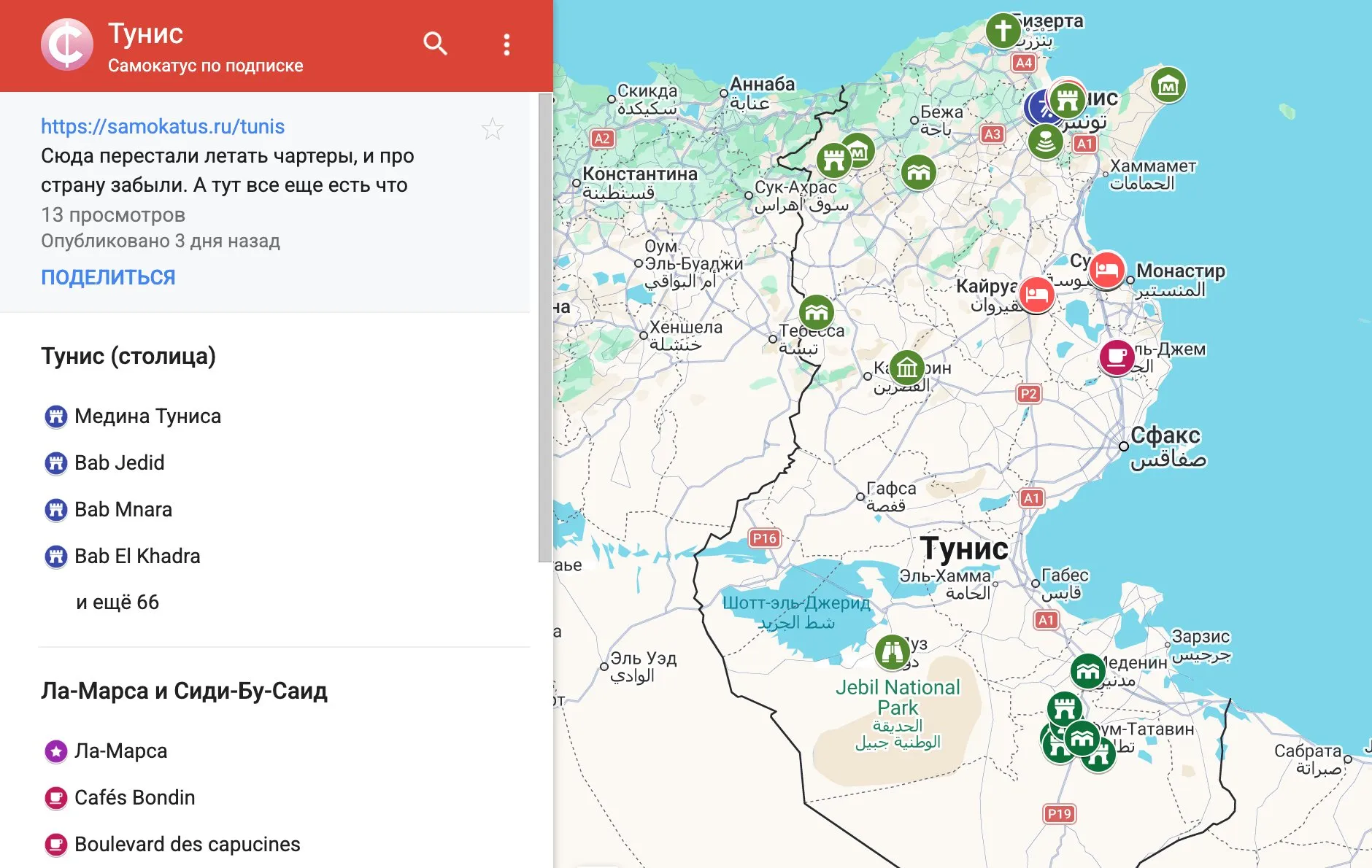
Map of attractions
Tunis — the country's capital
Although it's easy to see on the map, it's worth stating clearly — Tunis is not located on the seashore. The coastal areas are home to the capital's suburbs: Carthage, Ez-Zahra, La Marsa, and Sidi Bou Said. Like many other cities in the country, Tunis has a historic quarter (the medina) with winding streets where people generally get around only on foot or by motorcycle, a colonial quarter featuring grand mansions and art nouveau apartment buildings, and a modern district.
The Medina and surroundings
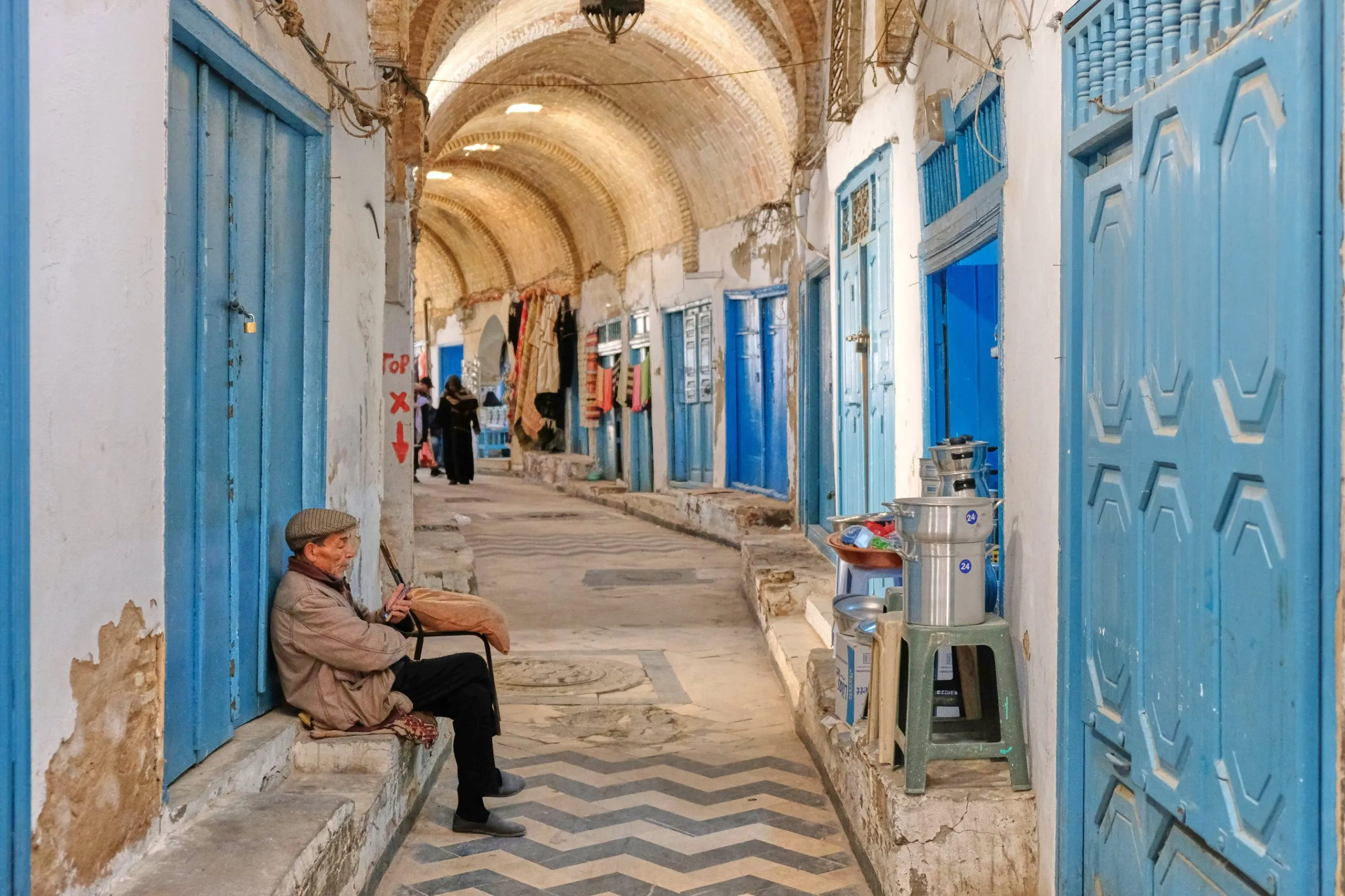
The medina of Tunis is a UNESCO World Heritage Site. It is not particularly large, and half a day is enough to get a general sense of it. The medina is a network of winding narrow streets lined with low-rise houses, wealthy merchants' palaces, and mosques. The entrance portals and doors of the Tunis medina are extraordinarily beautiful. Almost all of them are historic, and there are virtually no new buildings in the medina at all. You don't need to plan a specific route to explore it — you can simply wander in and drift aimlessly, watching the unhurried pace of city life.
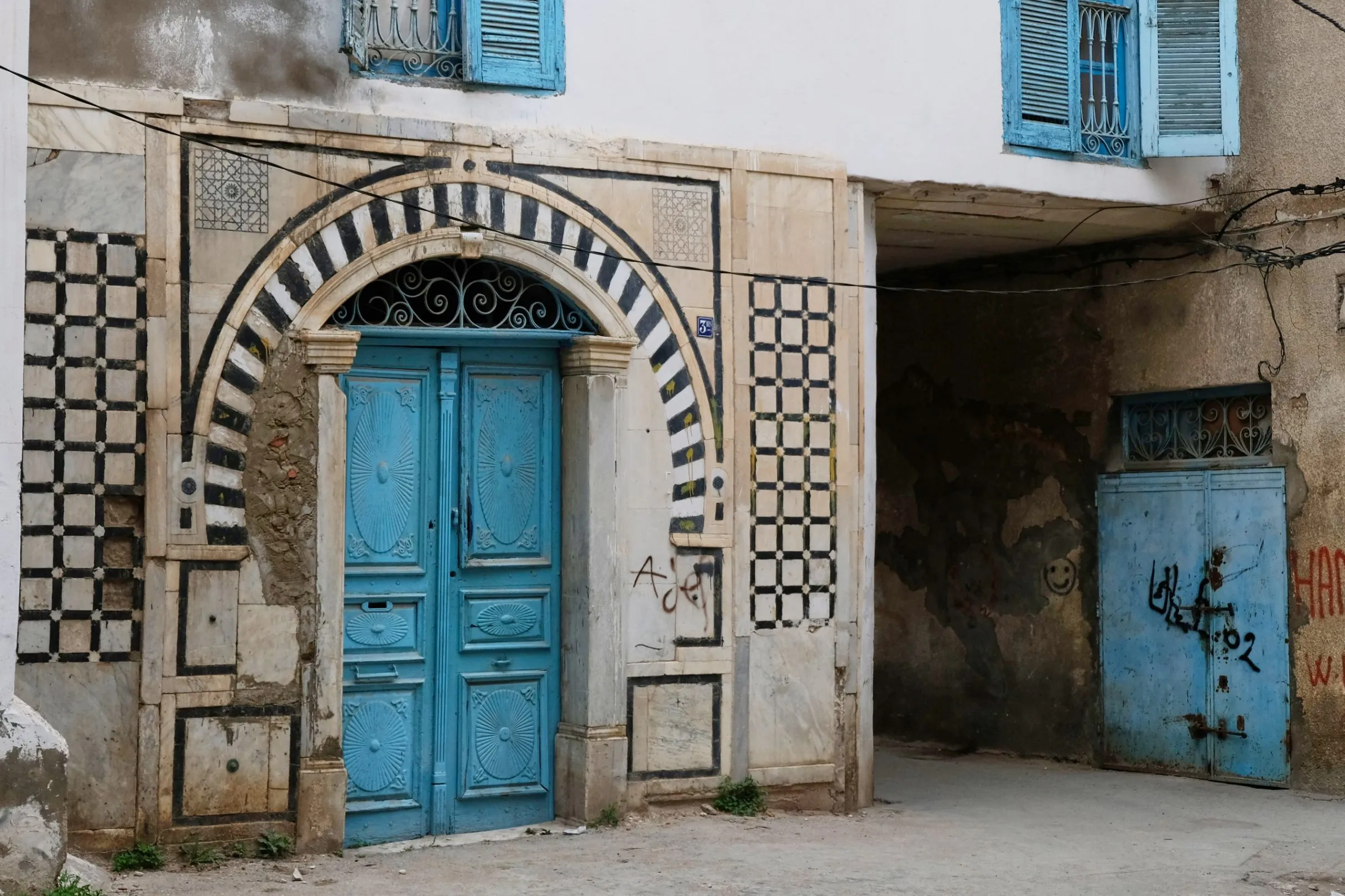
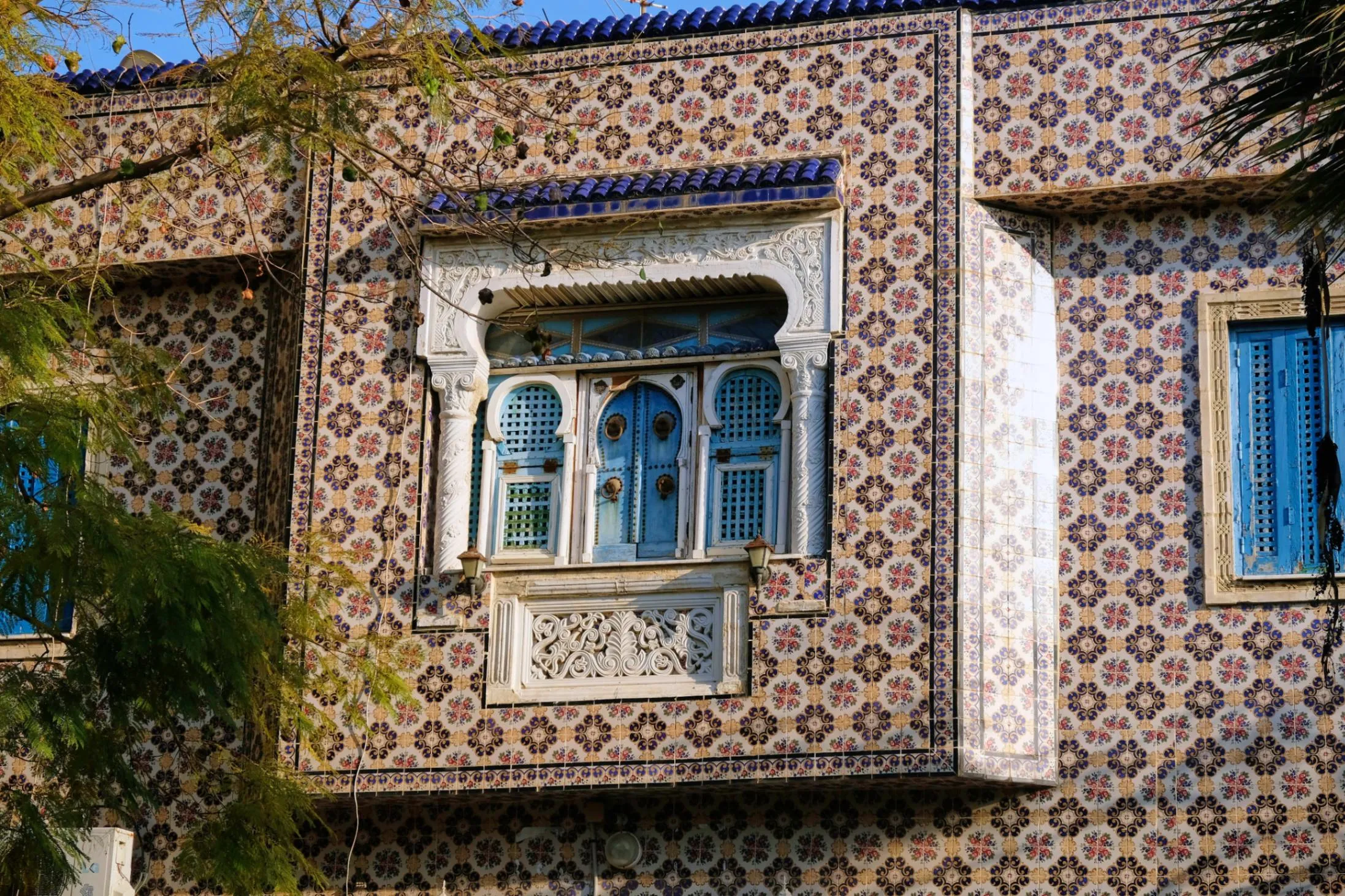
The medina does, of course, have specific sights worth visiting.
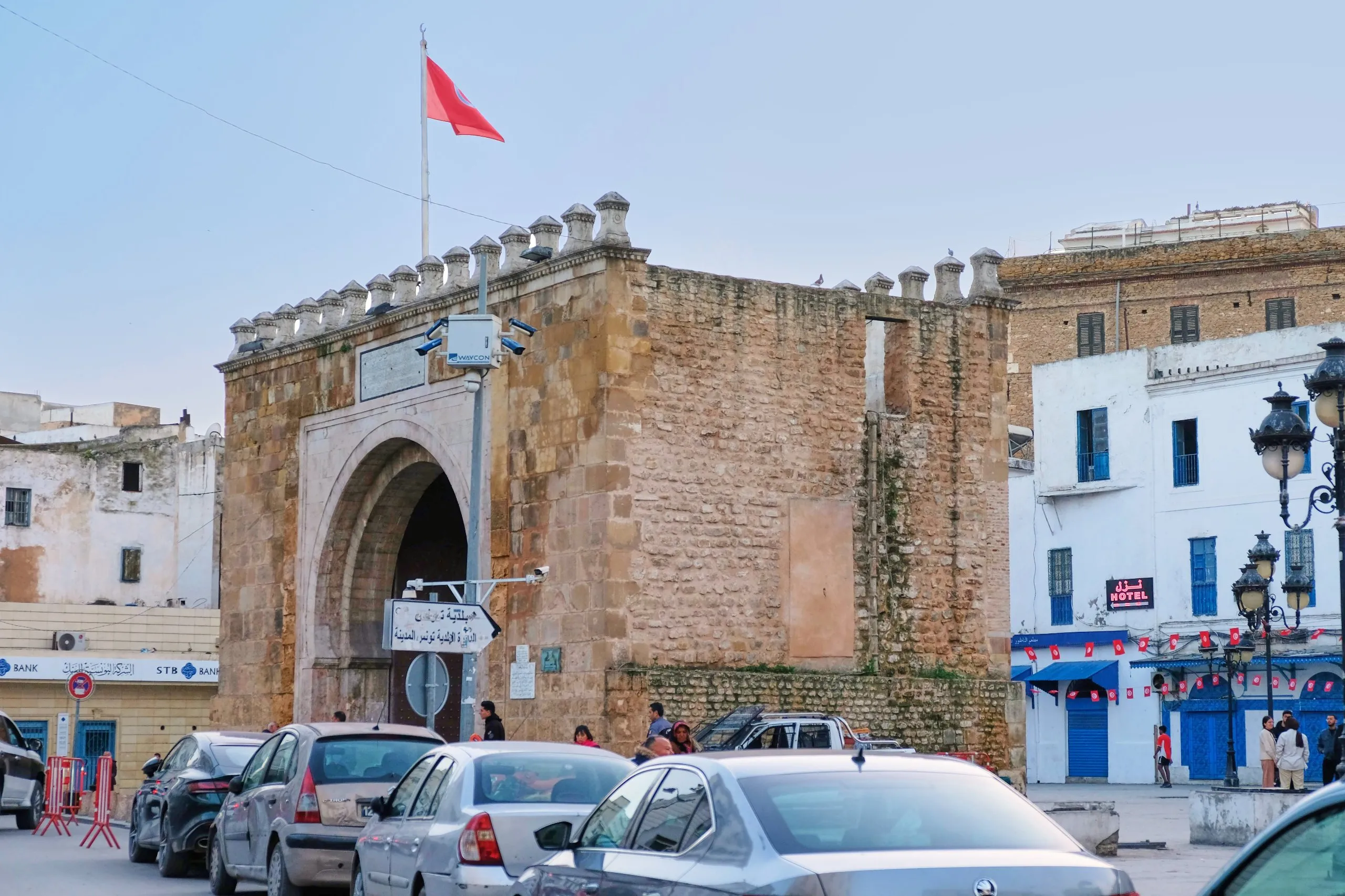
Five gates lead into the city: Bab Jedid, Bab Mnara,, Bab el-Khadra,which all sit directly against the historic fabric of the city. The remaining gates — Bab el-Bahr and Bab Saadoun — are essentially monuments severed from their urban context. Although they stand on their original historic sites, they have been heavily restored and are no longer connected to the surrounding historic buildings.
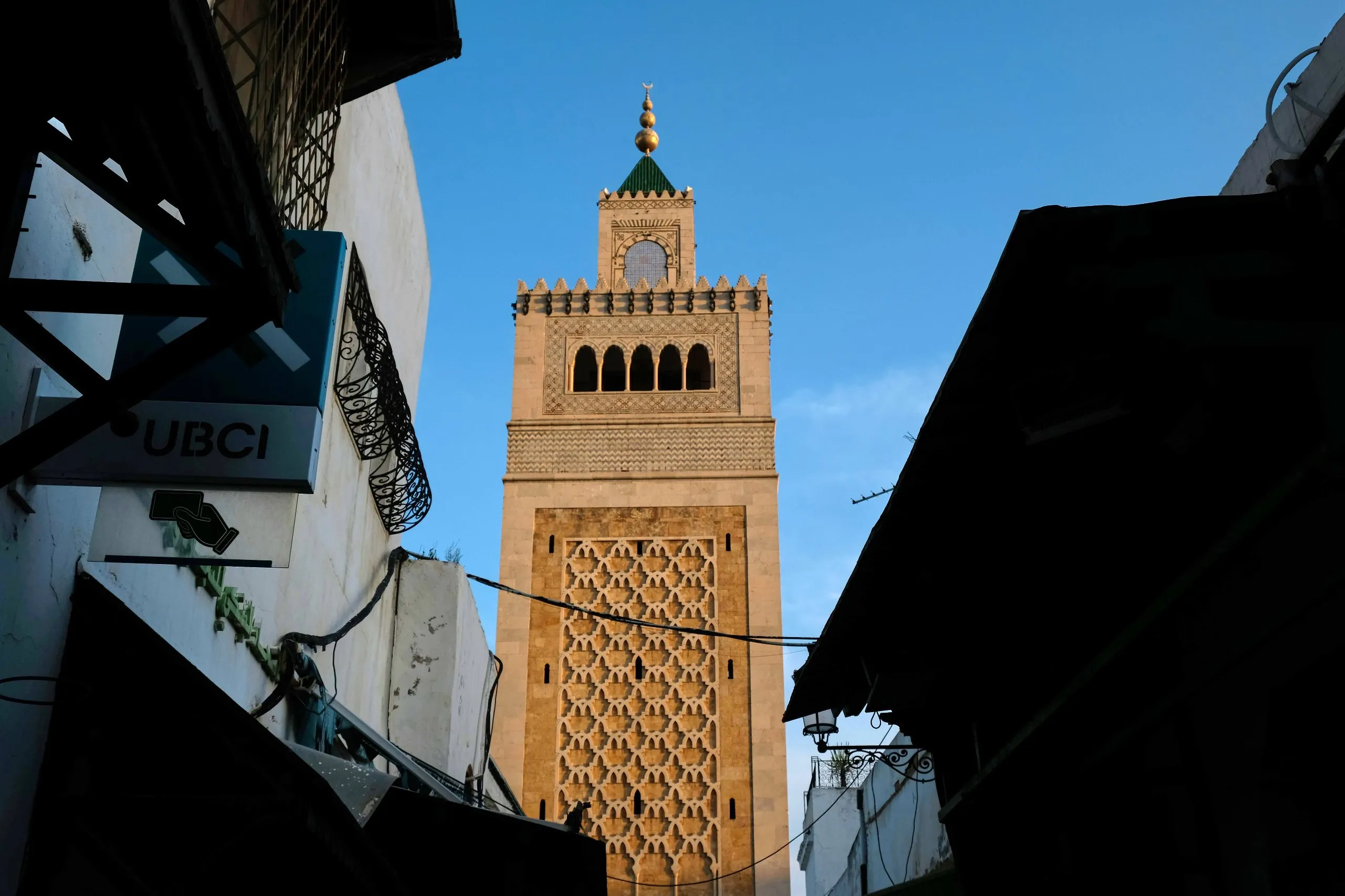
The Ez-Zitouna Mosque is the oldest in the city. It was founded in the late 7th century, though it was substantially rebuilt in the mid-9th century. It is the only mosque in the city that admits non-Muslims. Tunisia is one of the few Muslim countries in the world where non-believers are not permitted inside mosques. At some of the more popular ones, visitors are allowed into the courtyard but not into the main prayer hall. Youssef Dey Mosque was built in the early 17th century and is the first mosque in the city built in the Ottoman style. Another beautiful mosque in the medina is El Jedid (1726).
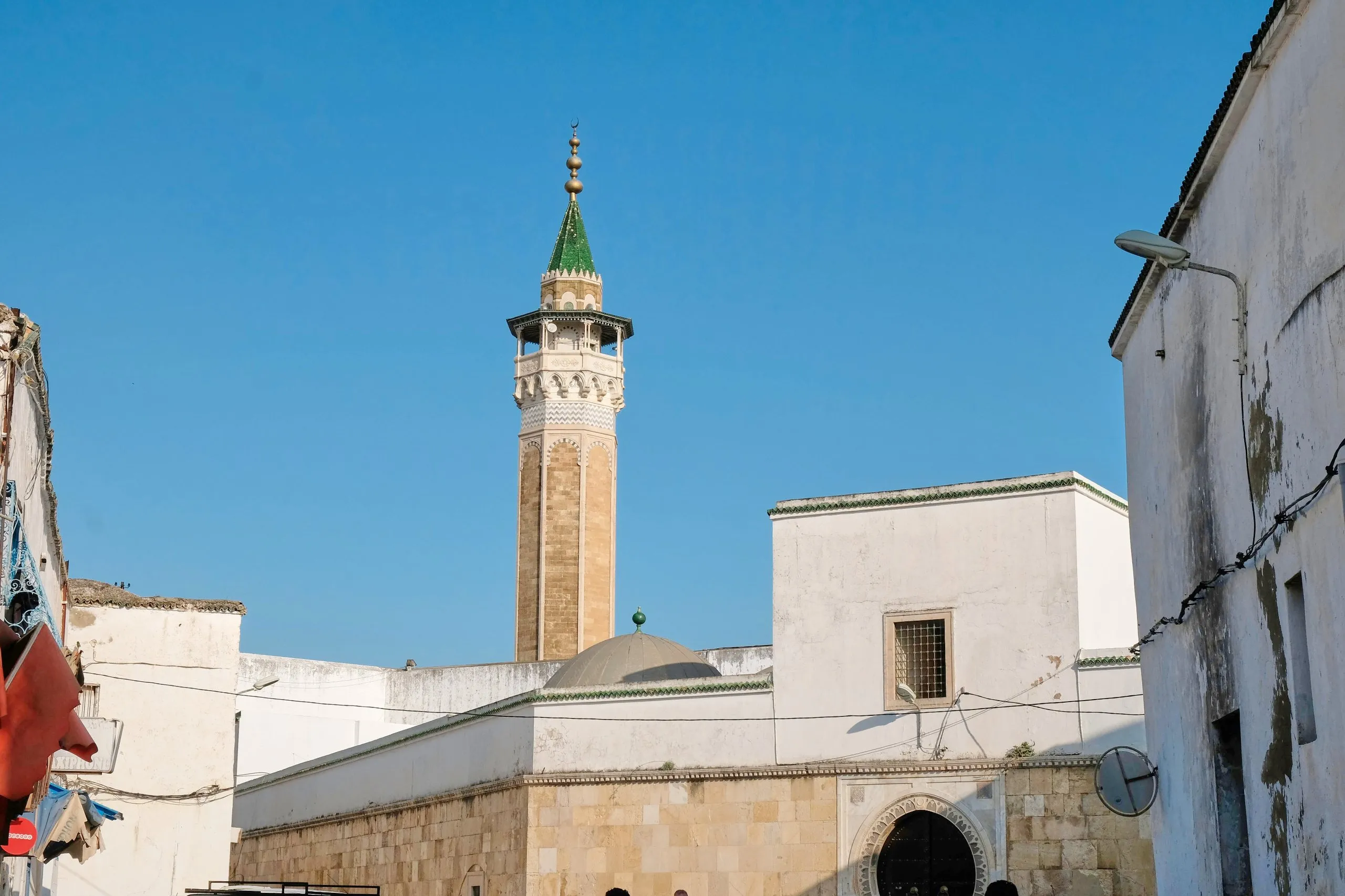
The mausoleum Tourbet el Bey is beautiful both inside and out. In richly decorated halls with carved vaulted ceilings and ceramic tilework, members of the ruling Ottoman family are buried in neat rows. Admission costs five dinars (1.7 USD).
Dar Ben Abdallah Palacewas once home to a wealthy silk merchant, but since the 1960s it has been converted into a museum — and for the past several years it has been closed for renovation. Dar Othman is another palace currently closed for renovation, but both are worth seeing at least from the outside.
Around the medina lie historic neighbourhoods with a more legible street grid, but still with beautiful architecture and a colourful everyday atmosphere. So if you venture beyond the medina itself, you could easily spend a couple of days wandering the historic quarters without stopping. These include Bab Souika, Bab El Khadra, Sidi Al Bachir, Bab El Feil, and Montfleury.
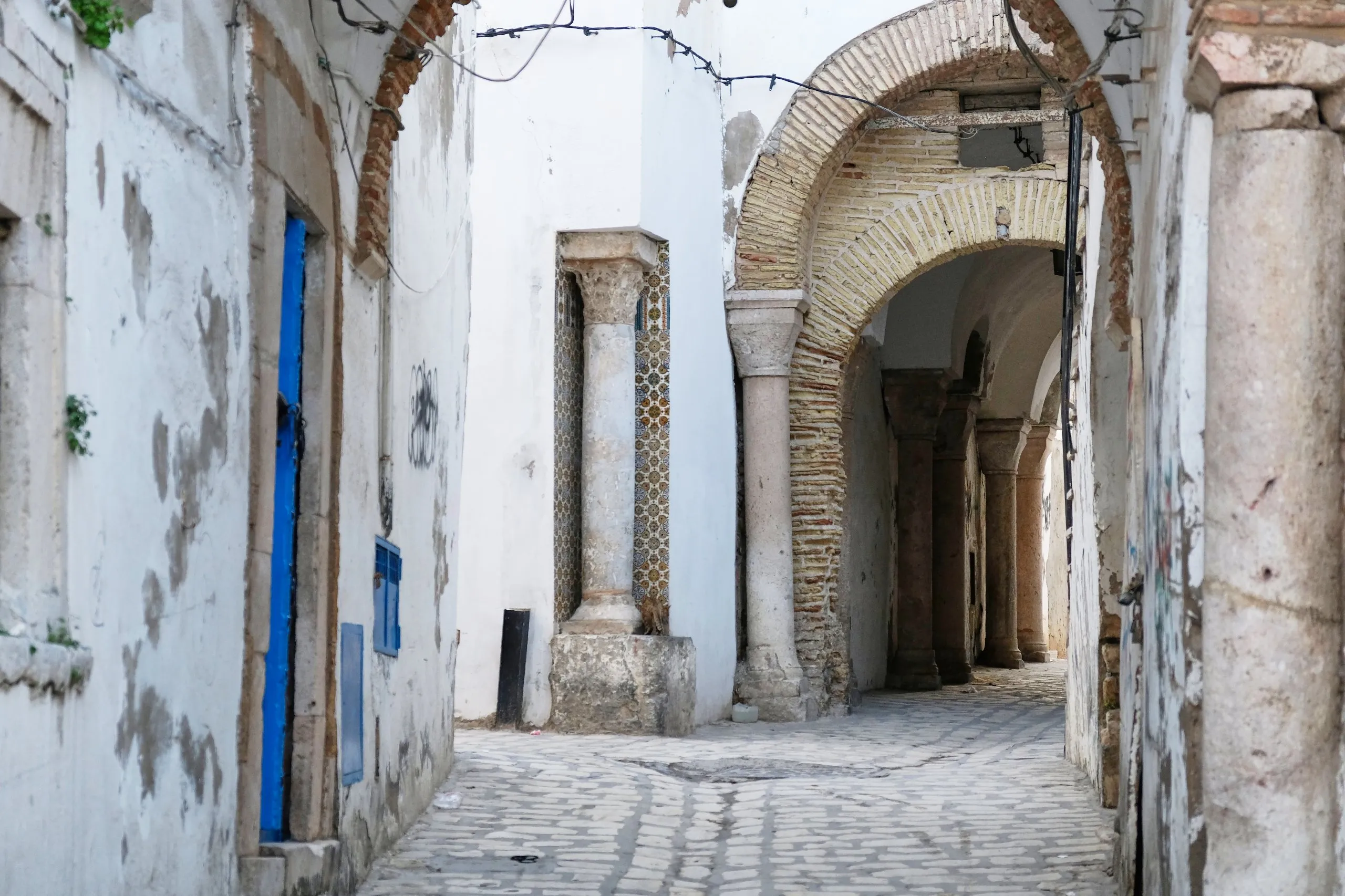
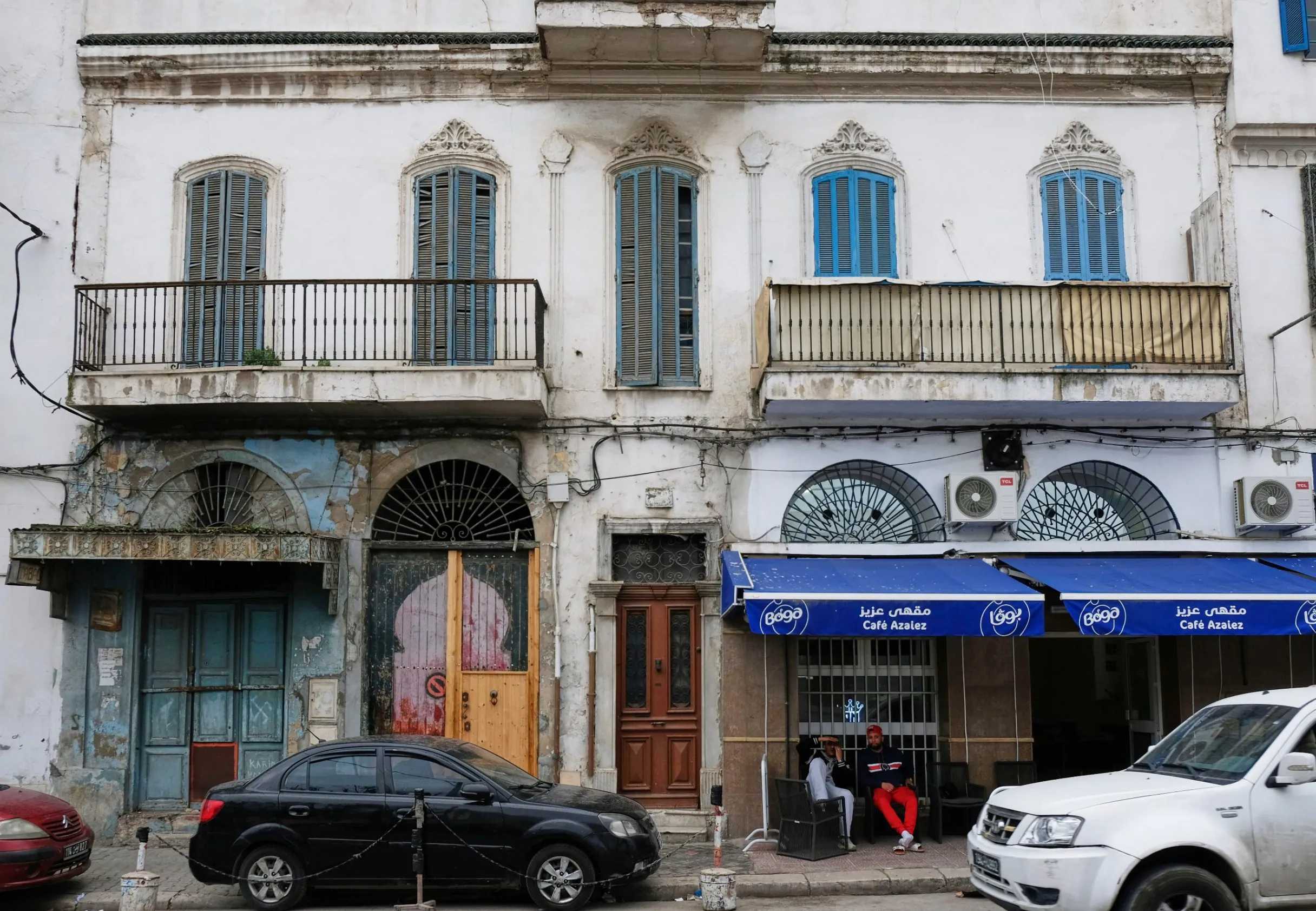
The National Theatre occupies the Khasnadar Palace. It faces the narrow but charming Place Halfaouine. Around it are simple cafés and teahouses. The streets adjoining the square are home to cramped and lively markets.
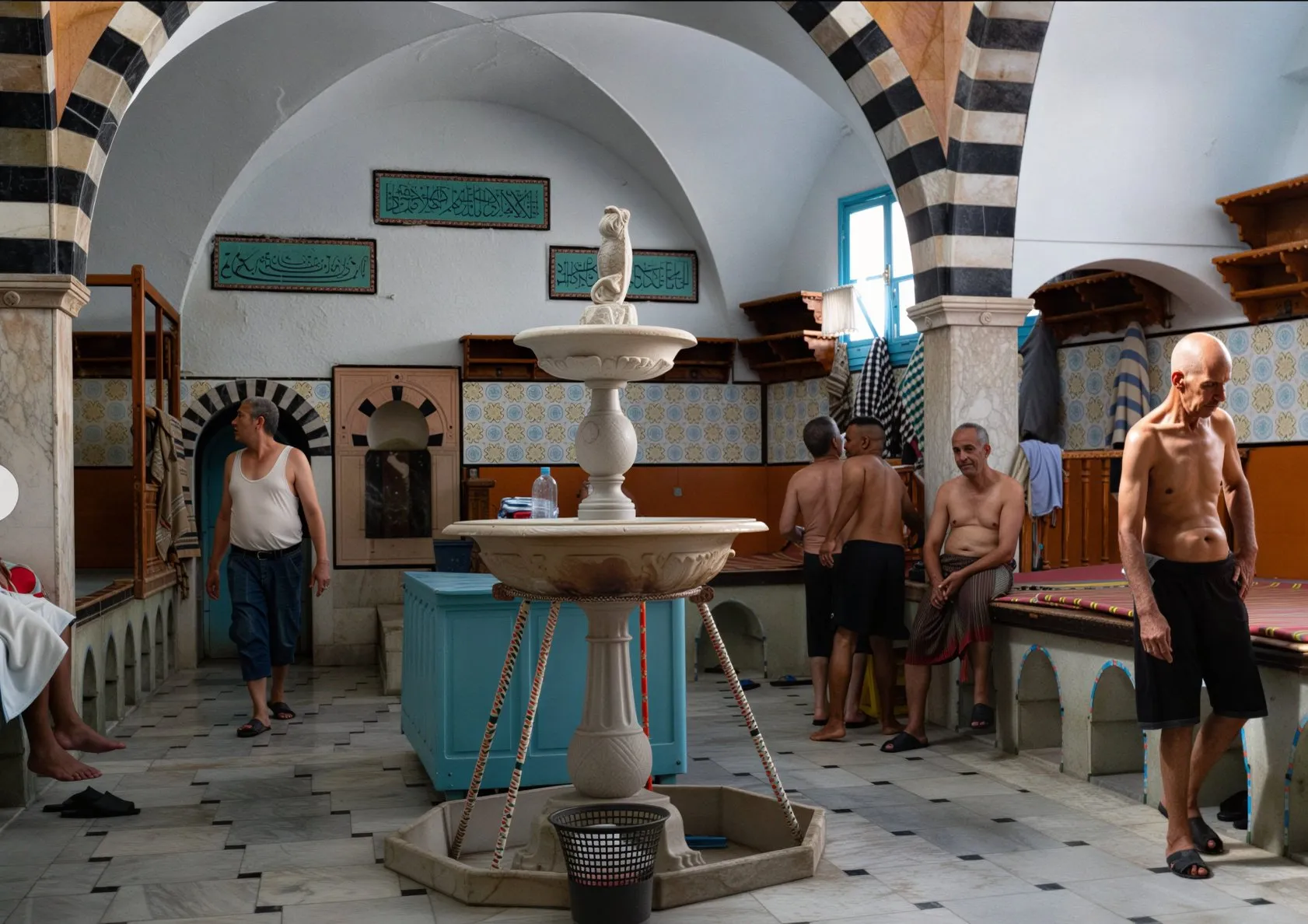
Hammam. Here is how a Tunisian hammam works: there are several types of rest rooms that also serve as changing rooms, shower cubicles, a wash-and-massage room, and a hot room (around 50–60 degrees) with a hot pool where everyone warms up, soaks their feet in a bucket, and scrubs themselves with a kese mitt. The flip-flops are communal; towels and shower gel-shampoo can be purchased there, though I'm not sure about the kese mitt — better to buy one in the city beforehand.
There are quite a few historic hammams in and around the medina. The Sidi Belghith hammam has preserved its century-old atmosphere, with a wealth of retro details in the interior. Here the price depends on the comfort level of the rest room you choose, though the difference is small. The most expensive option costs six dinars (2.04 USD). Peeling and massage are charged separately. Here are a few other good hammams: Daouletli and El Kachachine.
The Colonial Center
The colonial center is hemmed in between the medina, the marina, the Jellaz cemetery, and the Muhammad Al Khamis tram stop. If you plan to stay in Tunis for more than two or three days, you will find it more comfortable to base yourself here rather than in the medina. There are proper pavements, supermarkets, and cafés.
From 1881 to 1956, Tunisia was a protectorate within the French colonial empire. This part of the city, with its colonial buildings, was designed during that period. After independence was declared, most of the French and Jewish residents left the country.
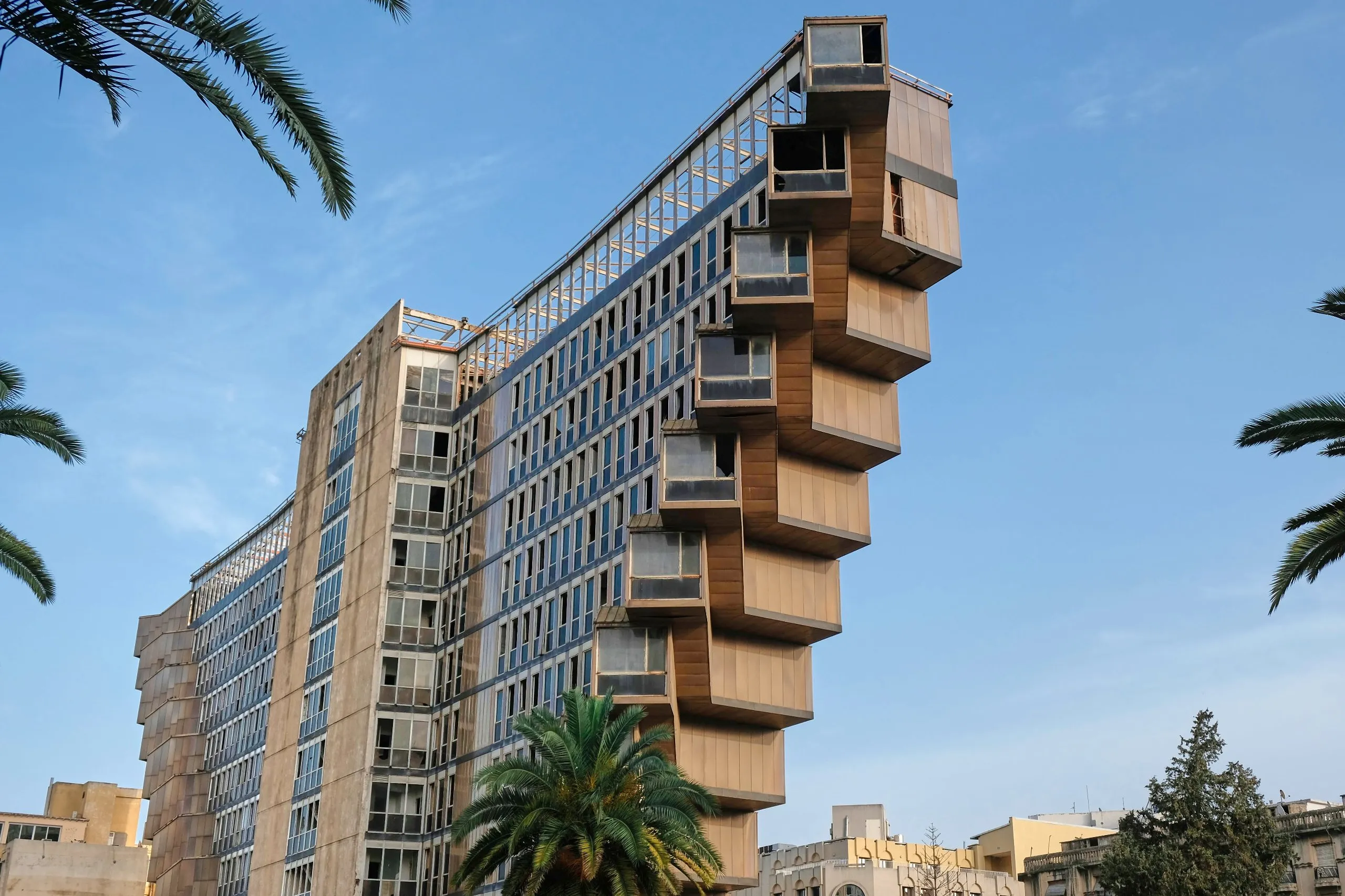
Habib Bourguiba is the main street of the colonial center, stretching from Tunis Marine train station all the way to the medina gate of Bab el-Bhar. For most of its length the street features a pedestrian boulevard, flanked on both sides by some of the city's most significant buildings, which together chart its development. Here you will find the brutalist abandoned hotel Hôtel du Lac shaped like an inverted pyramid. In front of it stands a charming modernist Ministry of Tourism building. On Place du 14 Janvier, with its fountain, stands a clock tower, and in front of it a monument to Habib Bourguiba. He was Tunisia's first president after the country gained independence. He ruled for 30 years and in 1987 was removed from power by the prime minister and placed under house arrest at his residence, where he died 13 years later. His successor, Zine El Abidine Ben Ali, went on to rule for 23 years until the Arab Spring.
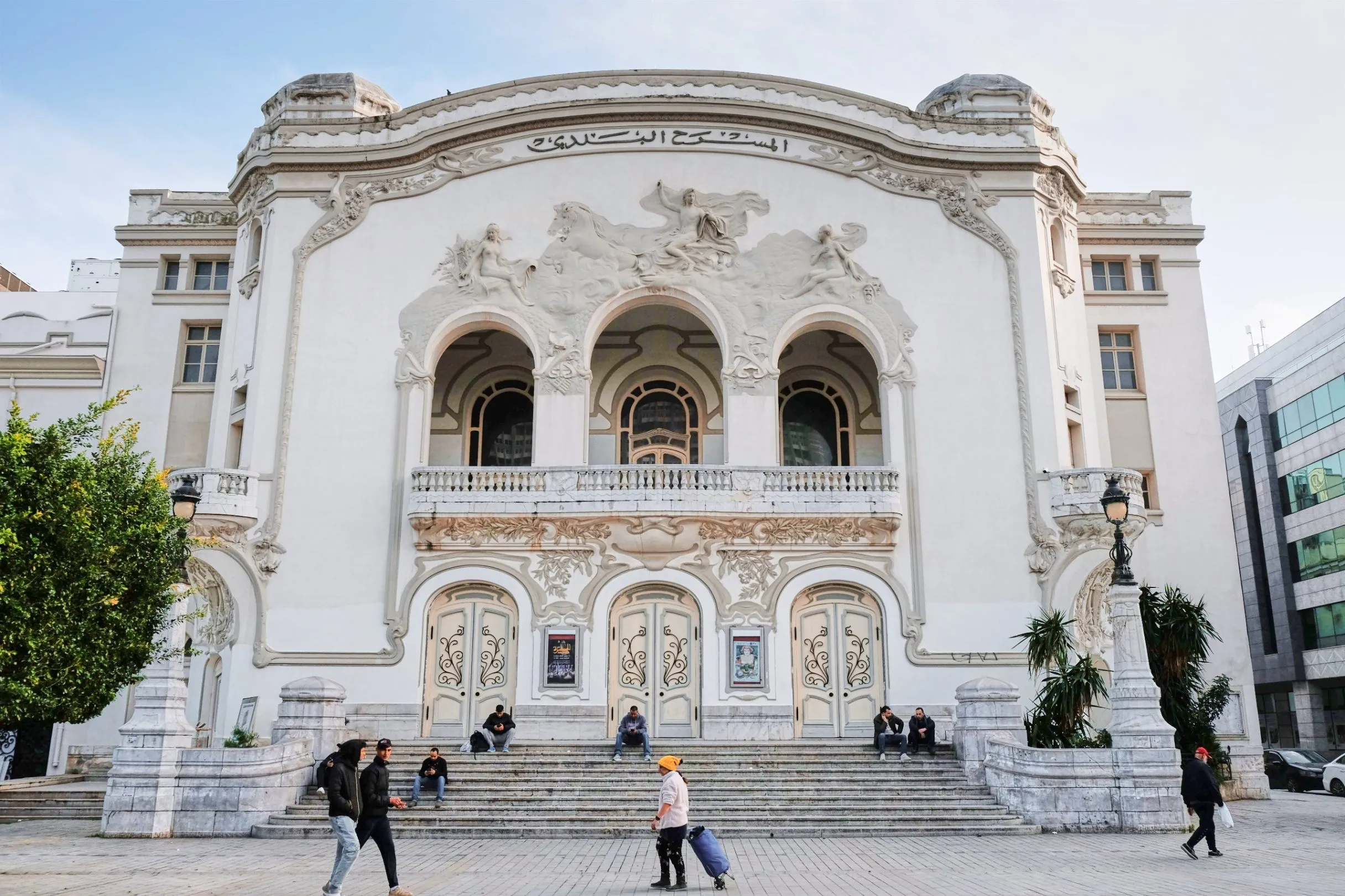
On Habib Bourguiba Avenue stands the Municipal Theatre in the Art Nouveau style, with elaborate botanical ornaments and bas-reliefs covering the entire facade. Opposite it is the enormous modernist El Hana Hotel. You can even spend a night there — the location is convenient, if perhaps a little noisy. The rooms no longer retain their historic interiors, though the common areas do. A little further along is a massive and heavily guarded building — the French Embassy — and opposite it stands the Catholic Cathedral of St. Vincent de Paul.
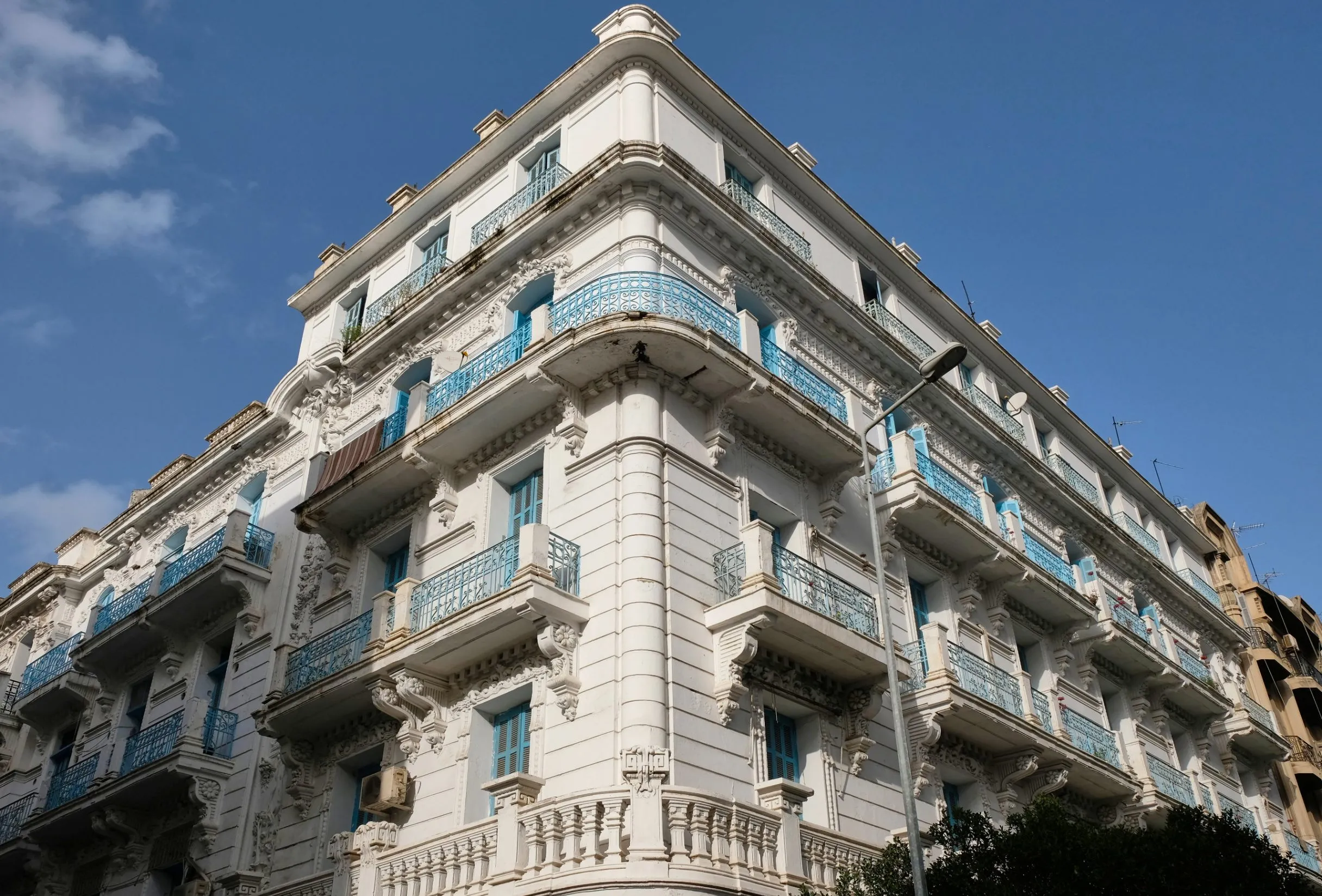
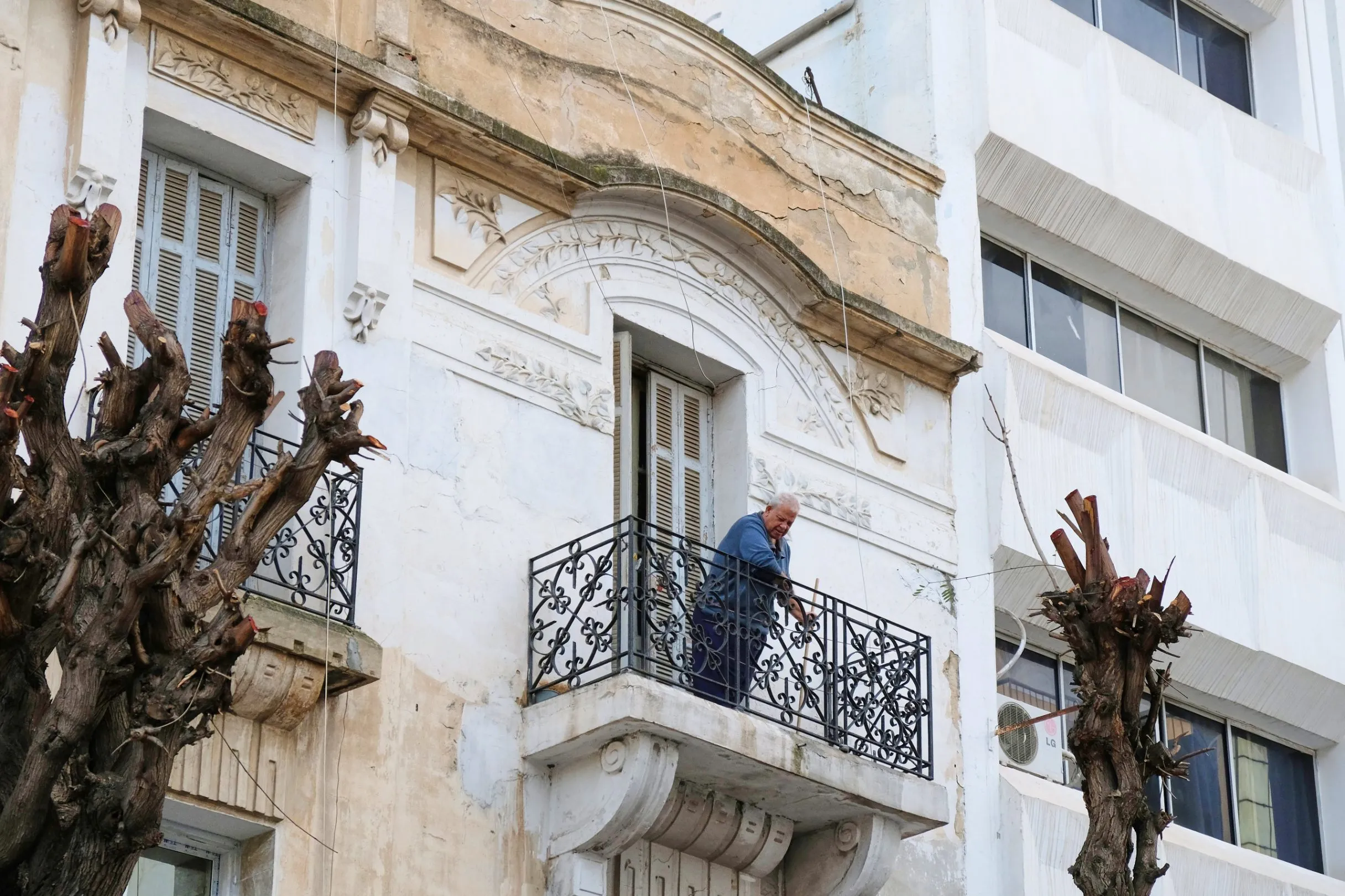
Opposite the Bab el-Bhar gate stand several similar Art Nouveau buildings of intricate forms and volumes, richly decorated with stucco work, tilework, vintage signage, and roller shutters. One of them is home to the historic hotel Splendid.
The Central Market is fairly modest and, uncharacteristically for the Middle East, quiet and unhurried. Even so, it is worth a 20-minute stroll. Nearby is the Central Post Office — an imposing and handsome building with its historic interiors entirely intact. It is a great excuse both to admire the wooden display cases and to send a postcard. Stamps for postcards to anywhere in the world cost 1.5 dinars (0.51 USD).
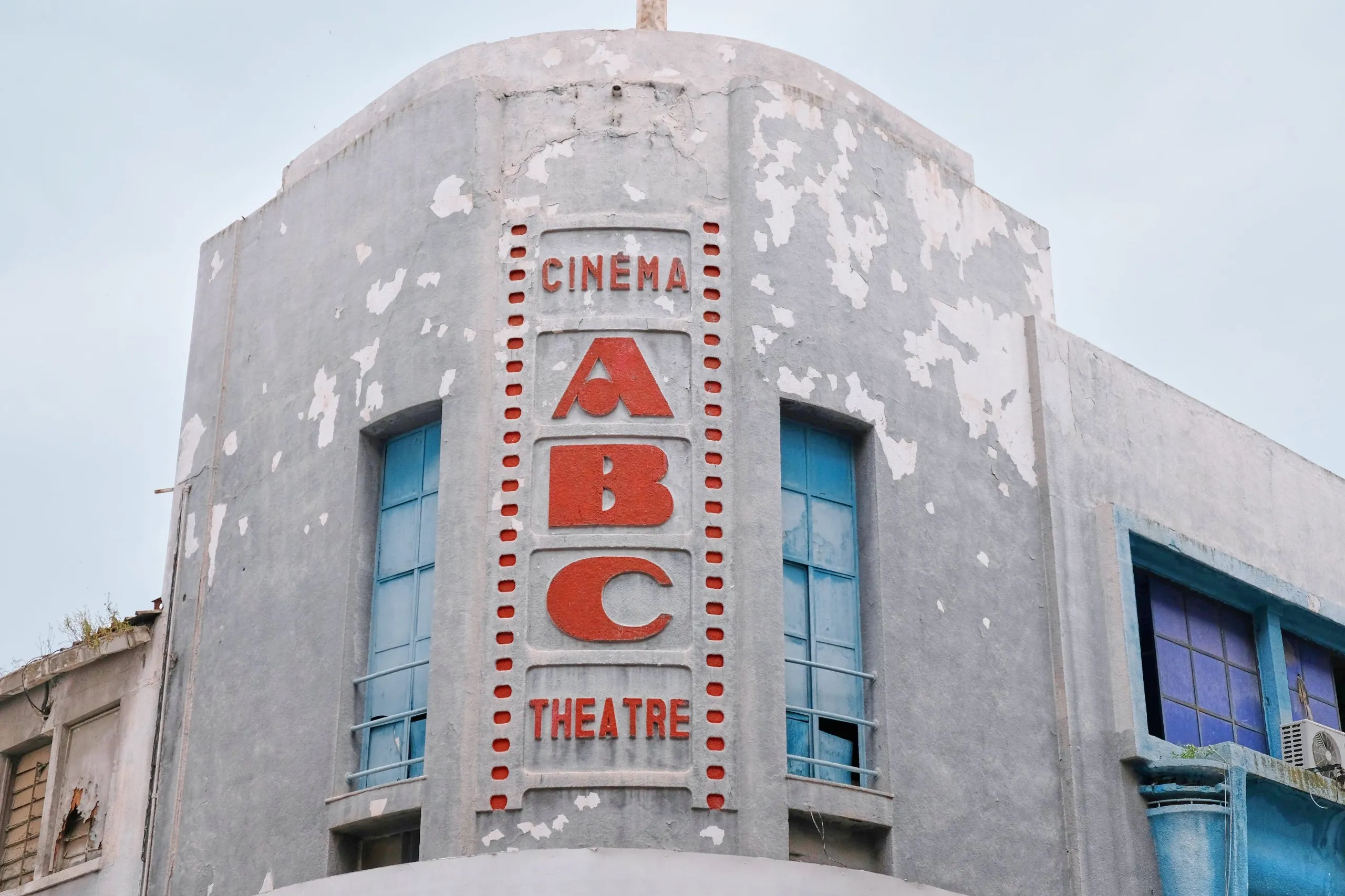
On Carthage Street there are many beautiful buildings and unusual historic details — signs, tiled panels. Slightly off to one side are two cinemas: ABC in the Art Deco style, and literally around the corner, occupying an Art Nouveau building, the cinema Rio.
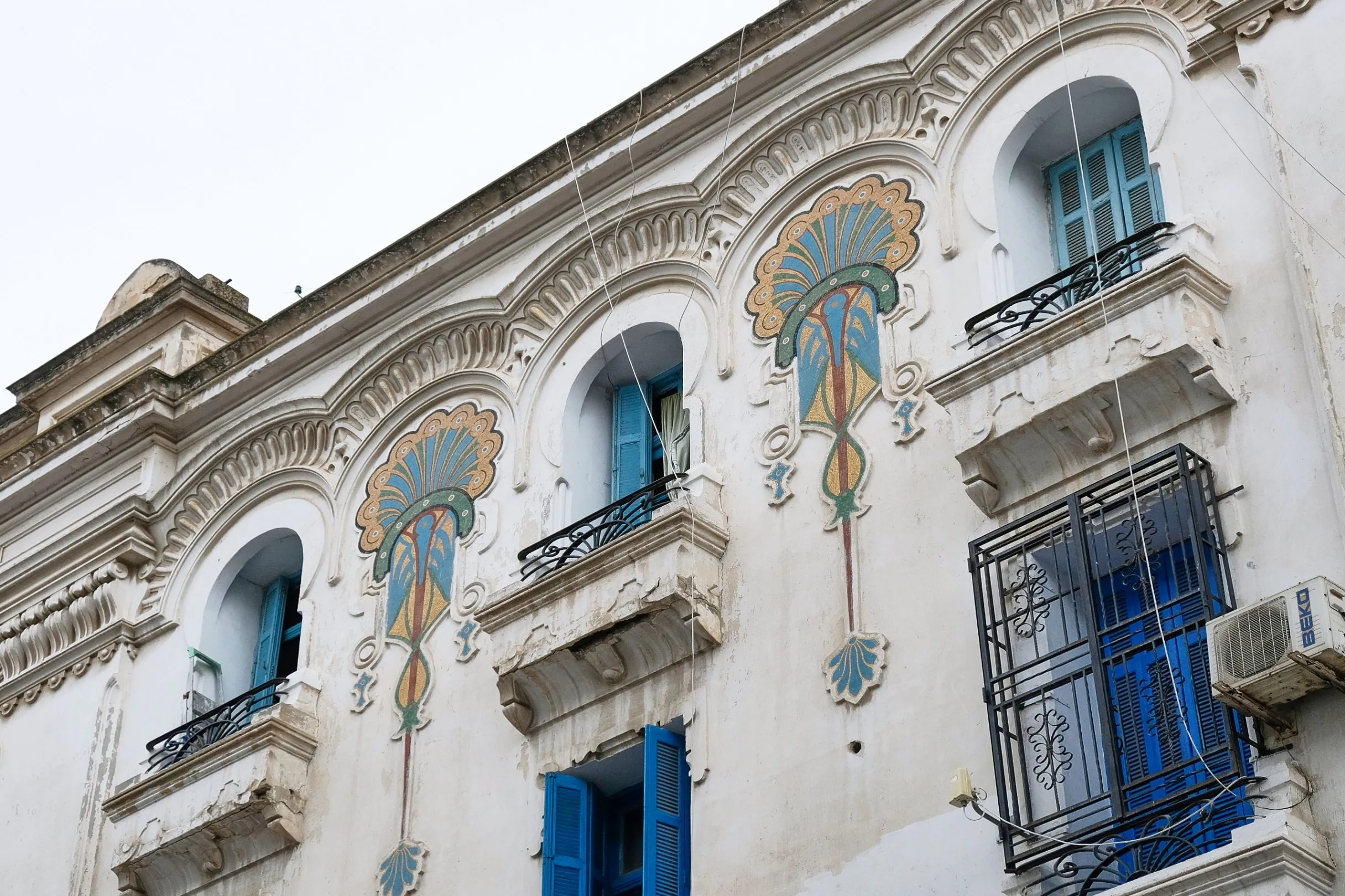
Lafayette is a pleasant neighborhood for a walk, with a regular grid layout and straight streets. Here you will find the Grand Synagogue, built in 1937 in the Art Nouveau style. Unfortunately, you will not be able to go inside: the synagogue is closed and guarded by police. Nearby stands one of the finest Art Nouveau buildings in the city — with mosaic signs on the ground floor and mosaics beneath the roofline.
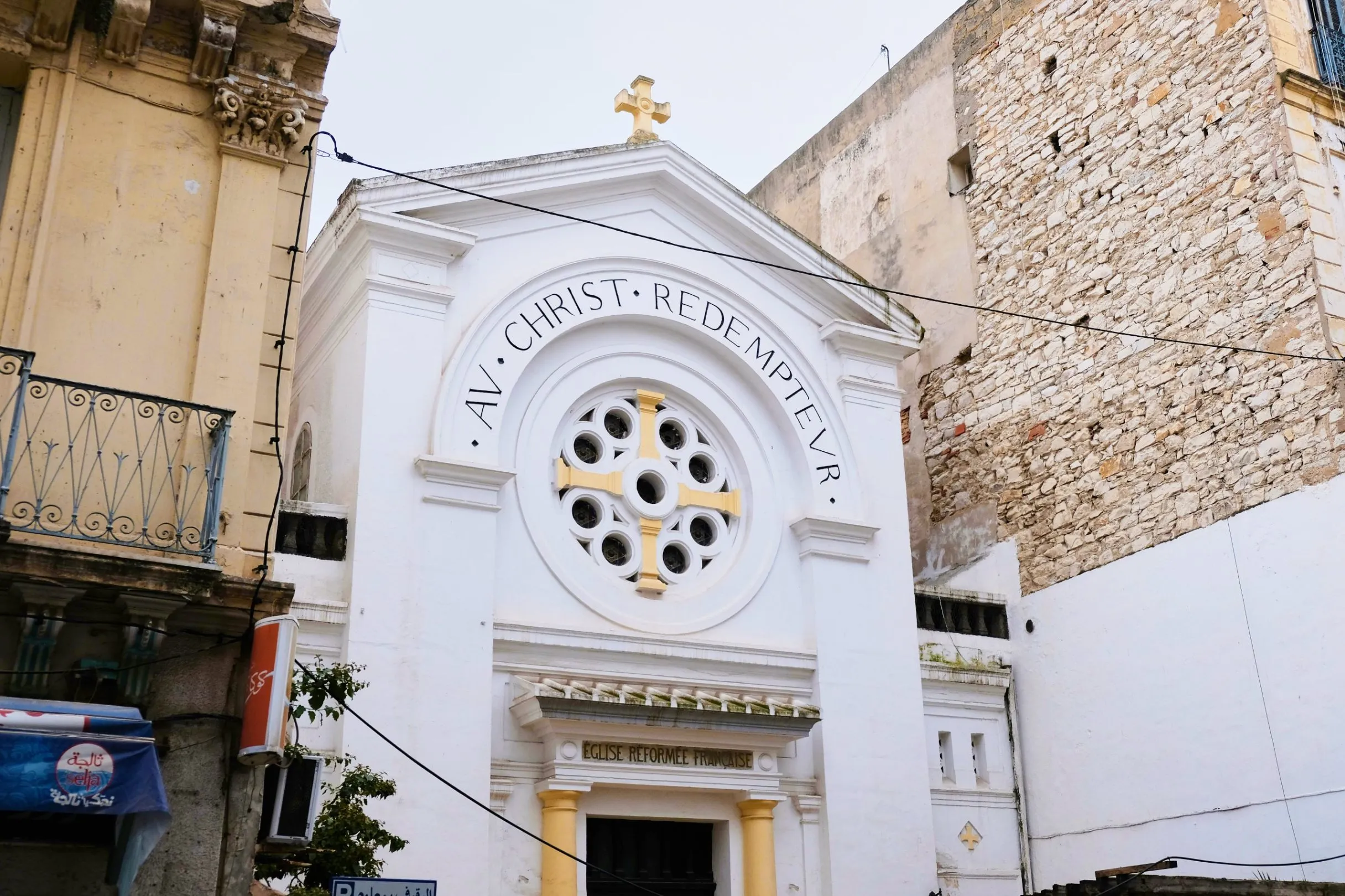
At the Christian cemetery of Bourges there is an Orthodox section, and overall it features many beautiful gravestones and crypts. The city also has an Orthodox Church of the Resurrection of Christ and a small Greek Church of Saint George, as well as Lenin Street (rue Lenin). The Reformed Church is sandwiched between two residential buildings.
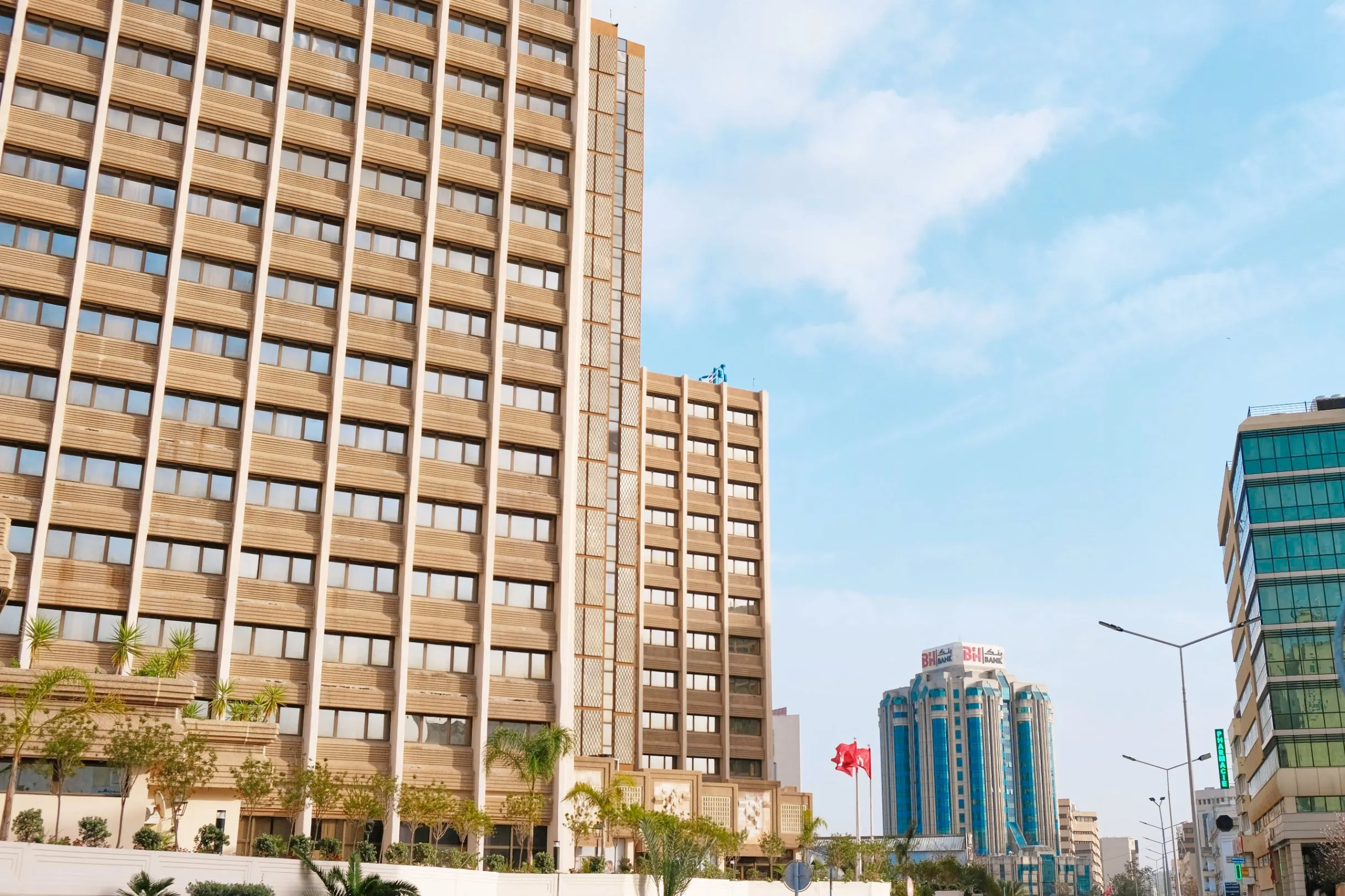
Tunis also has a great deal of high-quality modernist architecture — both early and late, from the end of the 20th century. Here are a few notable buildings: Ibn Khaldoun Hotel, STB Bank, Laico Hotel and Central Bank. There is also a curious phenomenon — modernist garages on various streets: rue de Sparte, avenue Cyrus Legrand, rue d'Espagne.
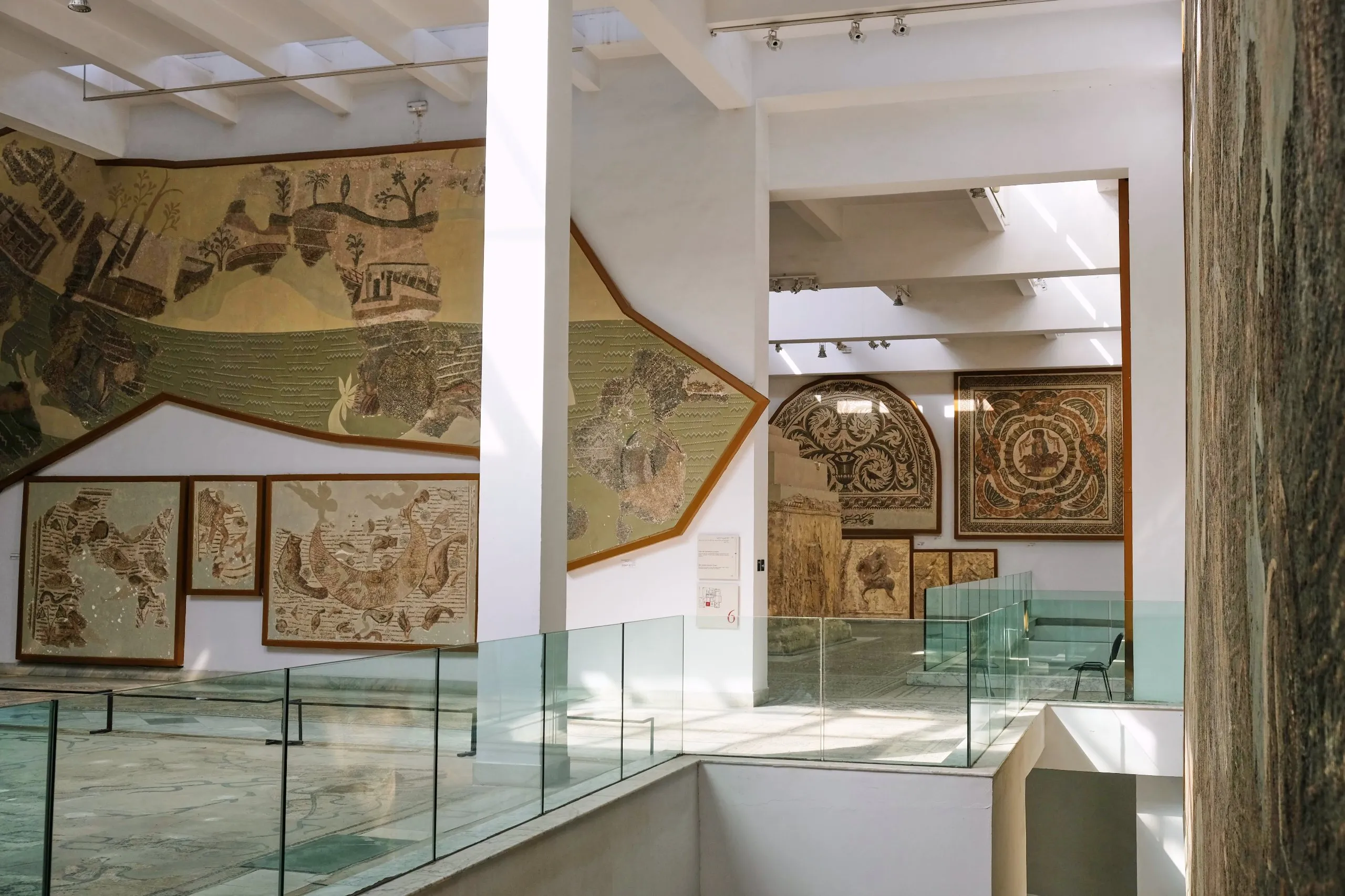
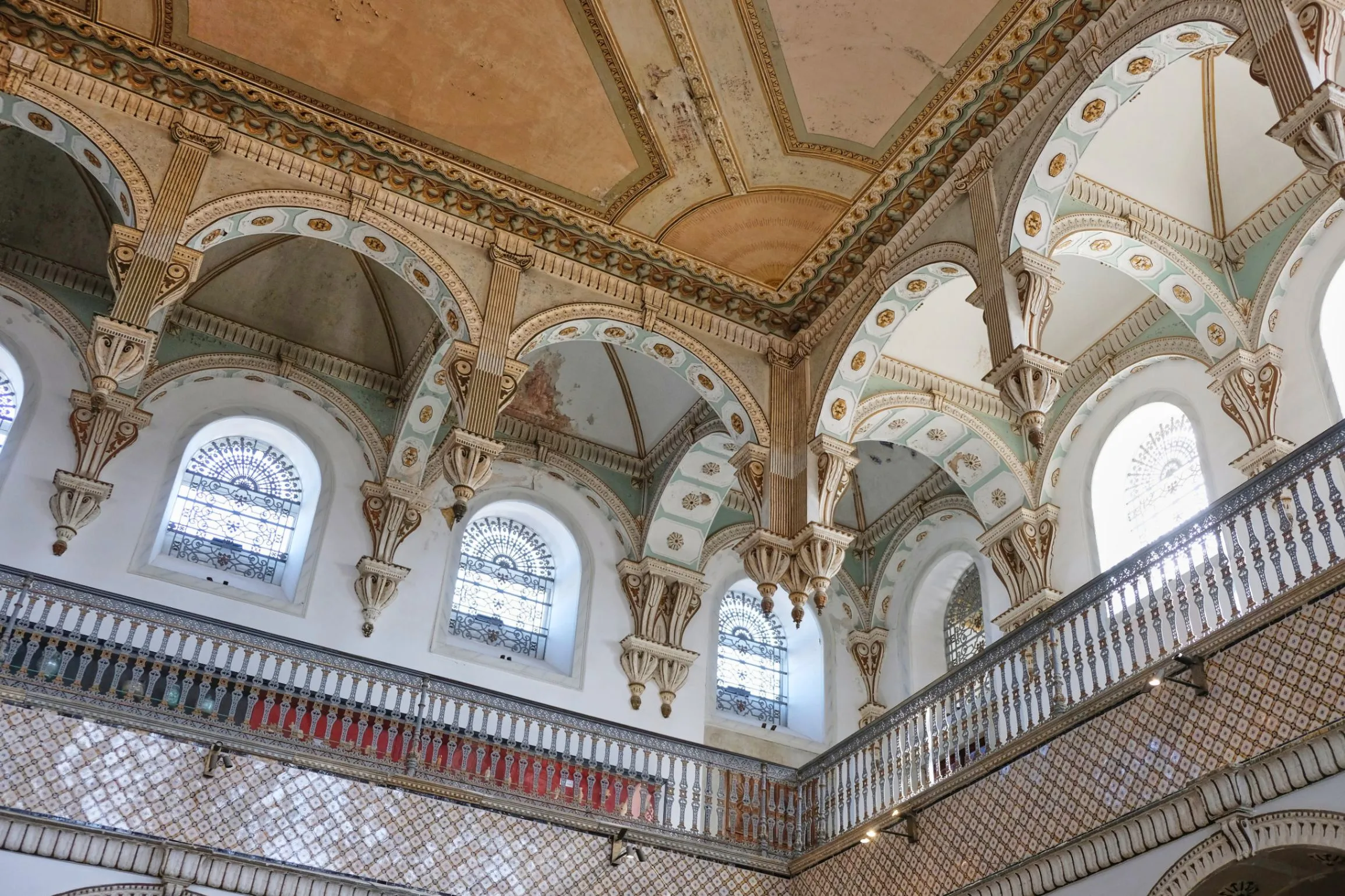
The Bardo Museum is the largest collection of mosaics in Africa. It is housed in a 13th-century palace and was established as far back as 1888. Admission costs 13 dinars (4.41 USD).
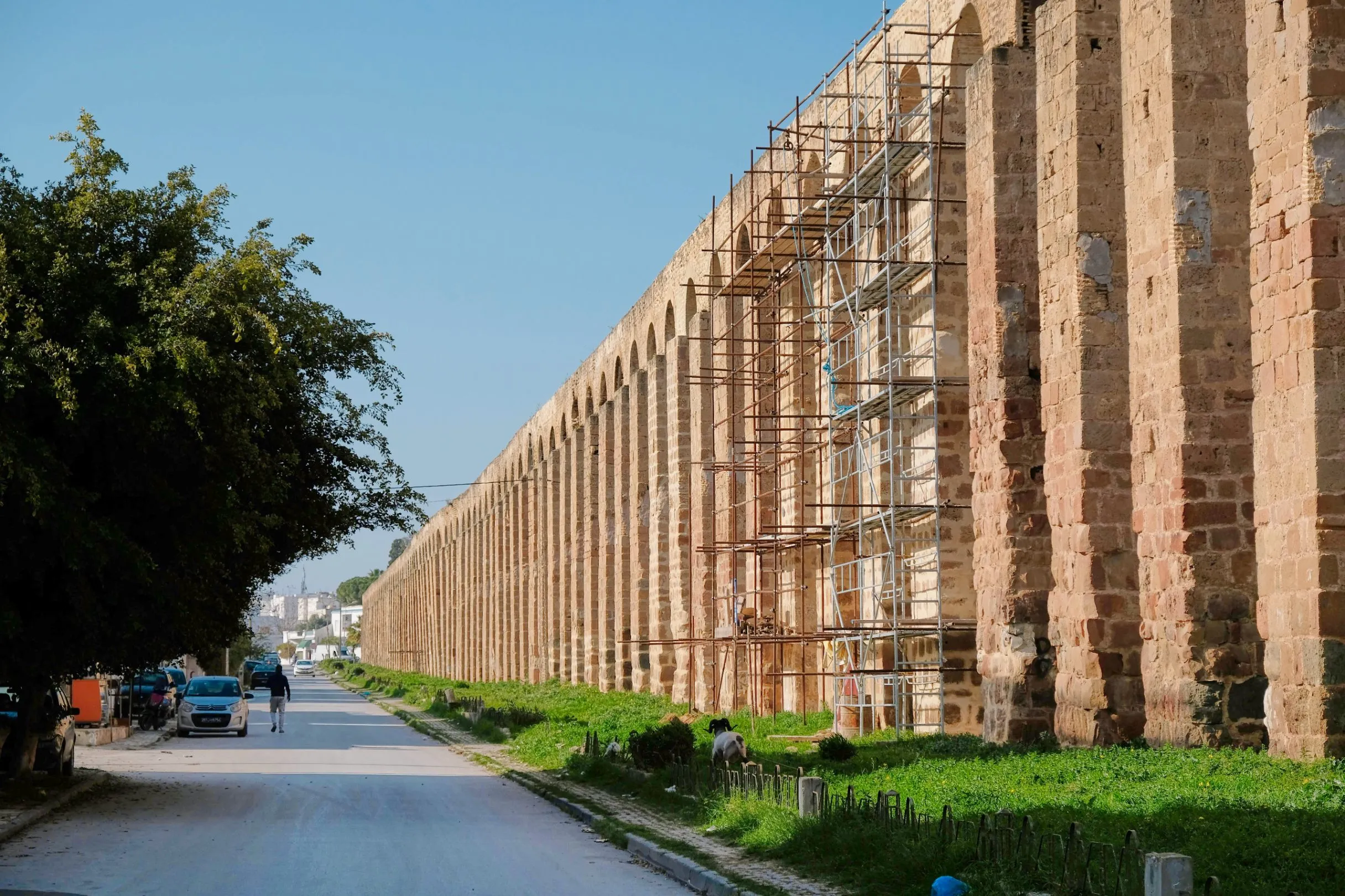
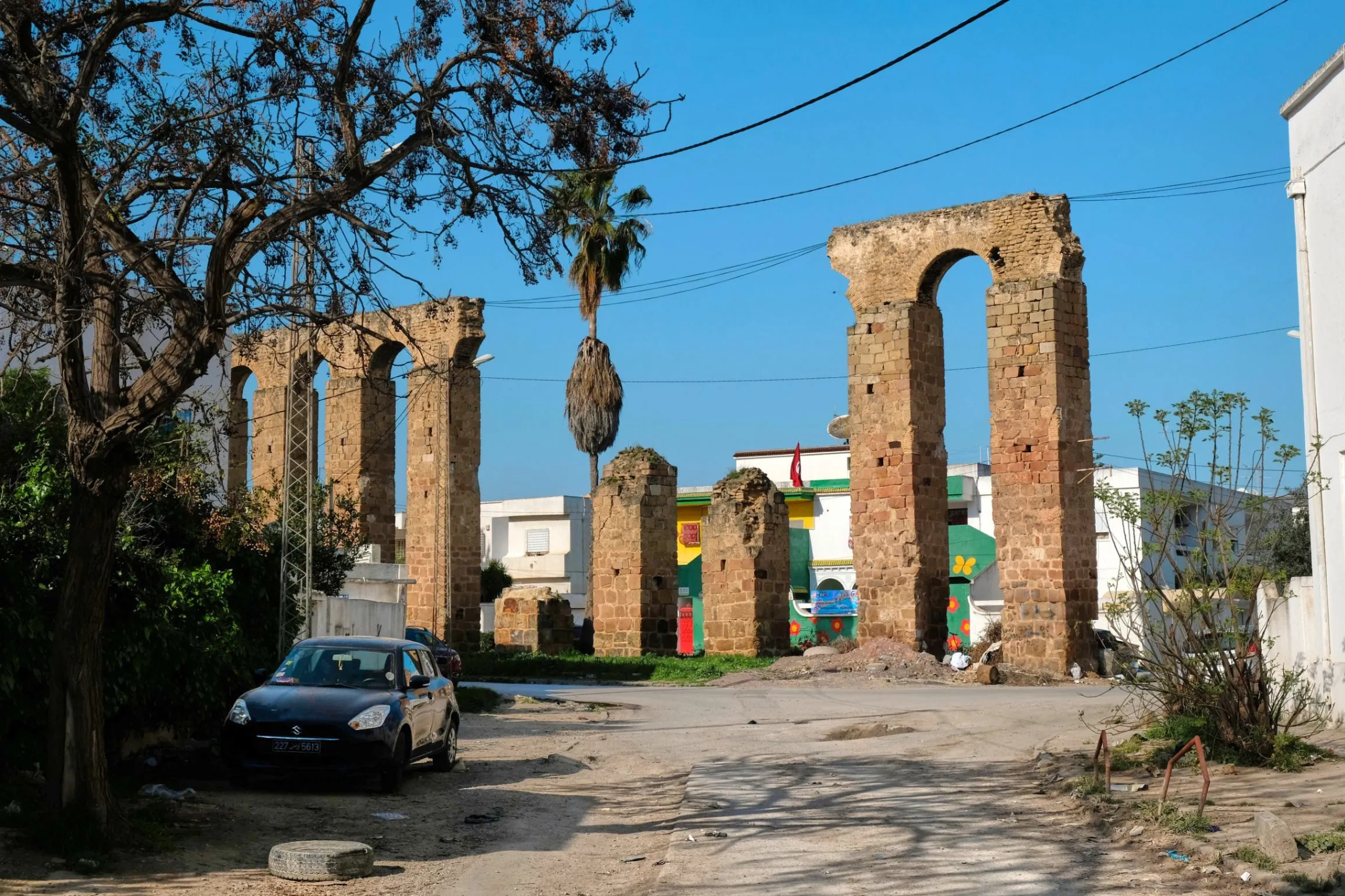
The Le Bardo district itself is filled with dull, uniform villas — there is nowhere to stroll and nothing to see. With one exception: a Roman aqueductsqueezed in among those very villas. There is also a coworking space called Hubio.
Food
Ben's Coffee — coffee, desserts, and breakfasts. There is a trendy barbershop nearby.
Biblio Thé — tea, coffee, and food; a popular hangout for local fashionable young people.
Coniz Coffee — a small café behind the Catholic cathedral.
El Behi and Decarloooo — popular pastry shops selling buns.
Mrabet — a restaurant inside an old mansion within the medina.
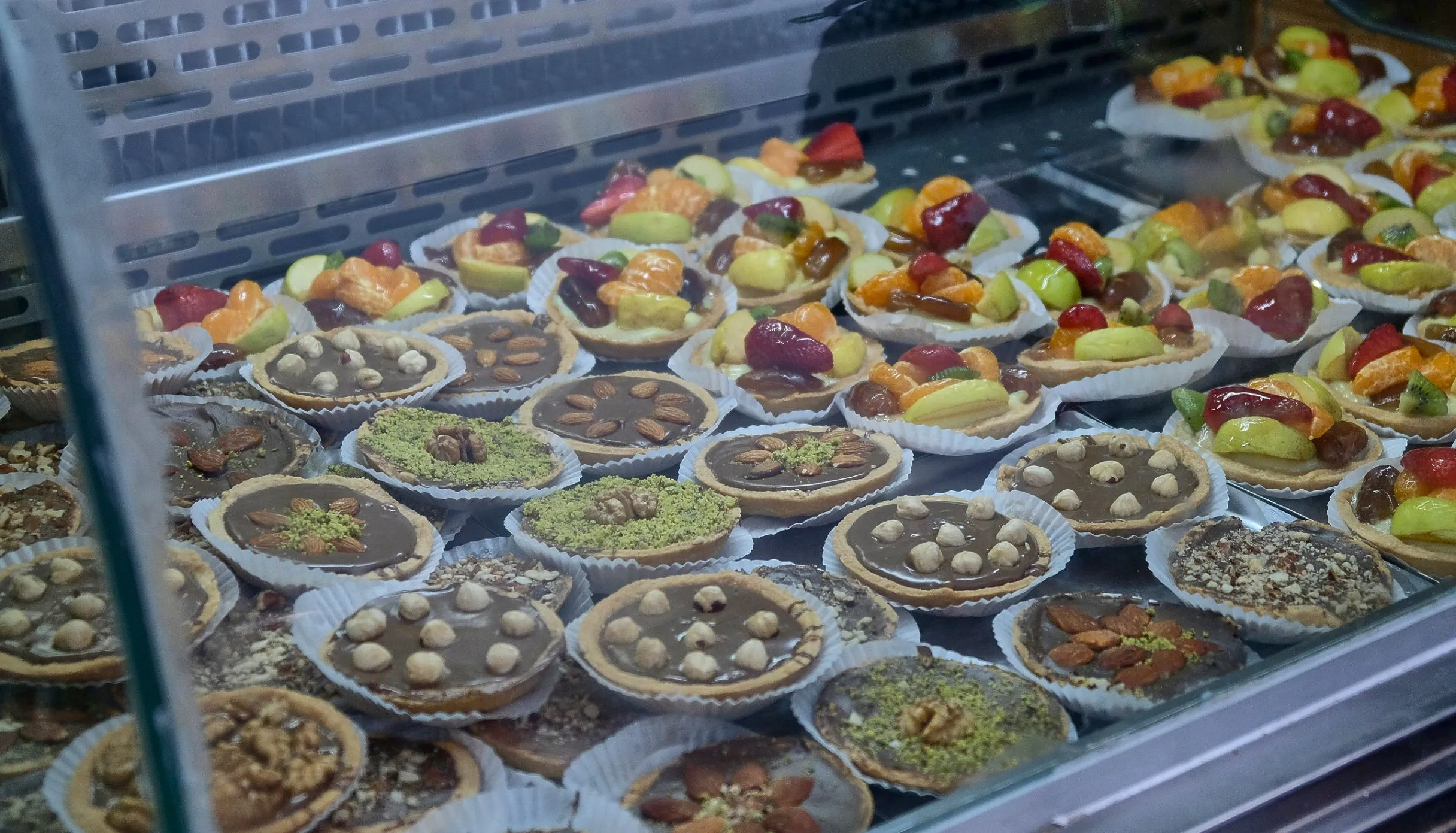
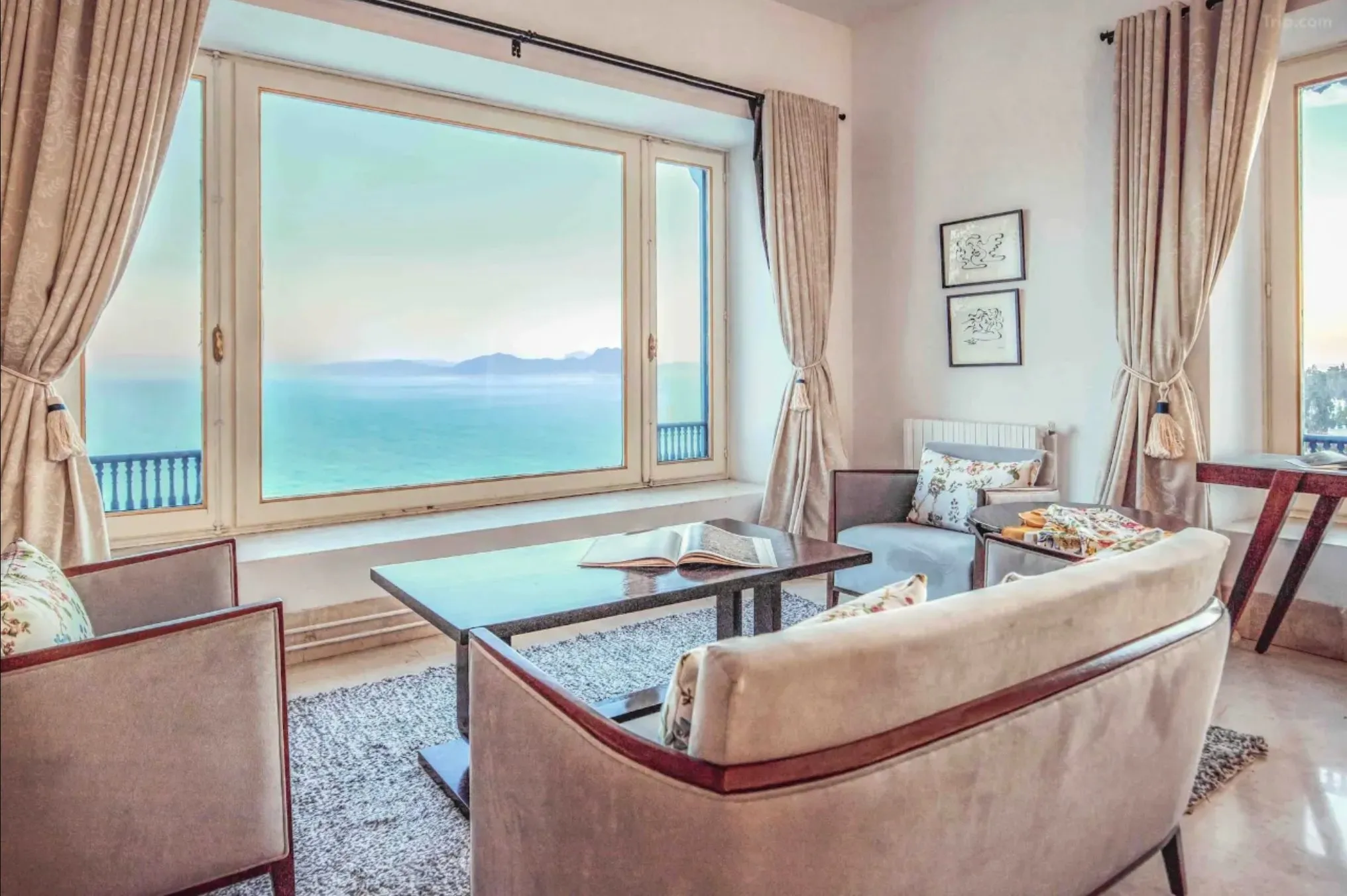
Tarte Aam Nasser — a popular pastry shop selling takeaway tartlets with various fillings (nuts, fruit, chocolate, and more).
Where to Stay
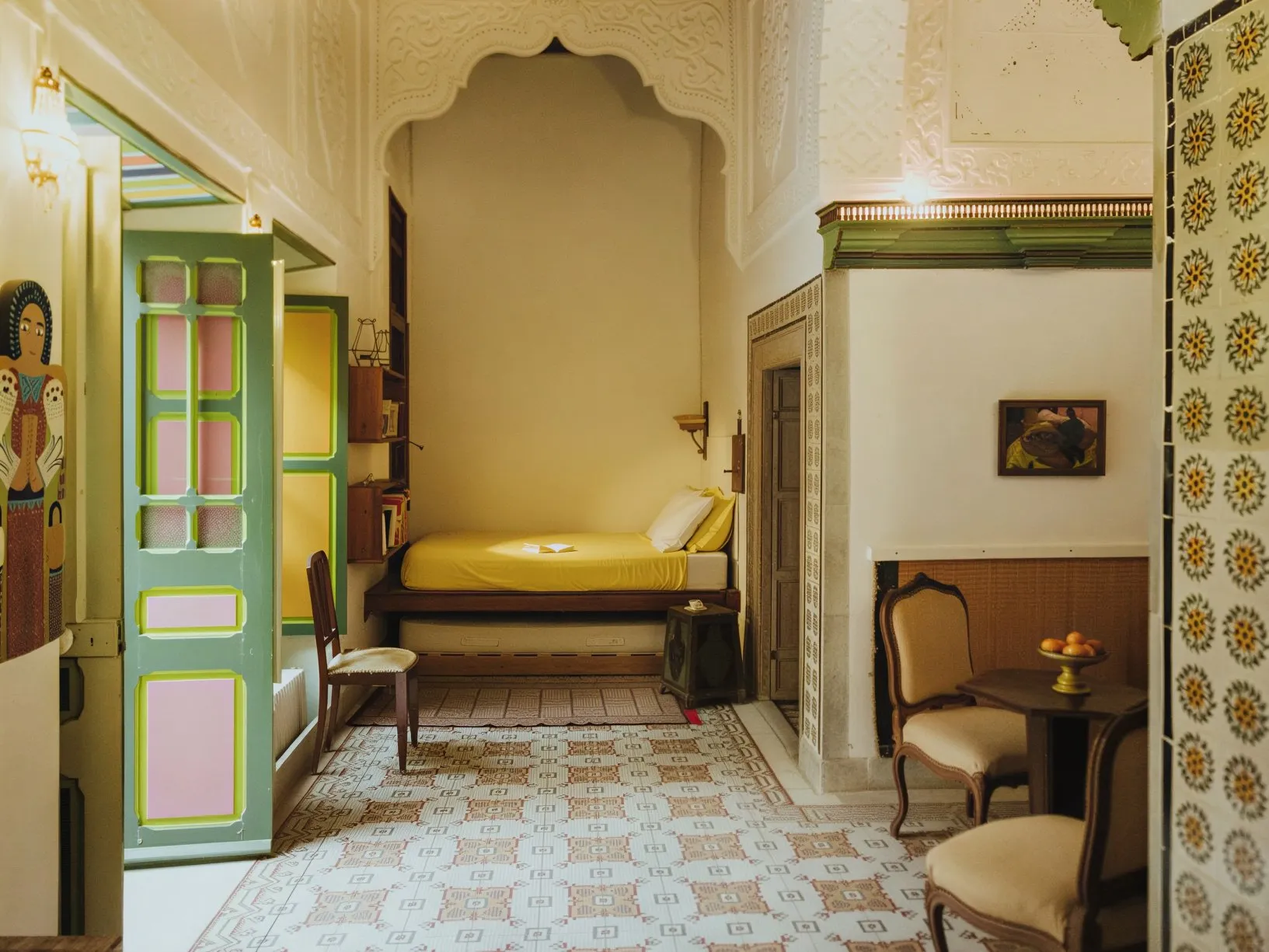
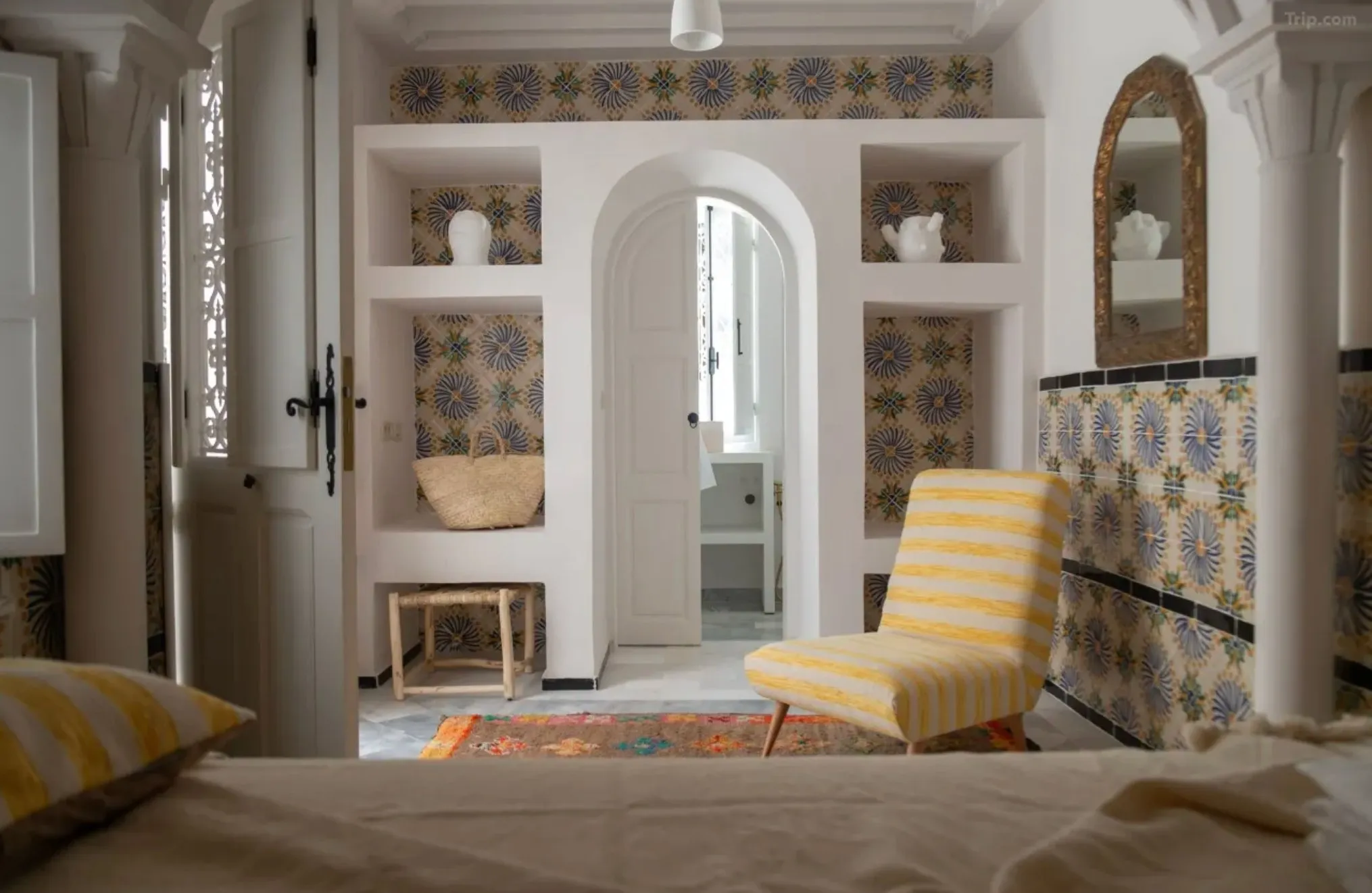
There are not that many hotels inside the medina in historic buildings, which might seem surprising. Here are a couple of good guesthouses set in mansions richly decorated with tiles, stained glass, and other architectural details: La Chambre Bleue and Dar Ben Gacem. The first hotel offers rooms that include not just a bedroom but also a large living area with sofas and a work desk. It is priced accordingly — 330 dinars (112 USD) compared to 270 (91.7 USD) at Dar Ben Gacem.
The hotel Royal Victoria sits on the boundary between the medina and the colonial city. The grand Moorish-style building was once home to the British Embassy. A night here starts from 270 dinars (91.7 USD).
Most hotels are concentrated in the colonial part of the city — the choice ranges from very cheap hotels catering to local traders all the way up to chain properties like the Radisson.
Carlton — small but stylish rooms, from 200 dinars (67.9 USD).
El Mouradi Hotel Africa — clean and spacious rooms with a convenient work desk, set in a rather unattractive modern building, from 260 dinars (88.3 USD).
Metropole Residence — seemingly the best value-for-money hotel in the city center, from 150 dinars (50.9 USD) per night.
Radisson City Center — stylish rooms in black and white tones, an excellent location right in the heart of the city, and all the usual perks of a chain hotel — pool, gym. From 300 dinars (101.8 USD) per night.
Tiba — understated design typical of a three-star chain hotel, with breakfast included in the rate, from 200 dinars (67.9 USD).
Villa Belvedere — a genuine villa with its own courtyard and rooms furnished with antique pieces, put together with care and taste. Rooms with breakfast start from 230 dinars (78.1 USD).
Public transport
Looking at a map of Tunis's public transport, things seem not too bad — several tram lines (for some reason they call them the metro), a commuter rail line (TGM) running to La Marsa, and several suburban lines. There is also a bus network.
However, rail services are highly unpredictable. You can board a tram at the terminus and wait half an hour for it to depart. In the evening, intervals between TGM trains can stretch to an hour and a half. So it's best not to rely too heavily on public transport.
A fare costs 0.5–1.5 dinars (0.17 USD–0.51 USD) depending on the distance and carriage class. For rail services, tickets must be purchased at stations; for buses, from the driver. Cash only.
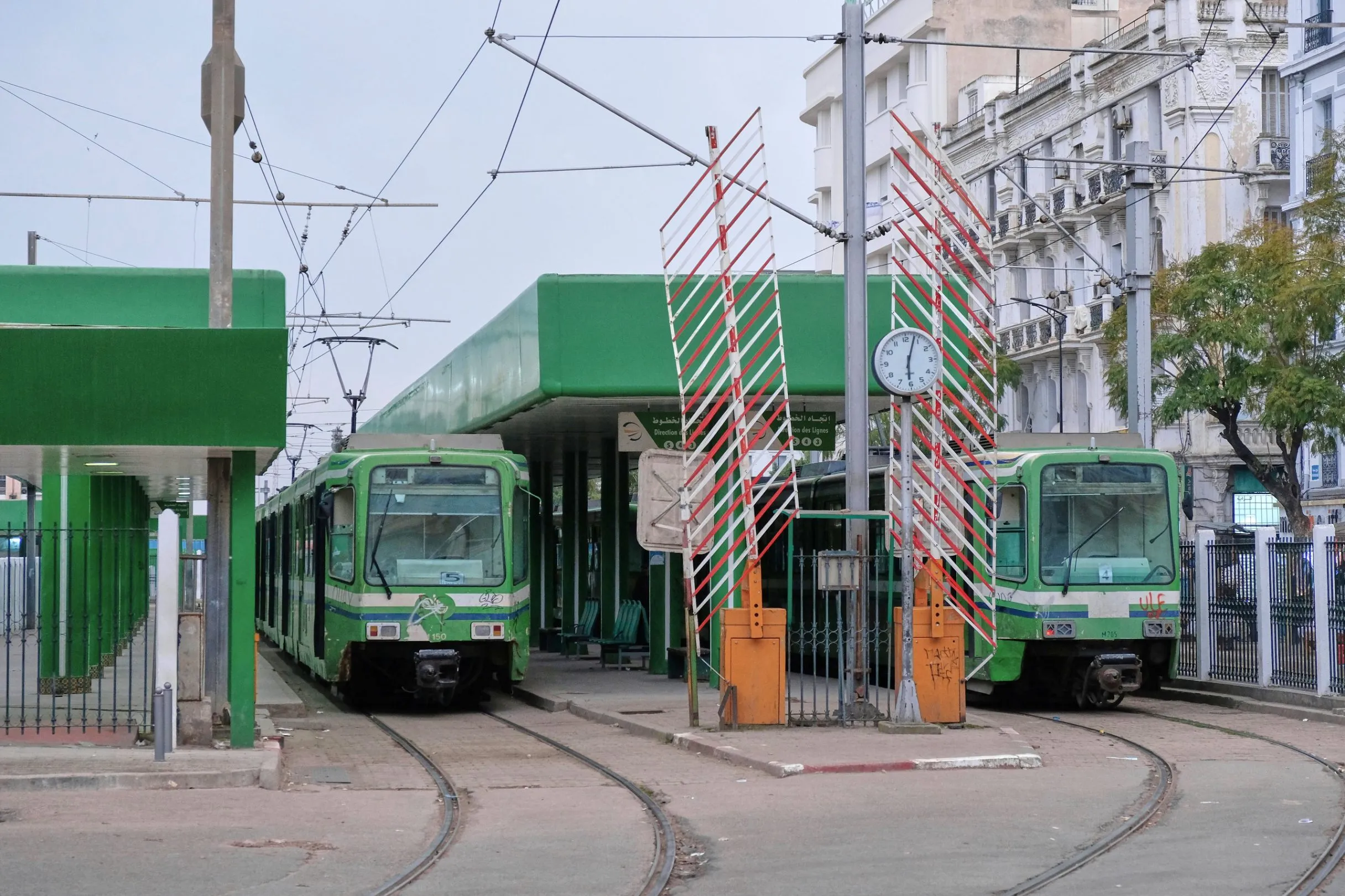
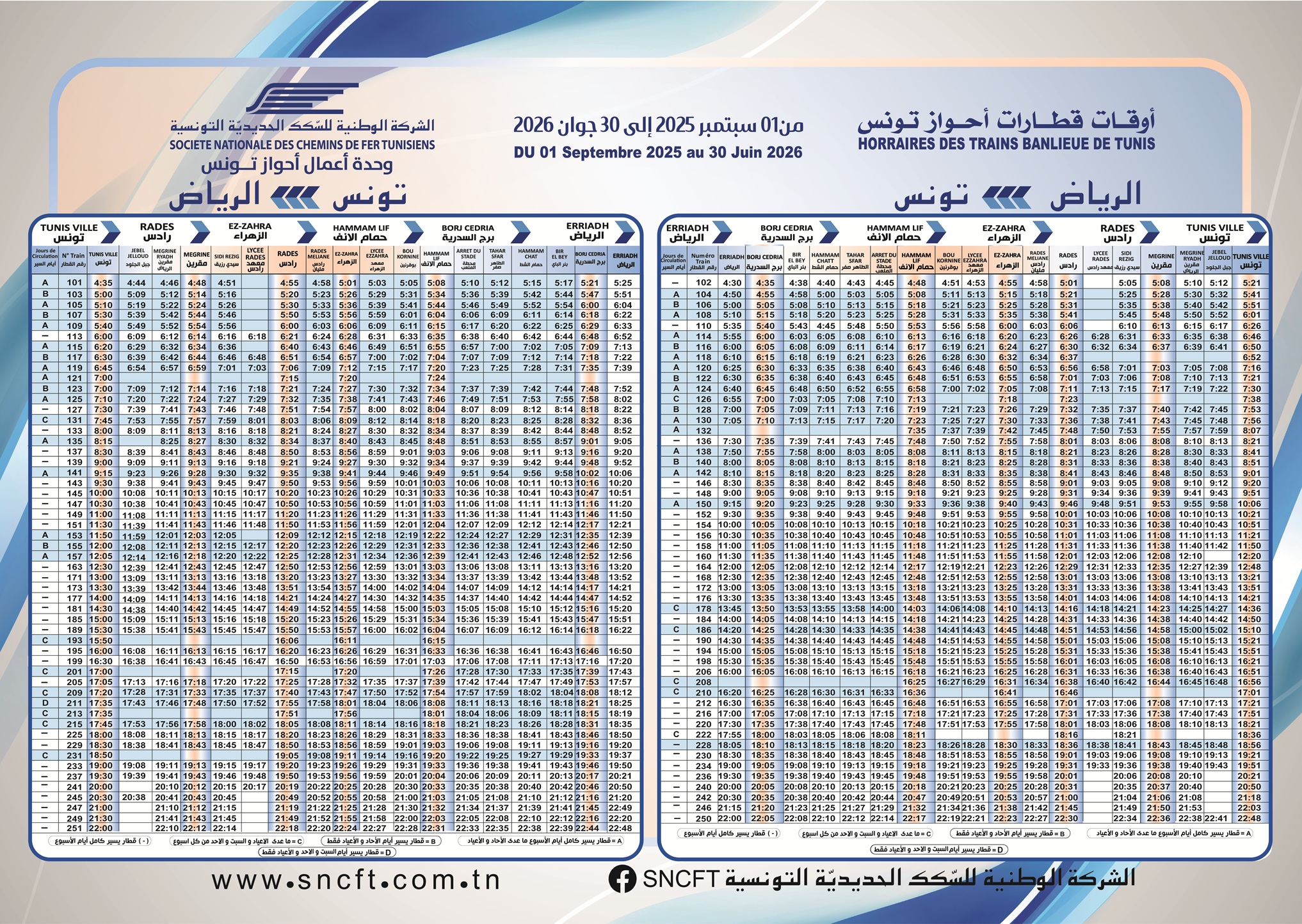
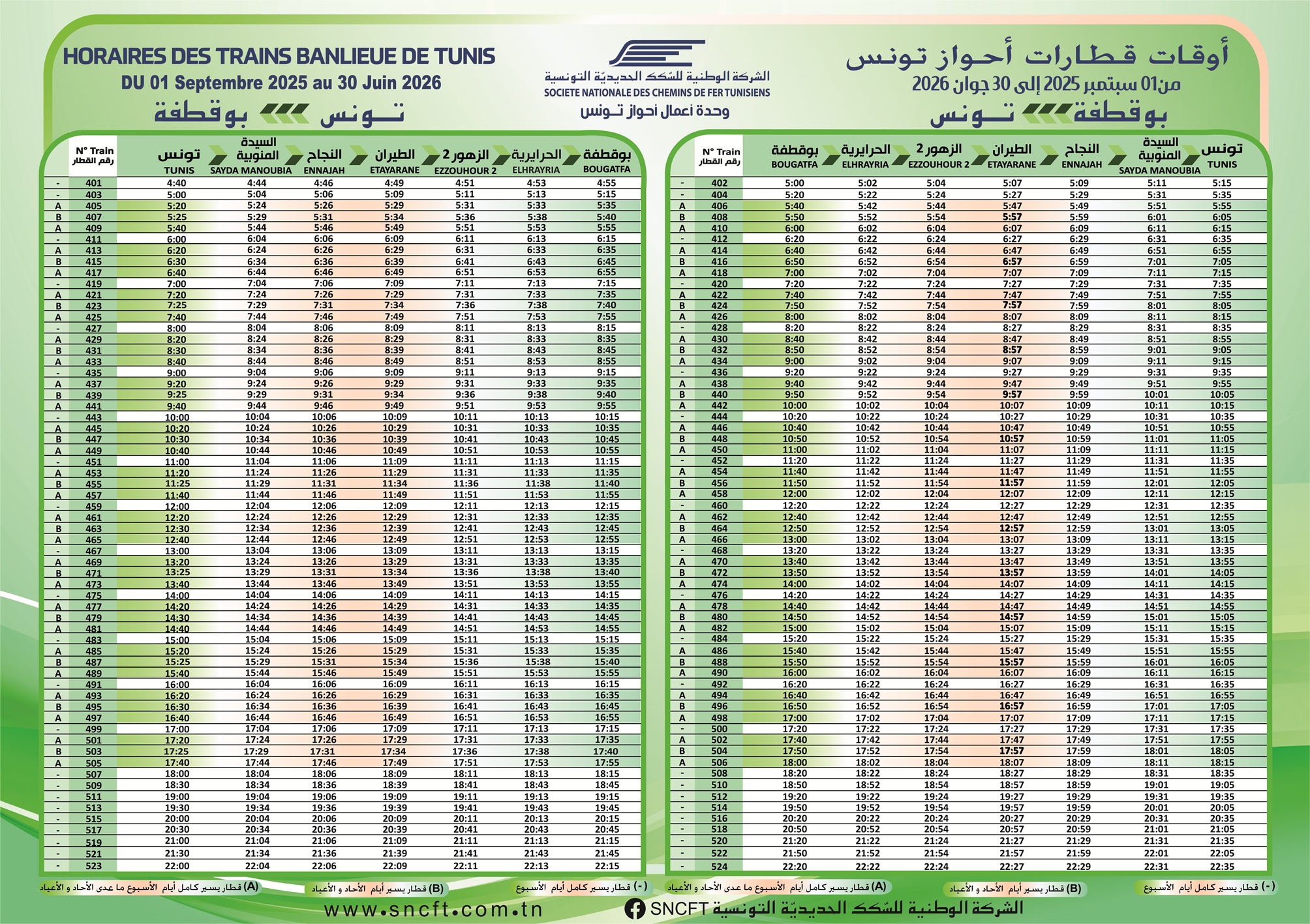
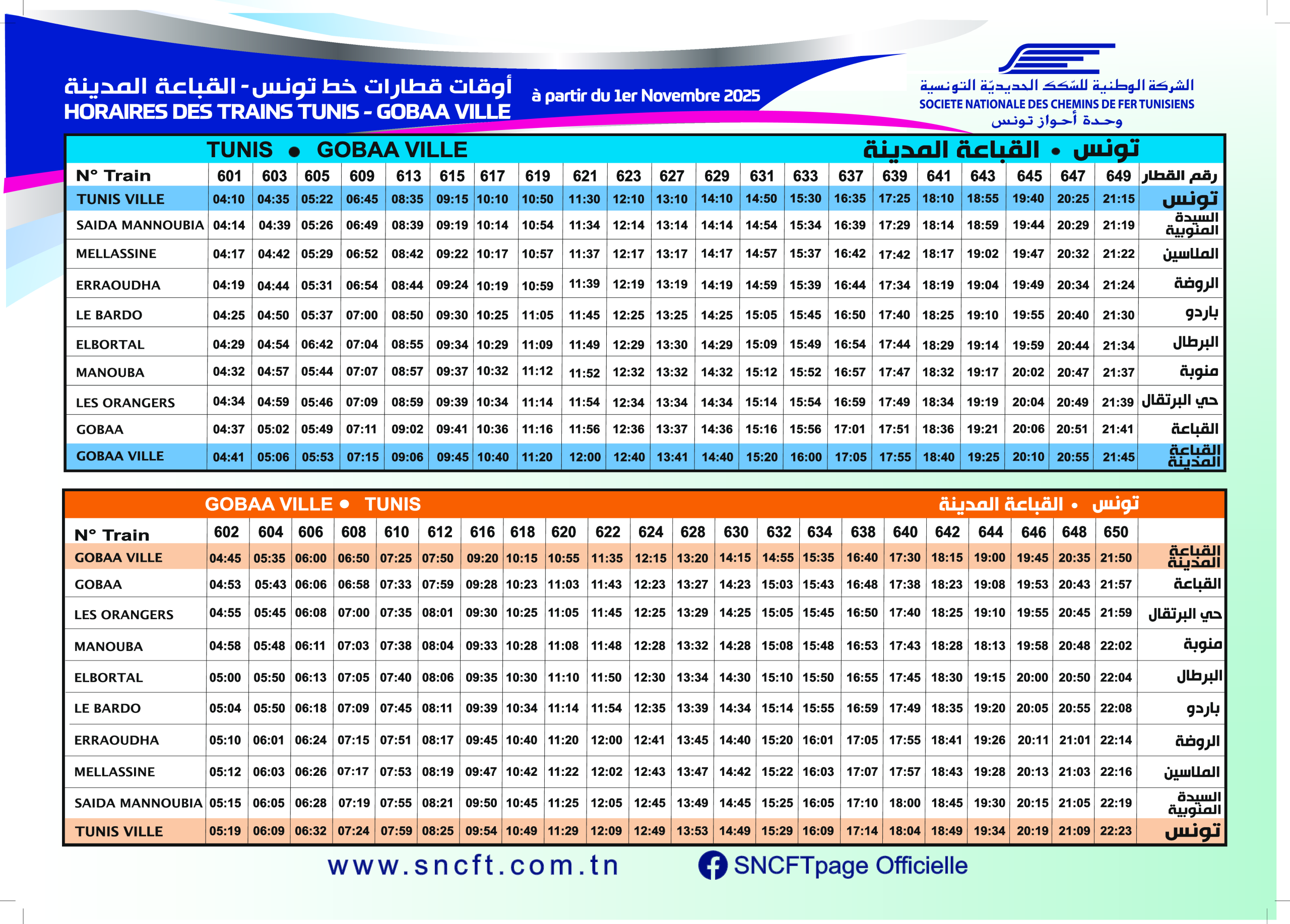
There are also three suburban rail lines from Tunis to Erriadh, Bougatfa, Gobaa City. Trains run from early morning until late evening every 10–30 minutes.
A bus to Tunis-Carthage Airport runs from the Tunis Marine stop between 06:00 and 20:30. When calling an InDrive taxi from the airport, a surcharge of 4.5 dinars (1.53 USD) is added to your fare. Check what InDrive charges and offer the same amount to the drivers waiting at the airport. It will be faster and cheaper. Technically, those same drivers are supposed to use the meter rather than negotiate a price — but at the airport, insisting on the meter can be difficult. In the city, drivers usually turn it on without needing to be asked.
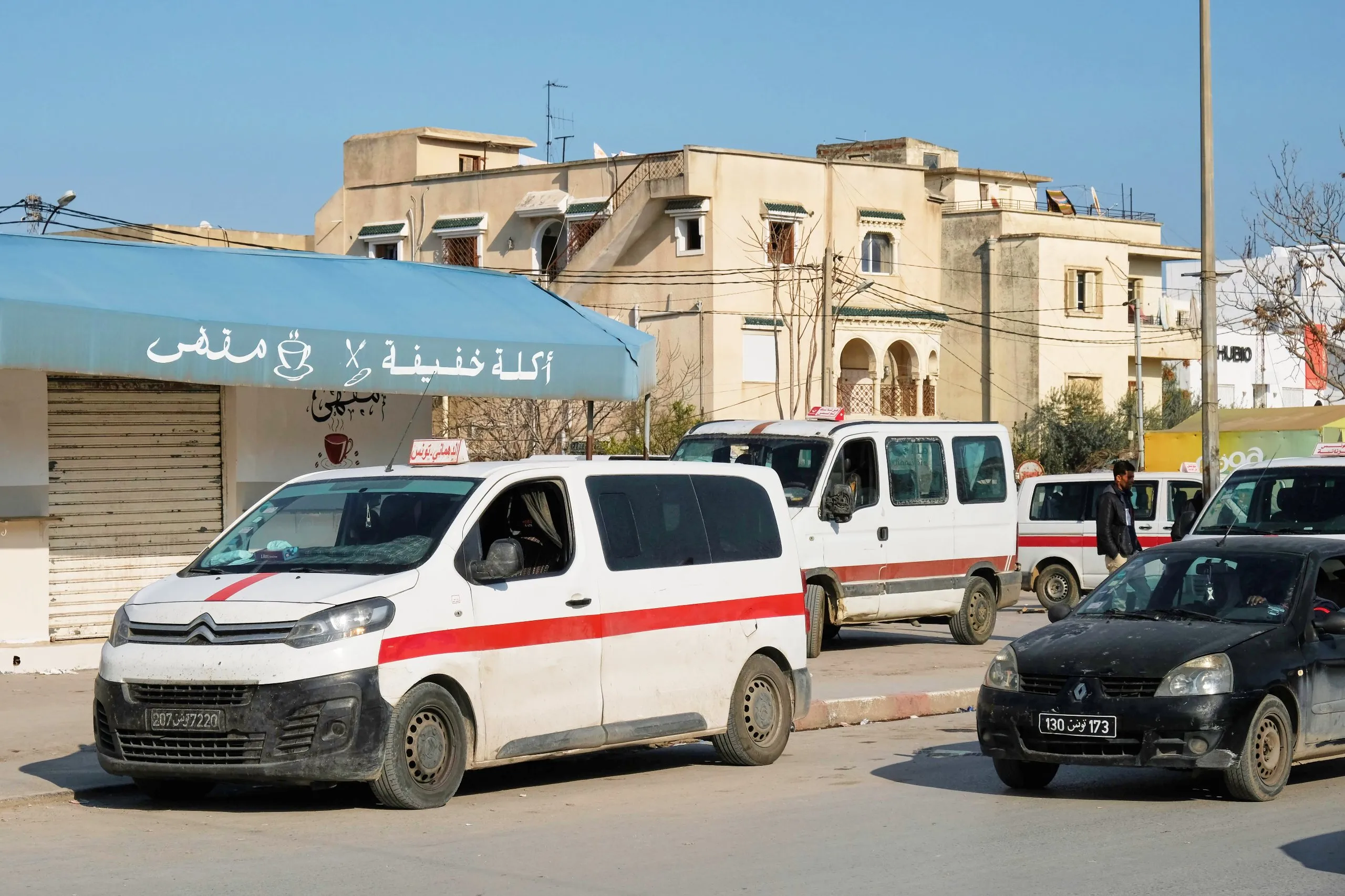
Intercity buses. From the Bab Saadoun bus station, louages (shared minibuses) depart for northern cities. From the Bab Alioua station, services run to Hammamet, and from Moncef Bey to the southeast. Minibuses leave when full and operate from six in the morning until 19:00–20:00.
Football
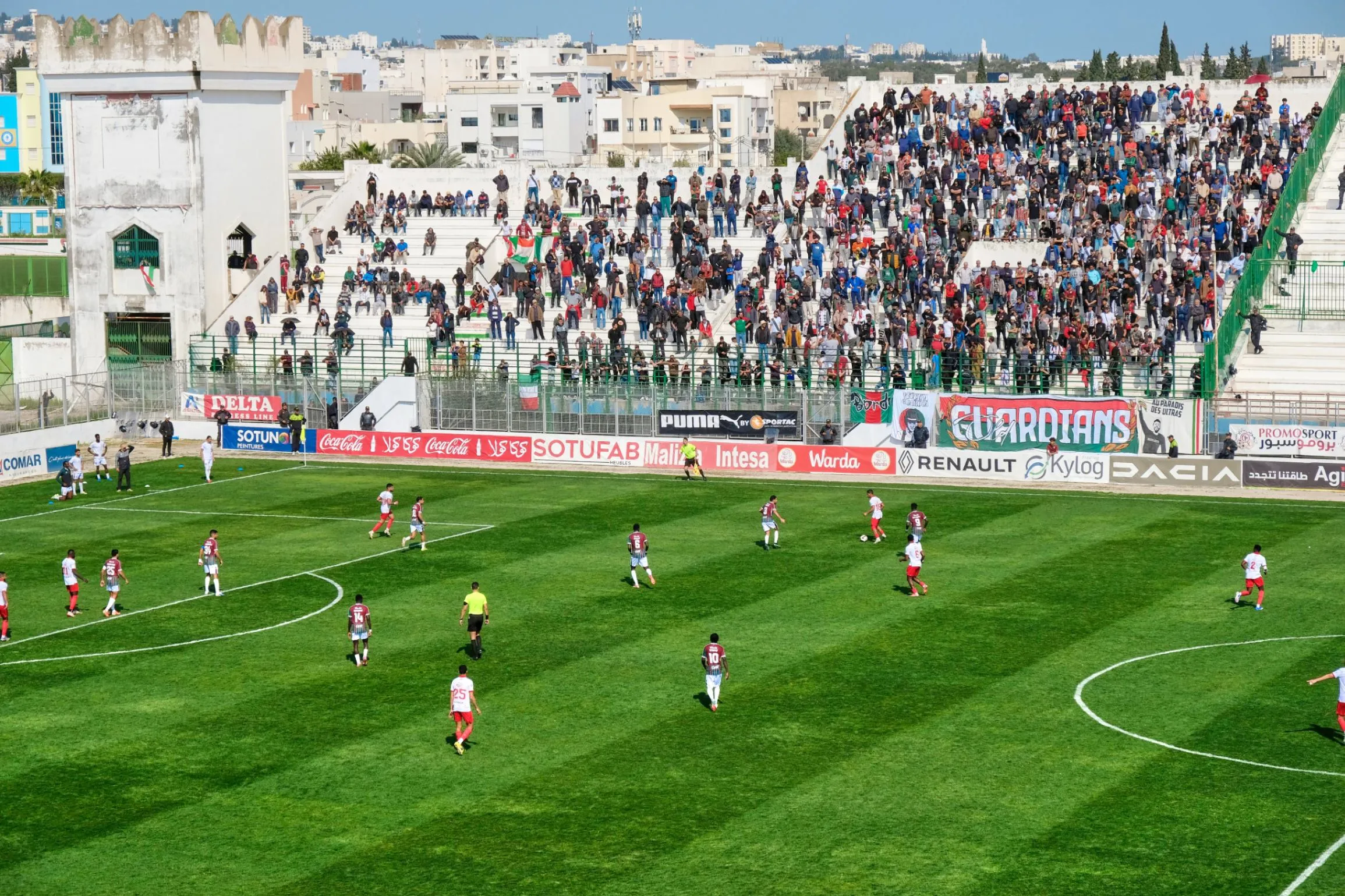
Football is hugely popular in Tunisia, and cities are covered in fan graffiti. The capital Tunis is home to several football clubs. Stade Tunisien plays its home matches in the Le Bardo neighbourhood. Tickets must be bought at the merchandise store near the stadium on Marrakesh Street. Espérance Sportive de Tunis is the most popular club in the country. They play at the stadium in the city of Radès, and tickets are sold at the fan shop in Tunis.
La Marsa and Sidi Bou Said — coastal suburbs of Tunis
La Marsa
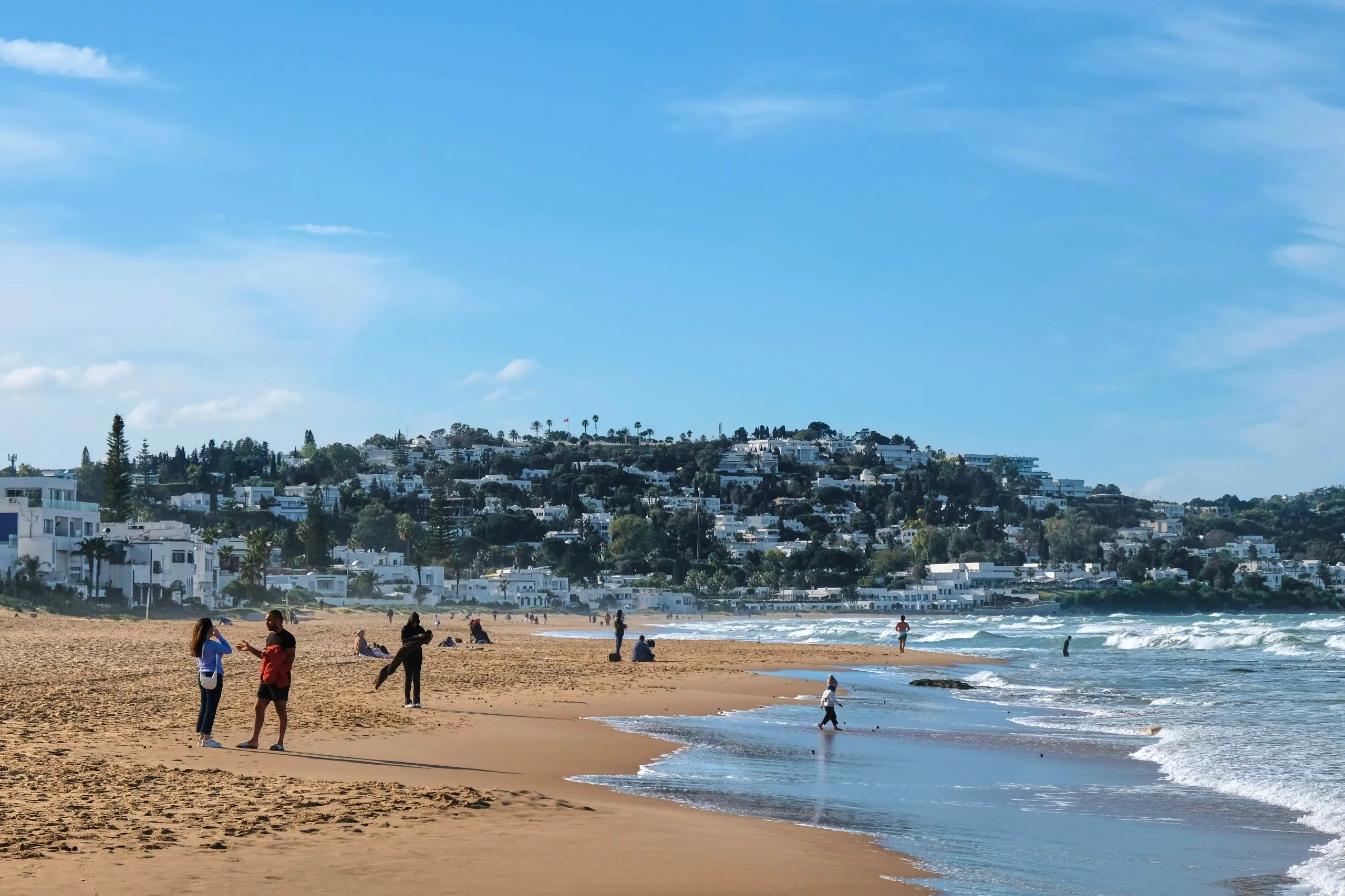
A city of a hundred thousand people, 20 kilometers from the center of Tunis. La Marsa stretches along the coast for three and a half kilometers, and there is a good sandy beach along its entire length. Many expats and wealthy Tunisians live here. A small number of historic buildings have survived — villas, public buildings such as a cinema and a synagogue. But for the most part the city is made up of standard low-rise apartment buildings and private villas. Still, it's a pleasant place to walk — lots of trees, wide pavements, and few cars.
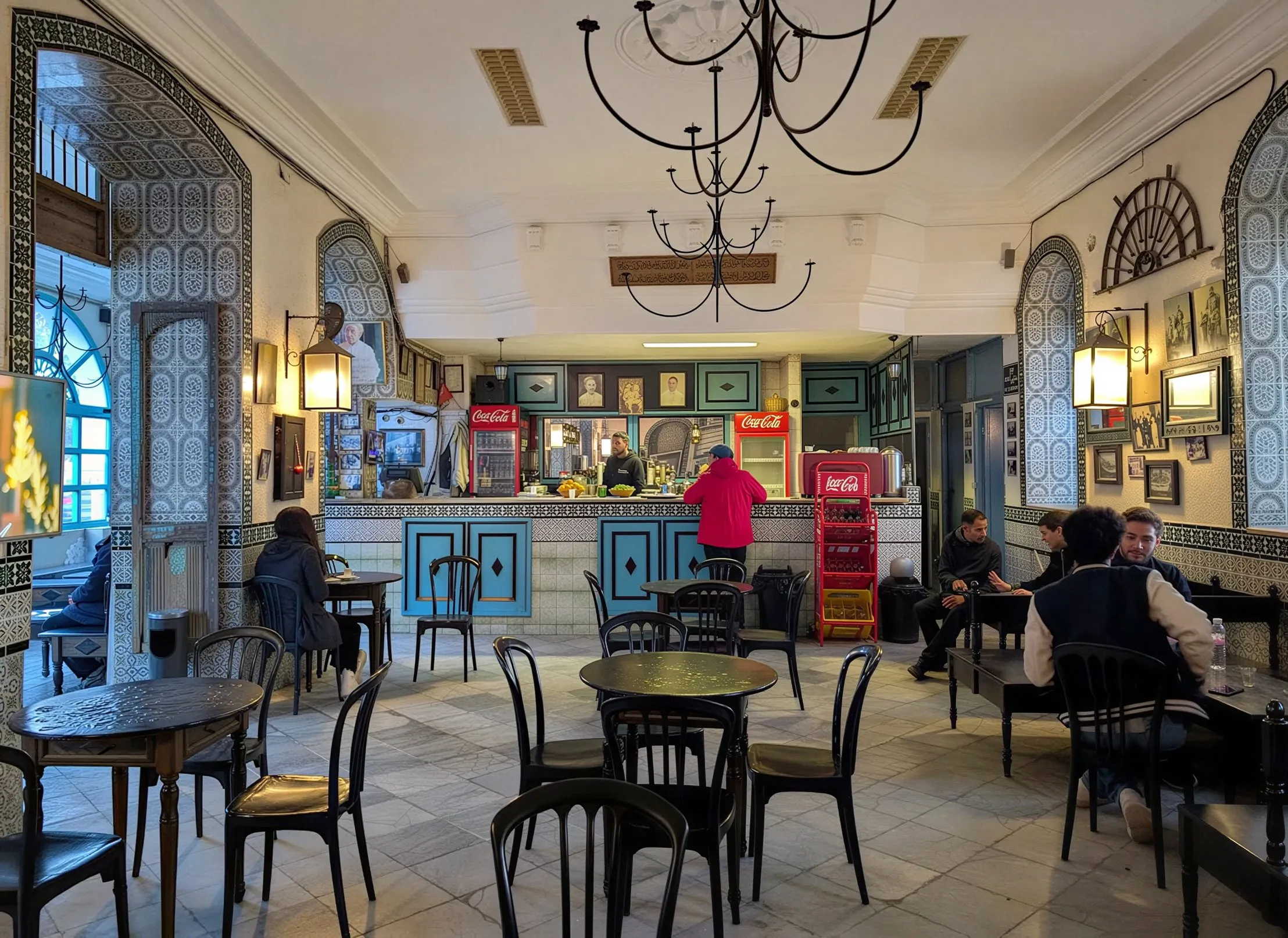
Unlike Tunis and other cities in the country, La Marsa has plenty of cafés, and many of them are, if not pretentious, then at least well-designed with menus that go beyond the obvious.
Bondin — an old traditional coffeehouse, always packed with people.
Boulevard des Capucines — a pretty café on a quiet street with outdoor seating. Local bohemians linger over breakfast here and sip coffee with croissants. Breakfast for one will cost 20–40 dinars (6.79 USD–13.6 USD).
Grignotine — another spot for the bohemian crowd, though of the intellectual rather than glamorous variety. Books, strong coffee, and a heavy smoky atmosphere. There is, however, a cozy green outdoor seating area. The breakfast menu is fairly extensive. A word of warning: the portions are very large.
Haouas — another classic spot for tea and coffee. Smoky, crowded, and lively — those who enjoy that kind of vibe will love it.
Lou — a trendy takeaway ice cream spot.
Panini — a local take on Baskin-Robbins.
Vero — specialty coffee and a small rack of clothing and jewelry by local designers. Don't expect too much from the black coffee — better to order something with milk.
Supersouk — a shop selling clothing, jewelry, and homeware by Tunisian designers.
Selective Concept — not just a shop but a clothing brand. Their products can also be found at Supersouk and the Vero coffee shop.
If the bustling atmosphere of an Eastern city doesn't appeal to you, La Marsa is the place to stay. You can visit the Tunis medina as a day trip. The town is small, so wherever you stay, everything will be within easy reach. The Zephyr shopping center is considered the hub and heart of all the interesting action. Some apartments on the front row look directly out onto the beach. In the off-season that's definitely a plus, though in summer it's hard to say.
Dar El Marsa — no-frills rooms, but with a spectacular sea view and spa facilities, from 500 dinars (169.7 USD).
L'Hôtel Particulier — a touch of old-money style, with large rooms and extensive green grounds. From 450 dinars (152.8 USD) per night.
Sidi Bou Said
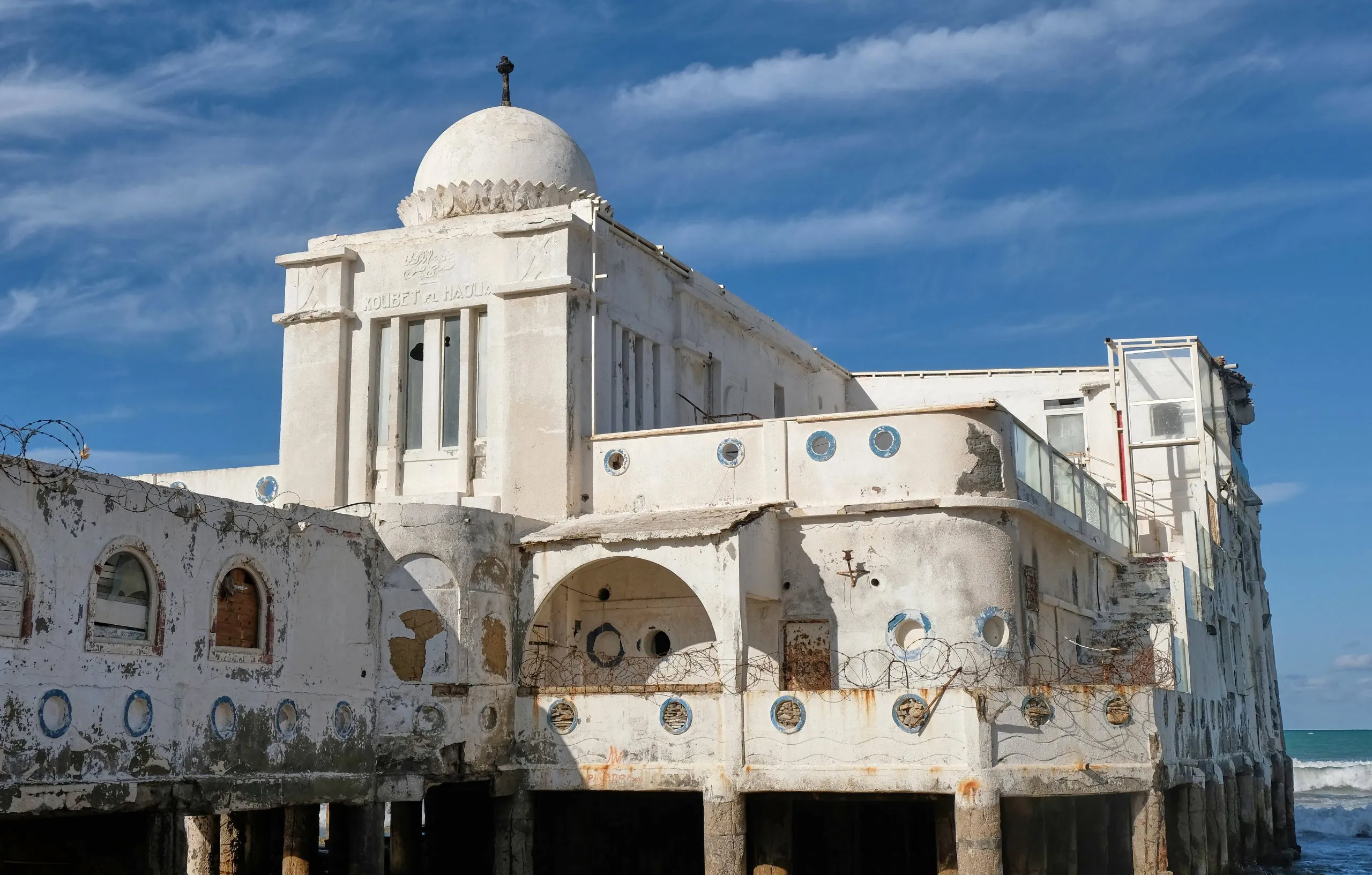
Sidi Bou Said is a tiny historic town between La Marsa and Tunis. Every tourist visiting Tunis makes a point of coming here. But that's no reason to skip it. You just need to arrive a couple of hours before sunset, when the tour buses have left, the souvenir sellers have packed up, and only locals remain — strolling unhurriedly through the winding streets and watching the beautiful sunset.
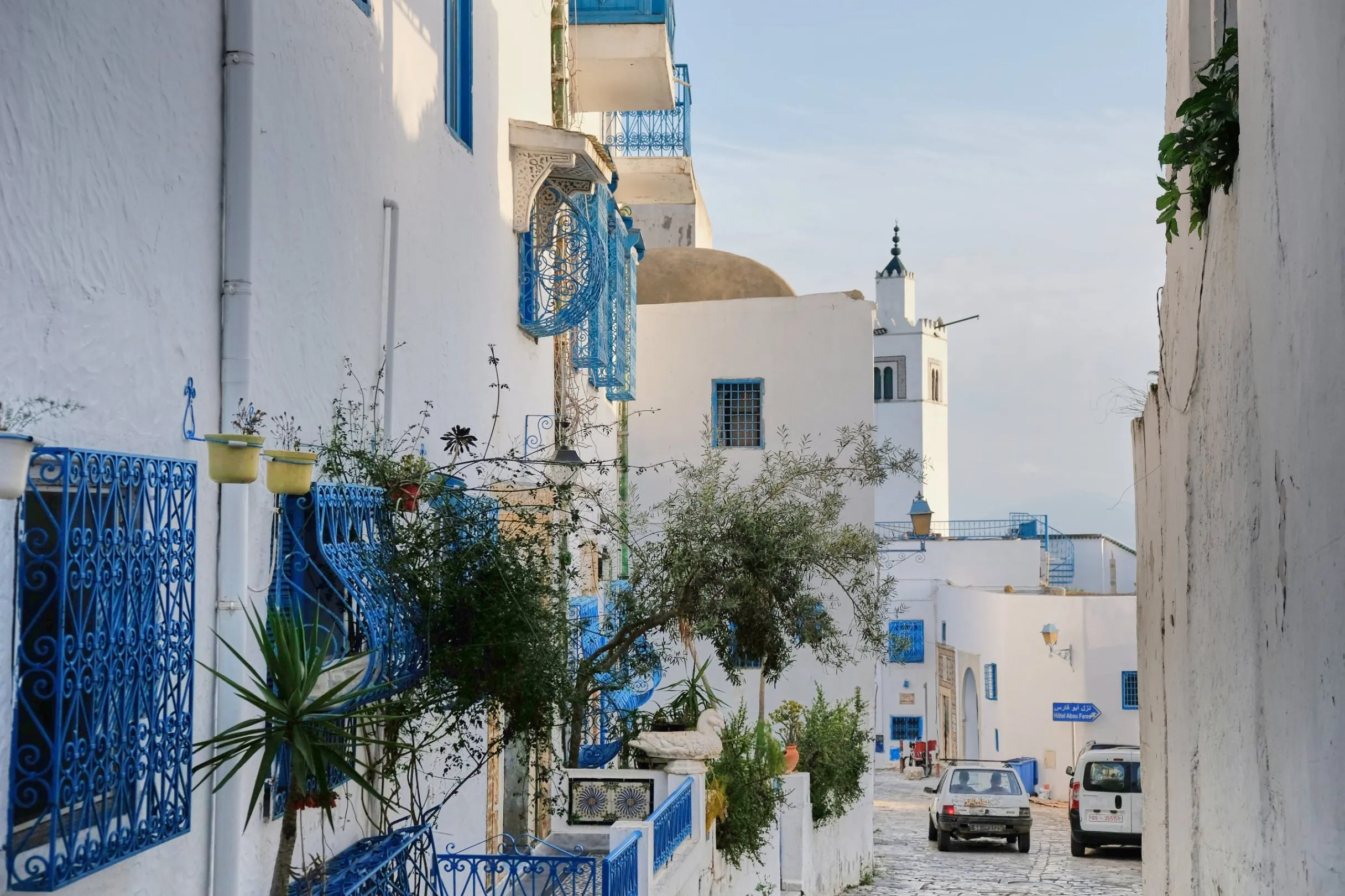
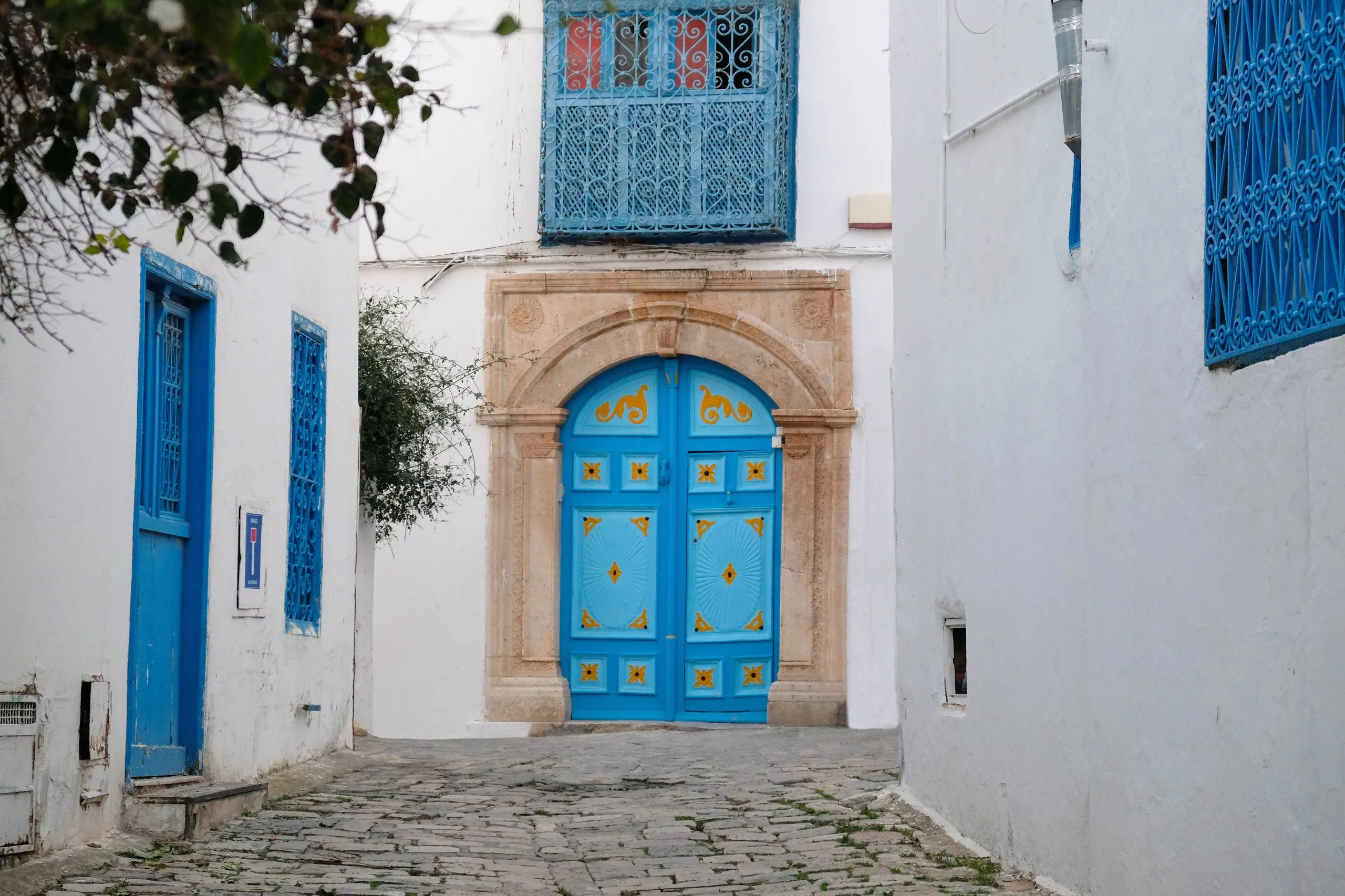
The historic part of town is tiny, made up of a few elongated streets connected by small alleyways and staircases. The entire town has preserved its historic appearance. Sidi Bou Said sits on a hilltop, and there are several scenic viewpoints — one and two. You can head down to the beach for a swim — it's small but charming.
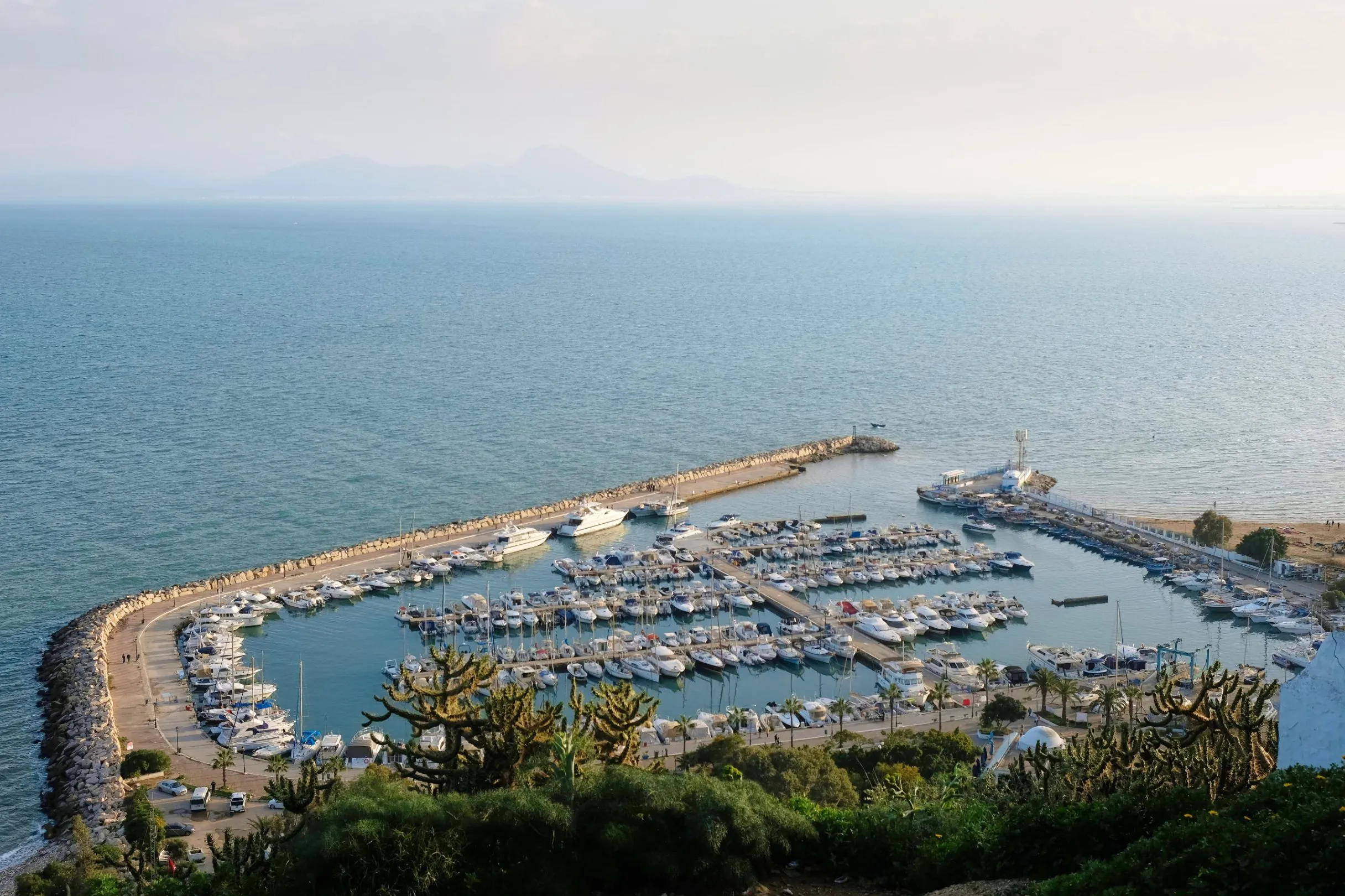
Just outside the medina is a specialty coffee shop, Ben Rahim — the best and only one in town. They do an excellent job with both milk-based drinks and black coffee, as well as desserts. Ben Rahim roasts its own beans, and you can buy some to take home. Literally next door to the coffee shop is a pastry shop selling Eastern sweets, Madame Hachicha. Across from the coffee shop is the local teahouse Hammadi. A perfect spot to enjoy a glass of mint tea in a characterful atmosphere alongside the locals.
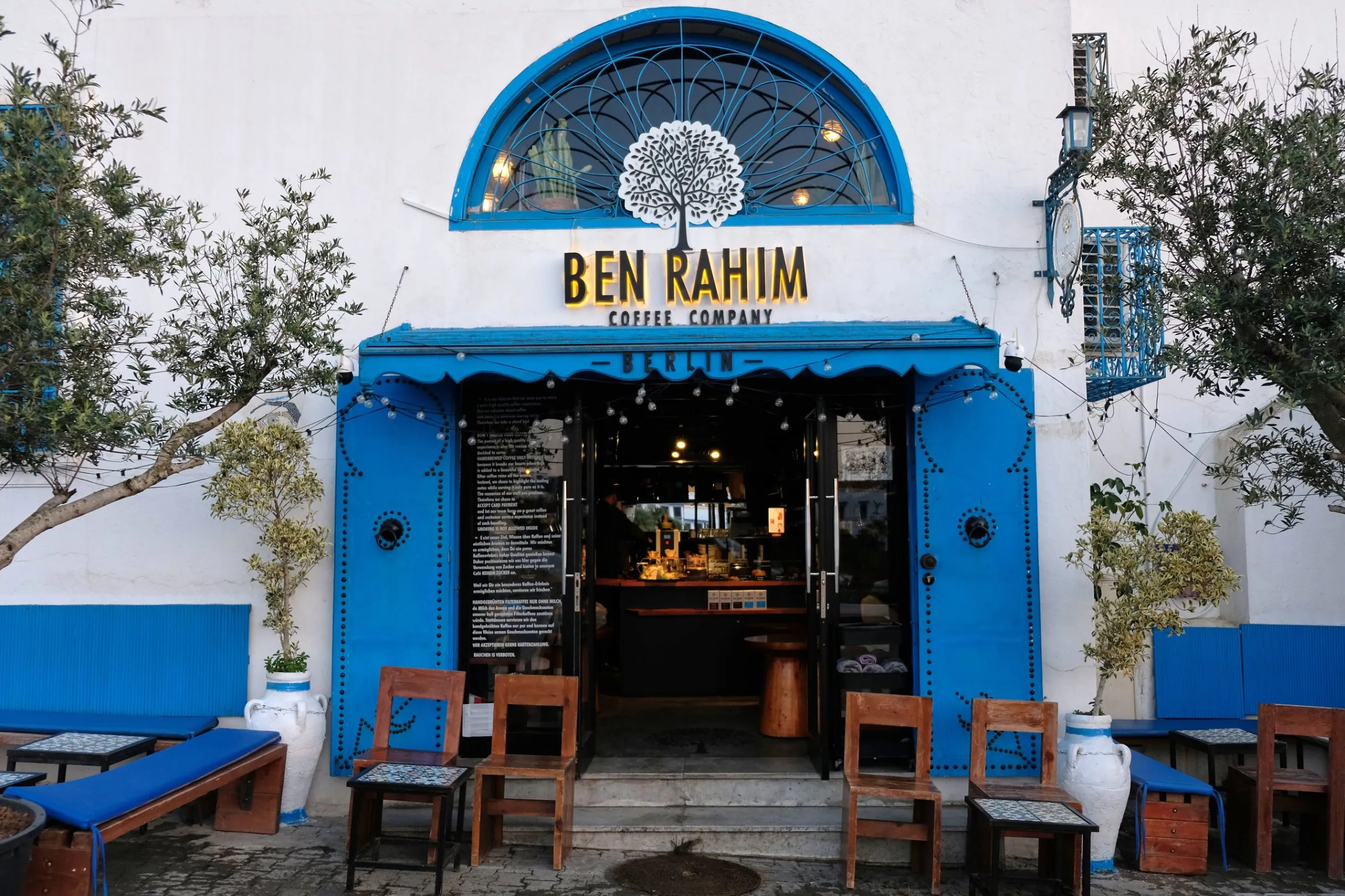
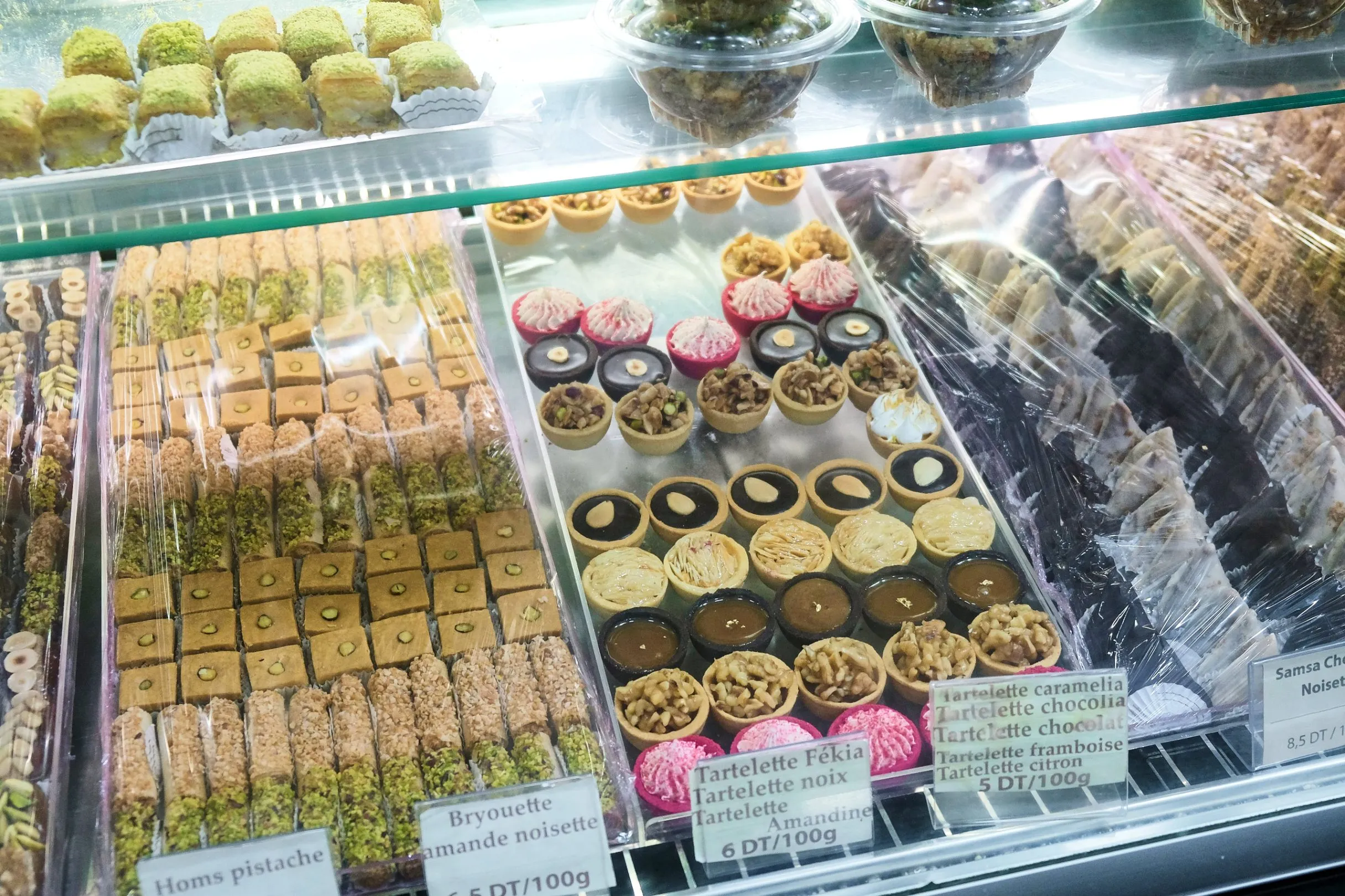
Many picturesque apartments are available to rent in Sidi Bou Said's historic buildings. Staying here for a long time wouldn't be the most convenient, but spending a couple of days in apartments with an Eastern feel, taking evening strolls to the viewpoints to watch the sunset — that's perfectly worthwhile.
Dar Said — Eastern luxury with tilework and enormous beds, from 650 dinars (220.7 USD) per room.
La Demeure — spacious, light-filled rooms and, as befits this town, with sea views, from 620 to 1,160 dinars (210.5 USD–393.8 USD) for two.
La Villa Bleue — a hotel in a historic building where every room has a sea view, from 580 dinars (196.9 USD) per night.
But for a far wider selection of picturesque apartments than you'll find on hotel booking sites, Airbnb is the place to look.
Getting there
A suburban electric railway line (TGM) runs from Tunis through Sidi Bou Said and La Marsa. The only catch is that trains run quite infrequently — gaps between services can stretch to an hour and a half, and there is no published timetable anywhere. The journey itself is leisurely, taking around 40–50 minutes to the terminus at Tunis Marine. So it's best not to rely too heavily on the train — if one shows up, great; if not, take a taxi.
Sousse, El Djem, Kairouan
If you want to see all three cities, the most convenient base is Monastir. From there you can easily make a day trip to Sousse, another day to Kairouan, a third to El Djem, and so on. Monastir is the destination of choice for all many package tourists.
Sousse — a UNESCO-listed medina and a city in decline
Once a thriving beach resort destination, Sousse is now in a somewhat run-down state. There are still large hotel complexes along the shoreline, including the Sousse Pearl Marriott Resort & Spa, but the city carries a distinct atmosphere of decay. Many buildings sit abandoned, including some very large ones, and good cafes are almost nowhere to be found.
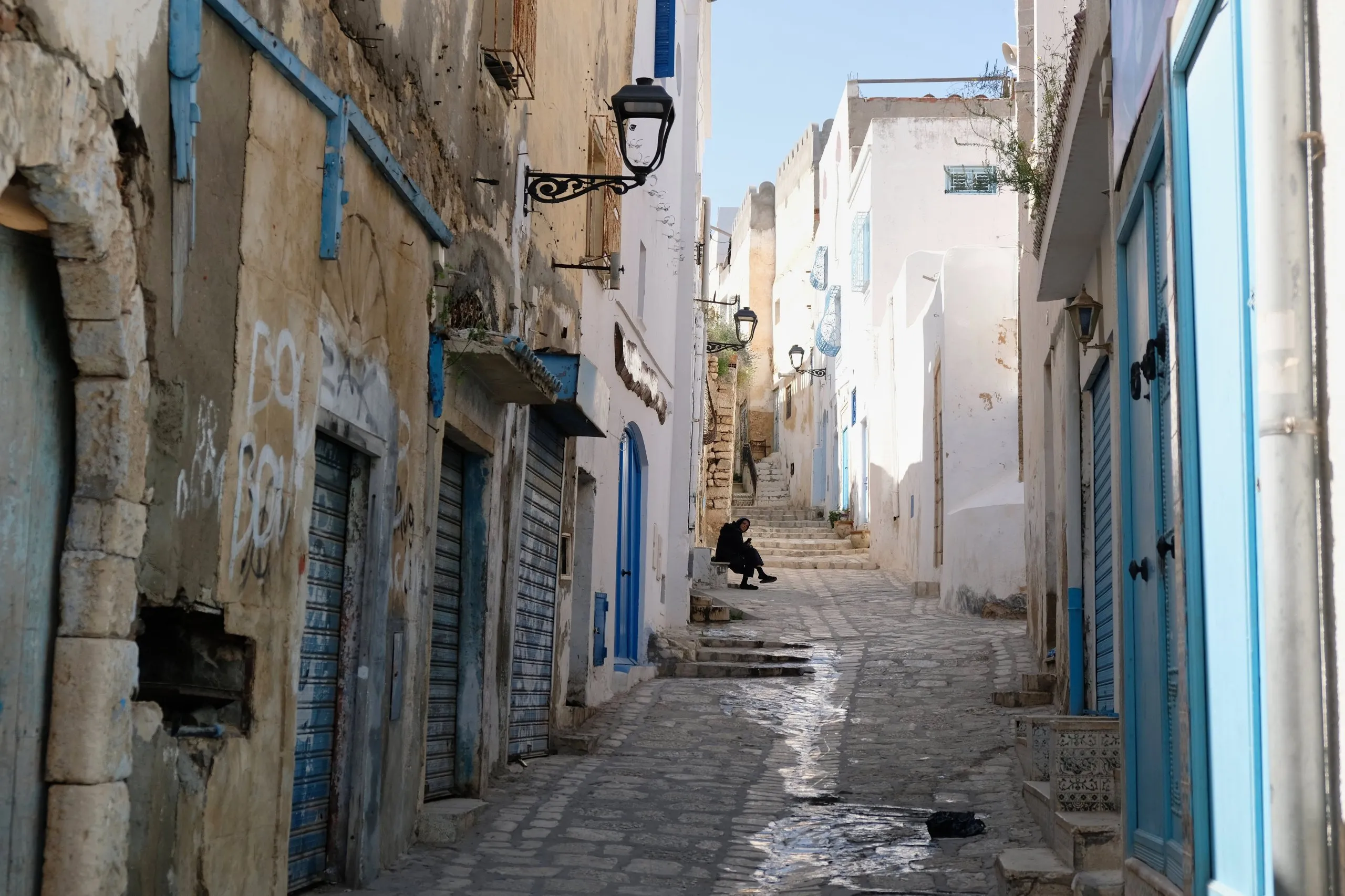
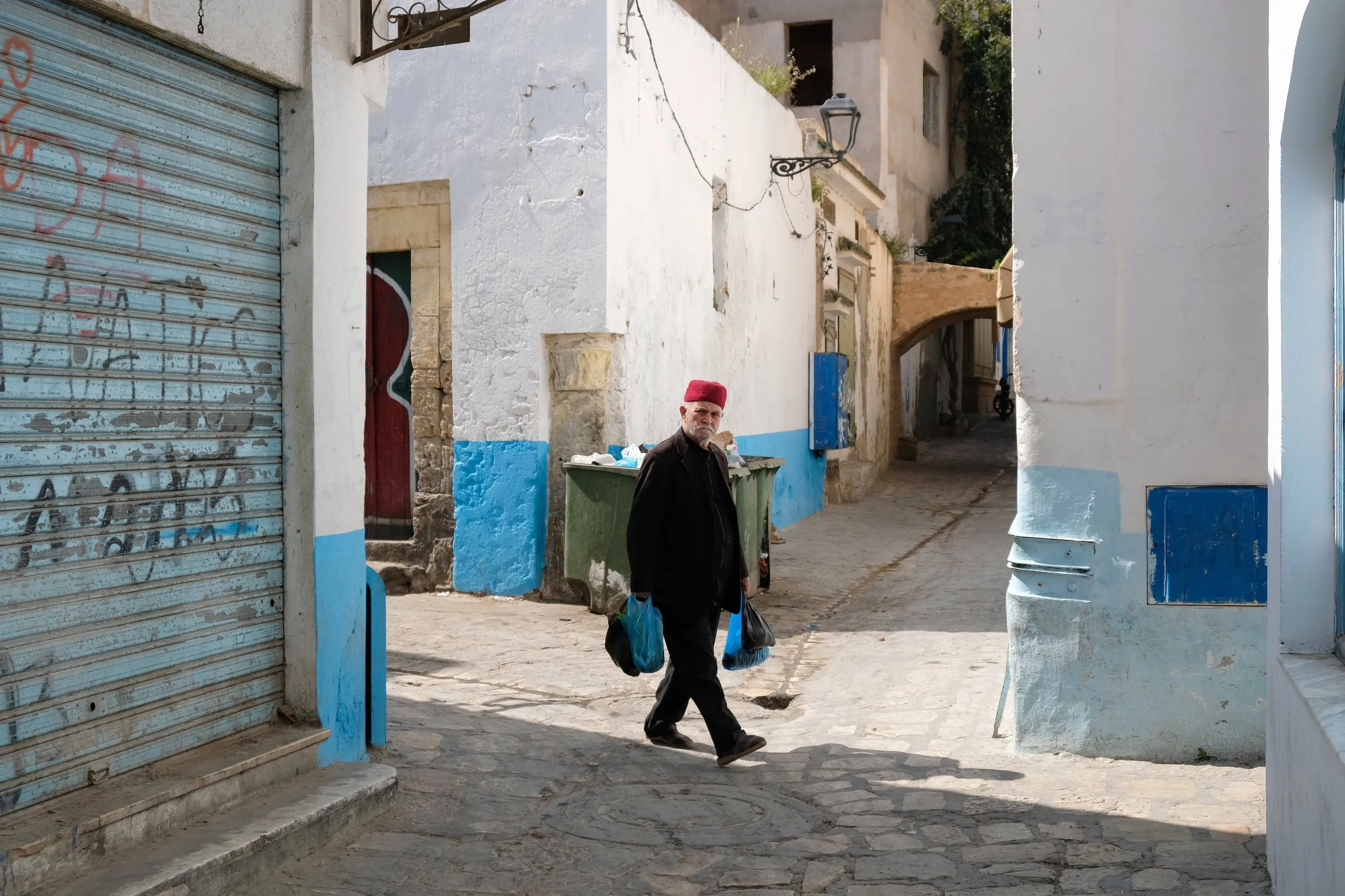
Most visitors come here primarily to see the medina, which is on the UNESCO World Heritage List. The medina in Sousse is small and fairly peaceful, as long as you avoid the market streets. Its main attraction is not the medina itself but the walls that surround it. These are genuinely impressive, so it is worth not only wandering through the winding alleyways but also walking around the outside of the medina.
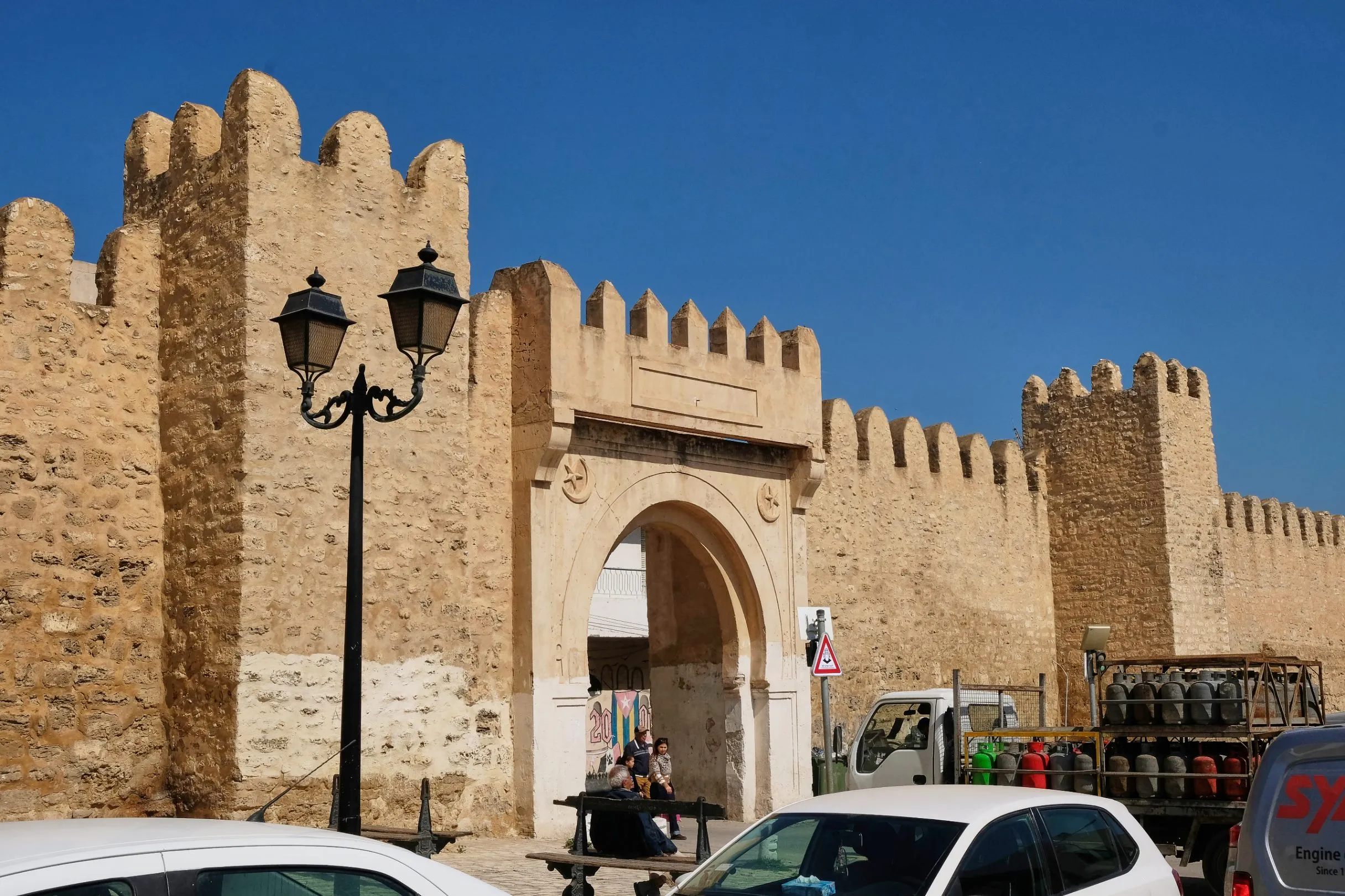
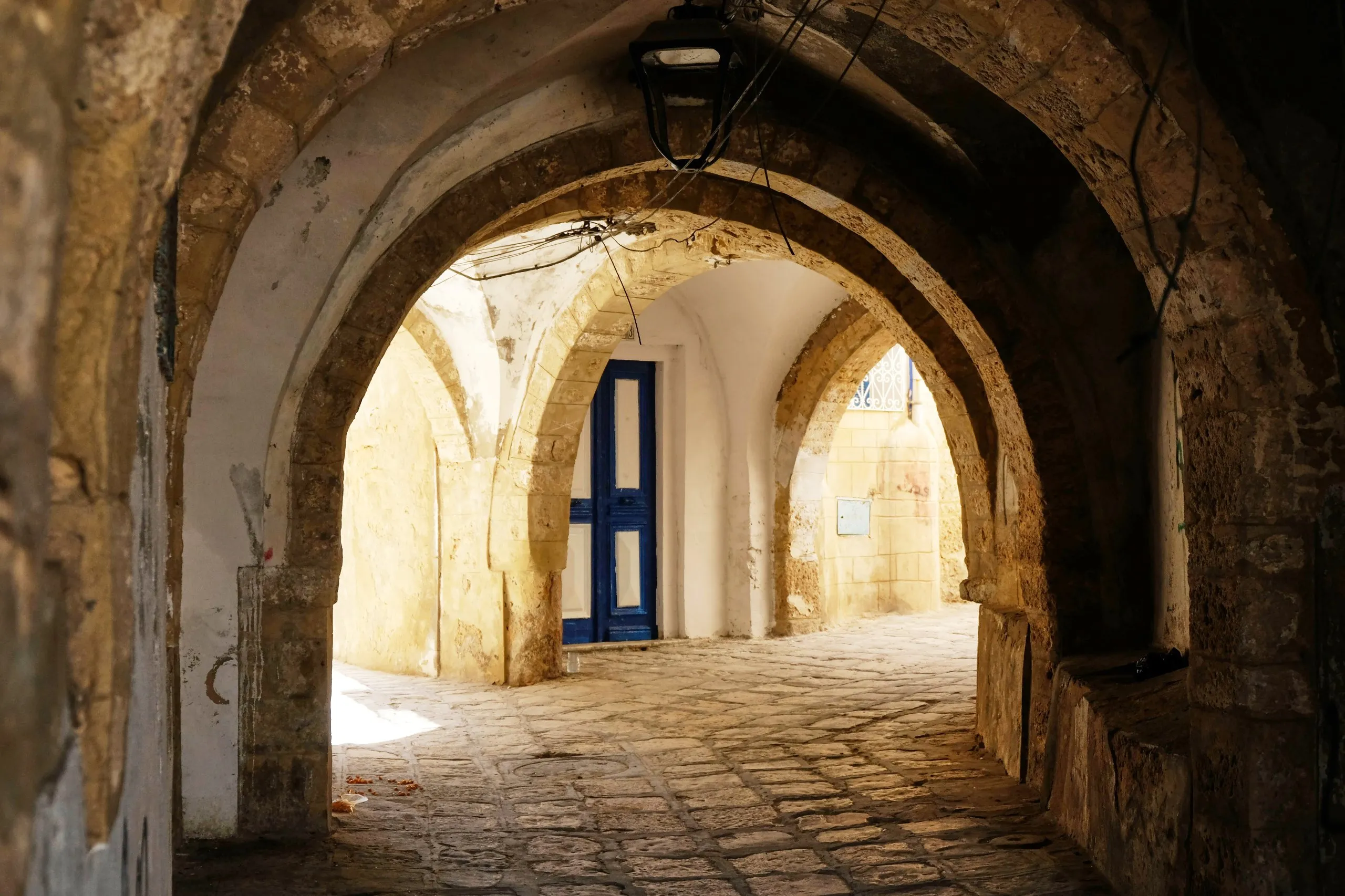
There is an archaeological museum and a fortress; admission costs ten dinars (3.39 USD). If you are not staying overnight in the city, three to four hours is plenty of time for everything.
A long sandy beach and promenade stretch along the entire city, becoming especially lively in the evening. Locals and street food vendors alike spill out onto it — popcorn, cotton candy, corn. But the most interesting item on offer is classic green tea with mint, to which pine nuts are added. It sounds and looks unusual, but in practice it turns out to be a surprisingly tasty combination.
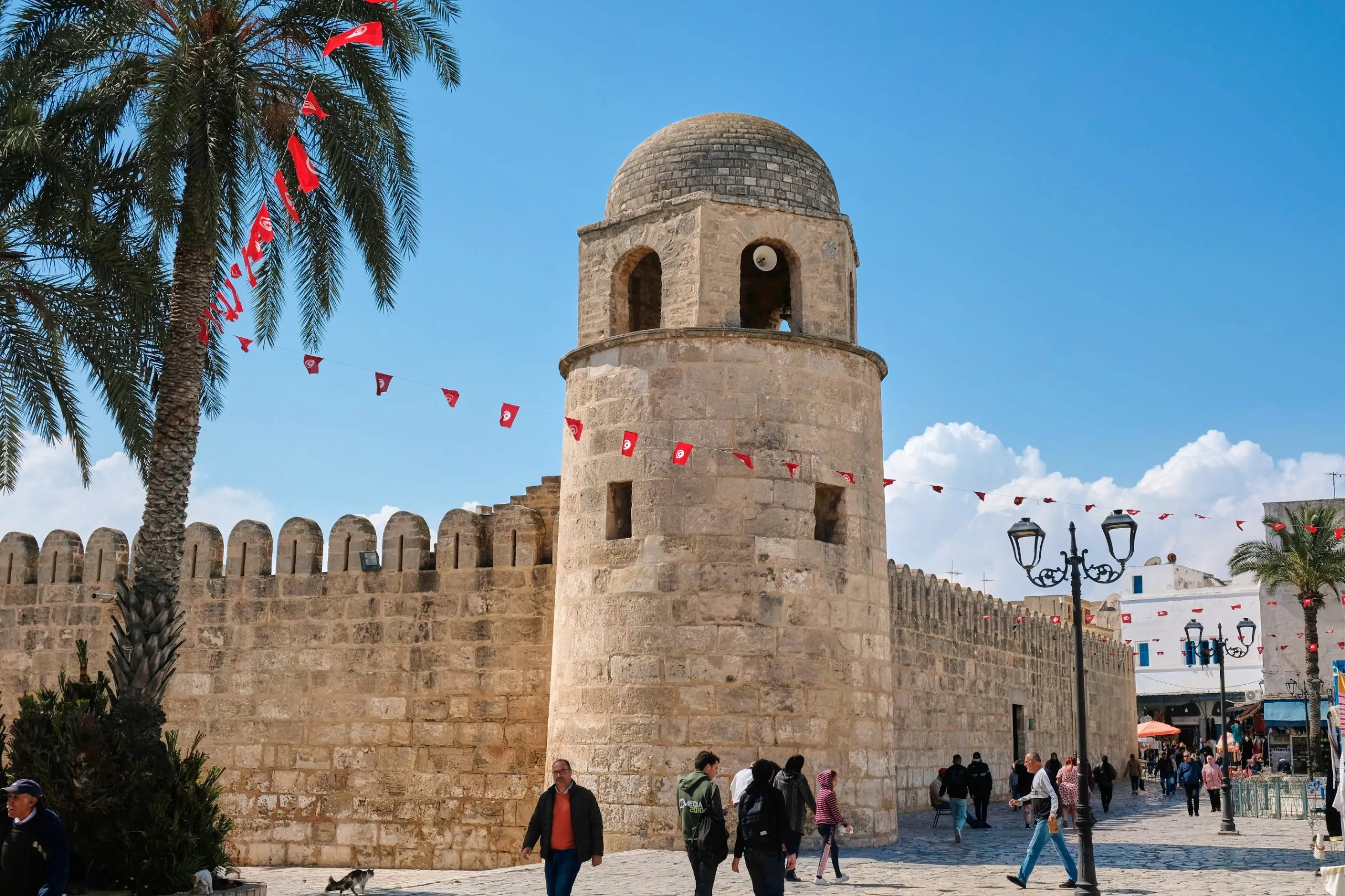
Ben Yedder is a characterful local tea house inside the medina.
Flour d'Oriente is one of the few decent restaurants in town, though don't expect too much from it either. Classic Tunisian cuisine with grilled meats, kebabs, and couscous with various toppings.
Manuel is not a specialty coffee spot, but it is a small, bright, and clean café.
Vox Vinyl and Coffee is a café on the grounds of the Alliance Française cultural center. All the local trendy young crowd hangs out here. Tea, coffee, simple sandwiches, and desserts. There are quite a few other cafés in the surrounding area. This is a small neighborhood of villas where the more affluent residents of Sousse live.
Nearby are two points of interest: one is closed but potentially great, and the other is just strange.
Maison Am Taieb is the museum and workshop of a local artist. His work is rather unconventional. The Catacombs du Bin Pasteur are a vast underground cemetery that has, for inexplicable reasons, been closed to visitors for several years. The site is not abandoned, however, and a guard is present on the premises.
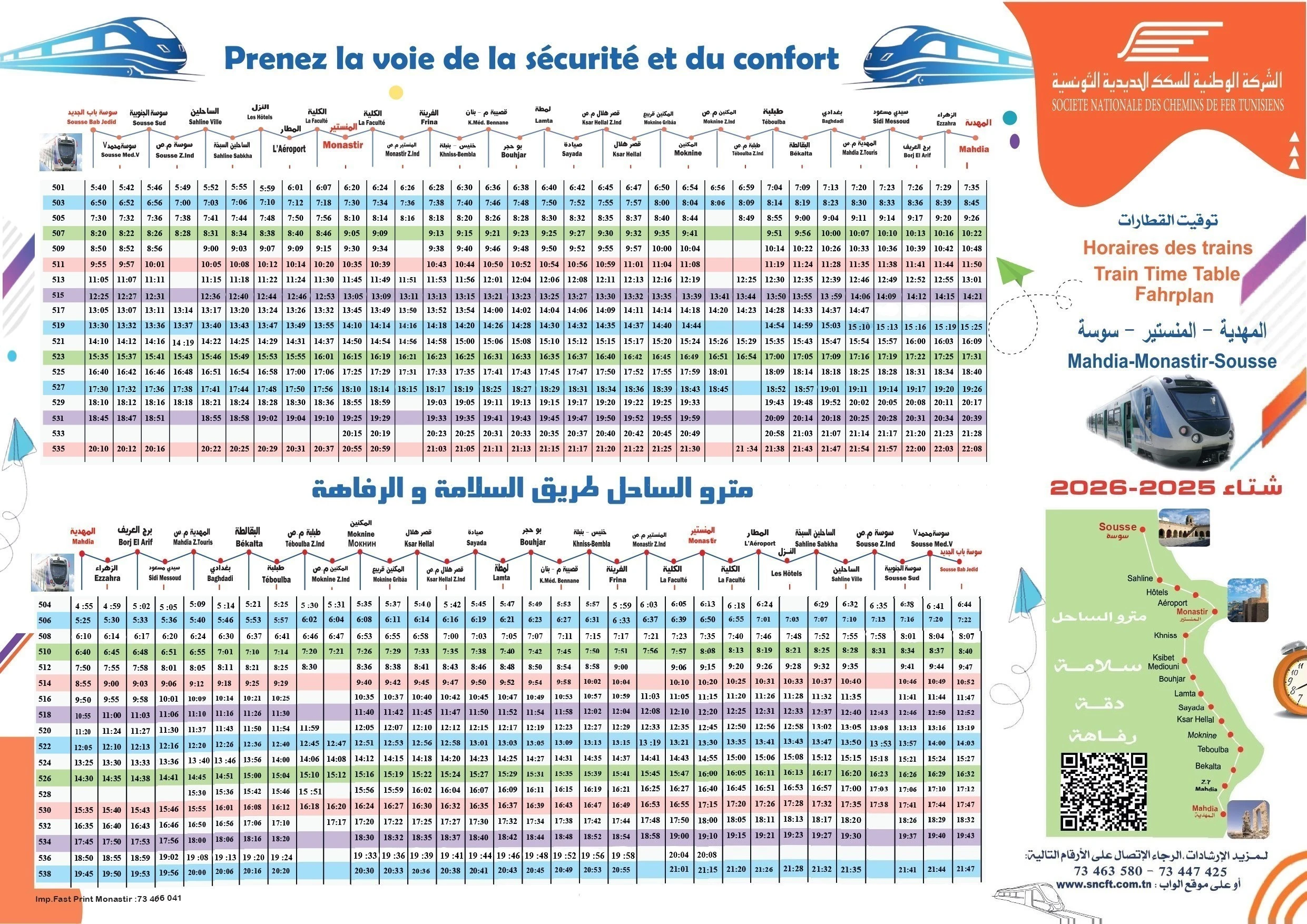
From Sousse, a separate suburban rail line runs 80 kilometers to Mahdia via Monastir. It is called the Sahel Suburbsline. The journey from Sousse to Monastir takes 40 minutes, and to Mahdia two hours. There are more than 15 trains per day.
Accommodation. Two wonderful historic hotels with an authentic Eastern atmosphere in the medina are Dar Antonia and Dar Baaziz — 300 (101.8 USD) and 120 dinars (40.7 USD) respectively.
Getting there. From Tunis to Sousse you can travel by bus, louage, or train. Trains run four times a day and the journey takes two and a half hours. A ticket costs 15 dinars (5.09 USD).
El Jem — amphitheatre and archaeological museum
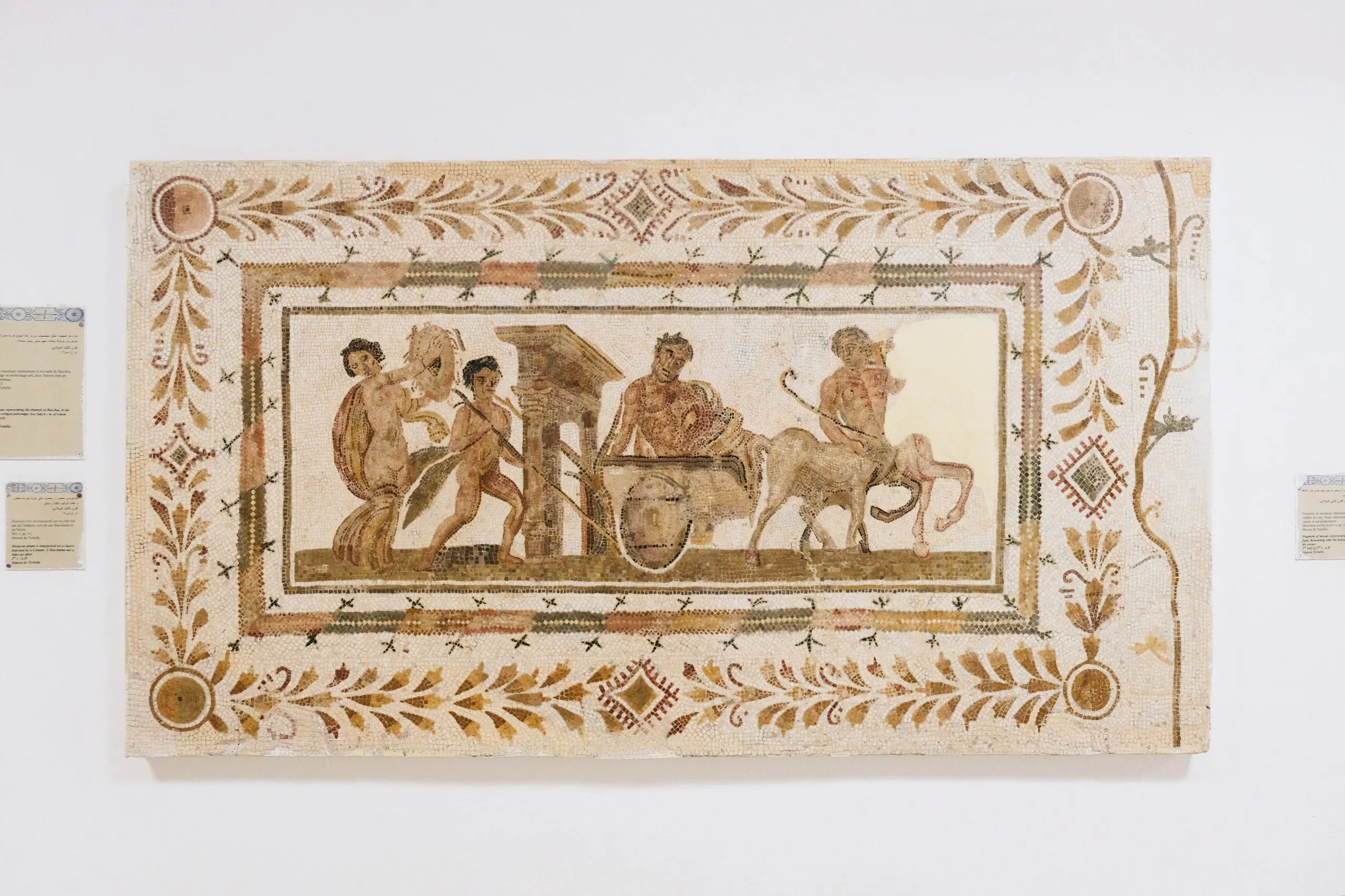
El Jem is a town of 18,000 people, located 70 kilometres from both Sousse and Monastir. It is home to the Gordian Amphitheatre from the Roman Empire era, with a capacity of 30,000 spectators. It is the fourth largest amphitheatre in the world — after the Italian ones: the Colosseum in Rome, Capua, and Verona. The amphitheatre in El Jem is included on the UNESCO World Heritage List. Admission costs 12 dinars (4.07 USDroubles). The town also has a smaller and older ancient amphitheatre, but only its foundations have survived. It will be of interest only to those with a particularly deep passion for the subject. The Archaeological Museum , however, is worth a visit for everyone — it houses an enormous collection of mosaics and other artefacts from the Roman Empire. It can be visited on the same ticket as the amphitheatre.
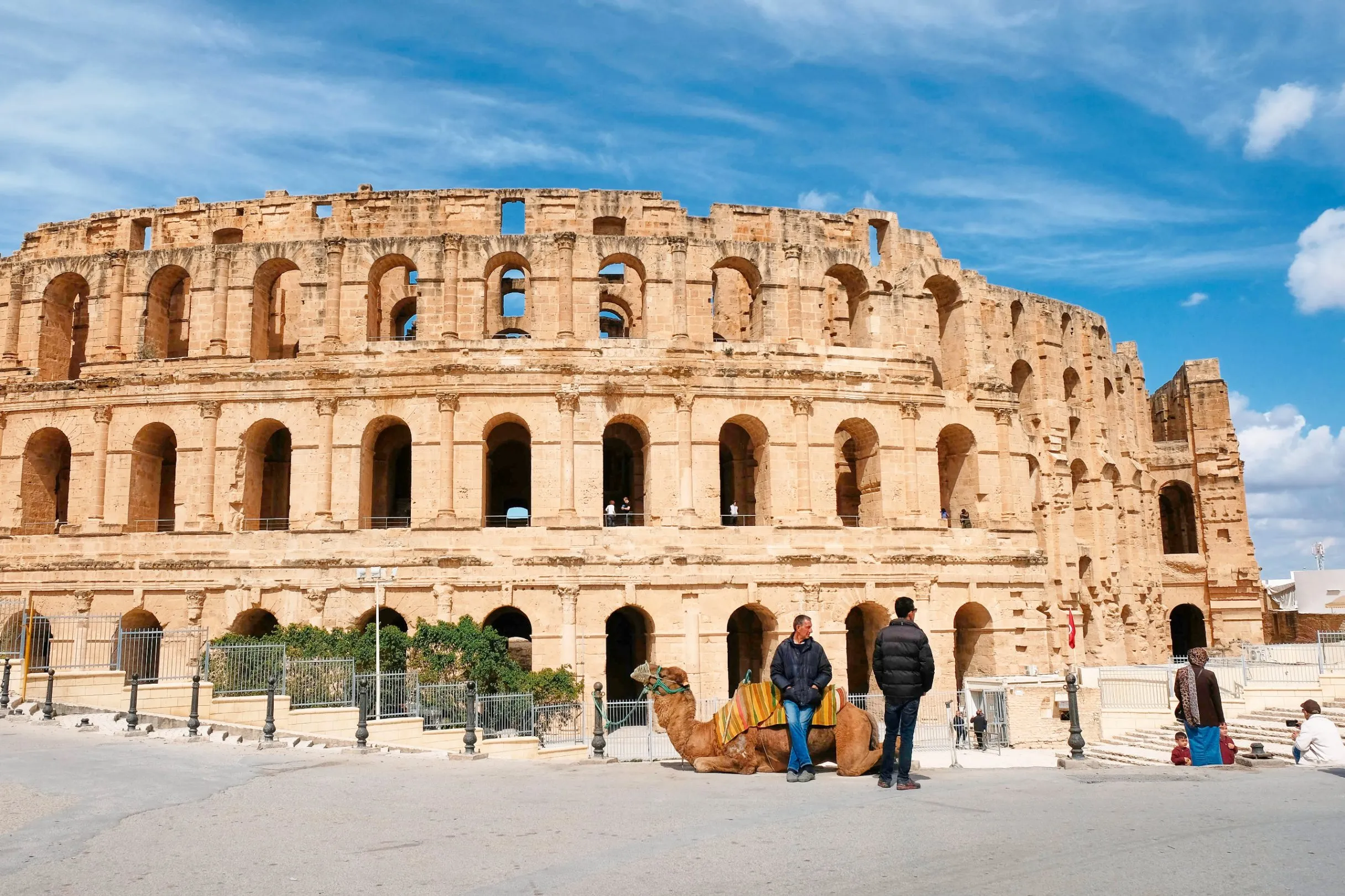
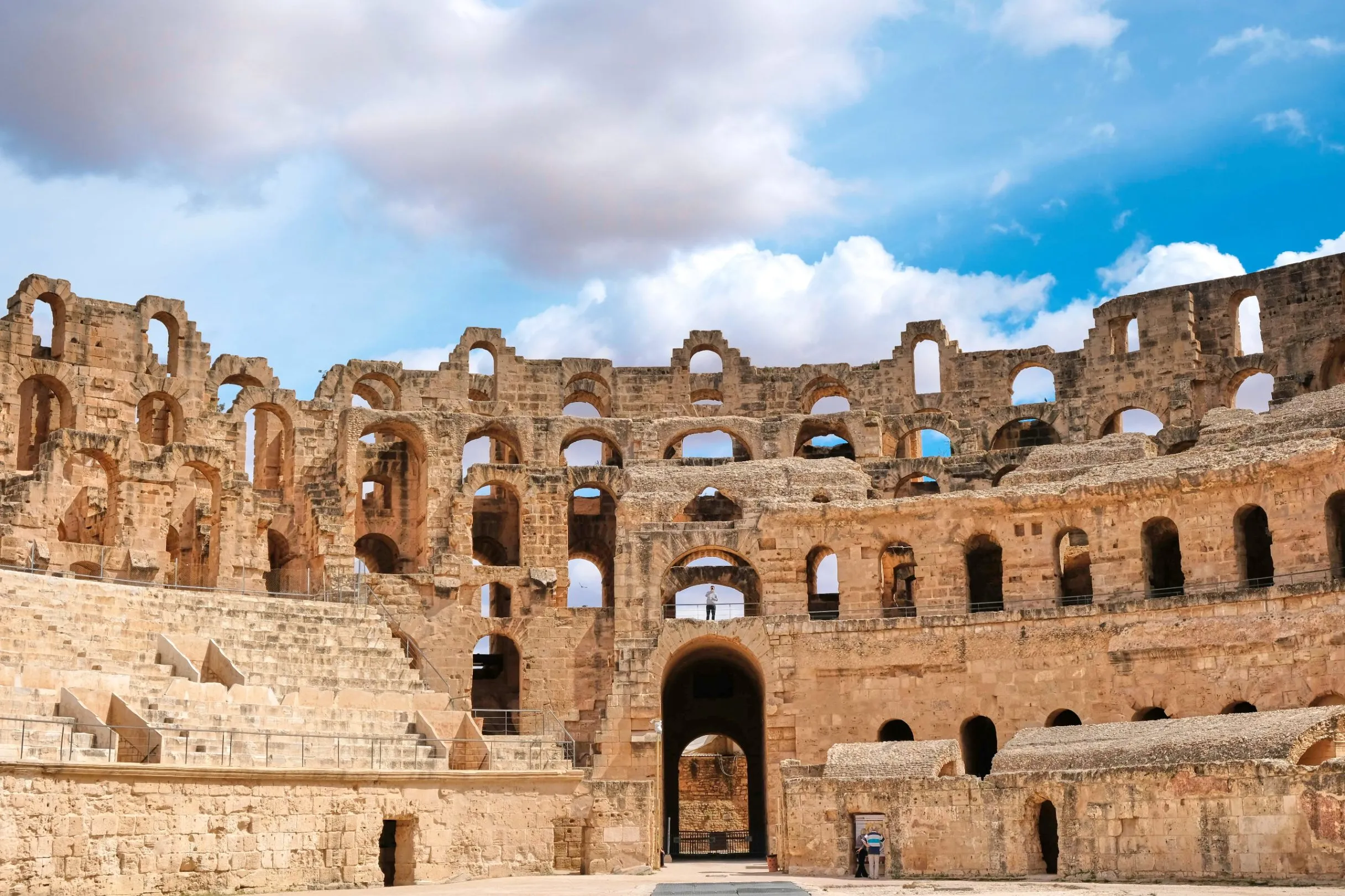
You can grab a bite at the restaurant El Hana opposite the amphitheatre. It is a little pricey by tourist standards and not particularly spotless, but the food is good — and there are not many other options in town. Not far from the train station there is a fashionable patisserie selling Eastern sweets and croissants — La Sucrette.
Getting there. El Jem lies on the railway line, so it is easy to reach by train from Tunis or Sousse.
Kairouan — the holiest city in the country
Kairouan is the most venerated Muslim city in Tunisia. It was the first capital of Muslim North Africa. The 7th-century Uqba Mosque is located here, and it is considered to have greatly influenced the spread of Islam thanks to the university attached to it. The mosque covers a vast area and is one of the few mosques in Tunisia that admits foreigners — though only into the inner courtyard; the prayer hall itself may only be viewed from the threshold.
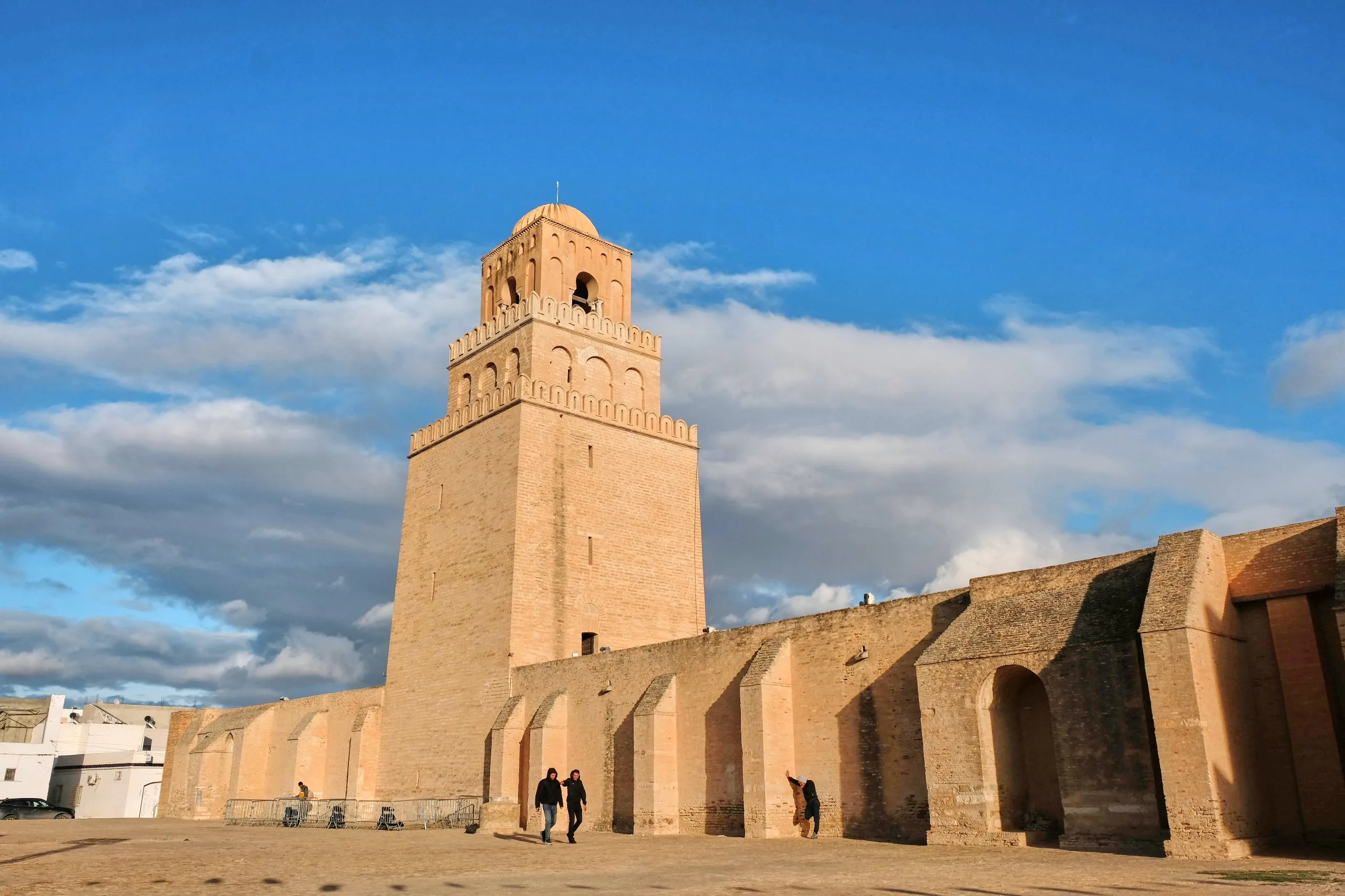
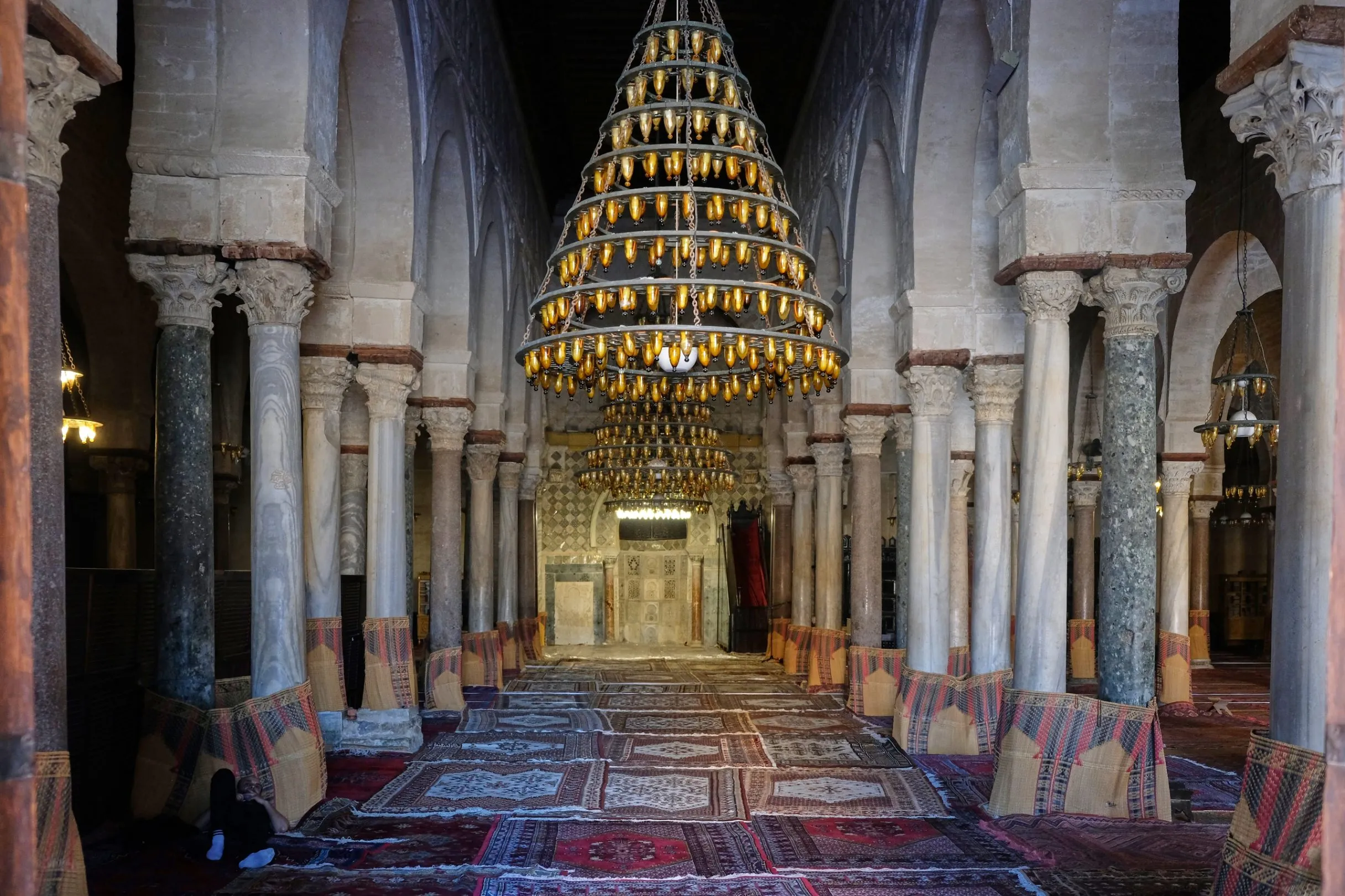
Admission to the mosque costs 12 dinars (4.07 USD). The ticket also covers several other historic sights:
Mosque of Three Doors from the 9th century — often closed.
Mausoleum of Sidi Hedidi.
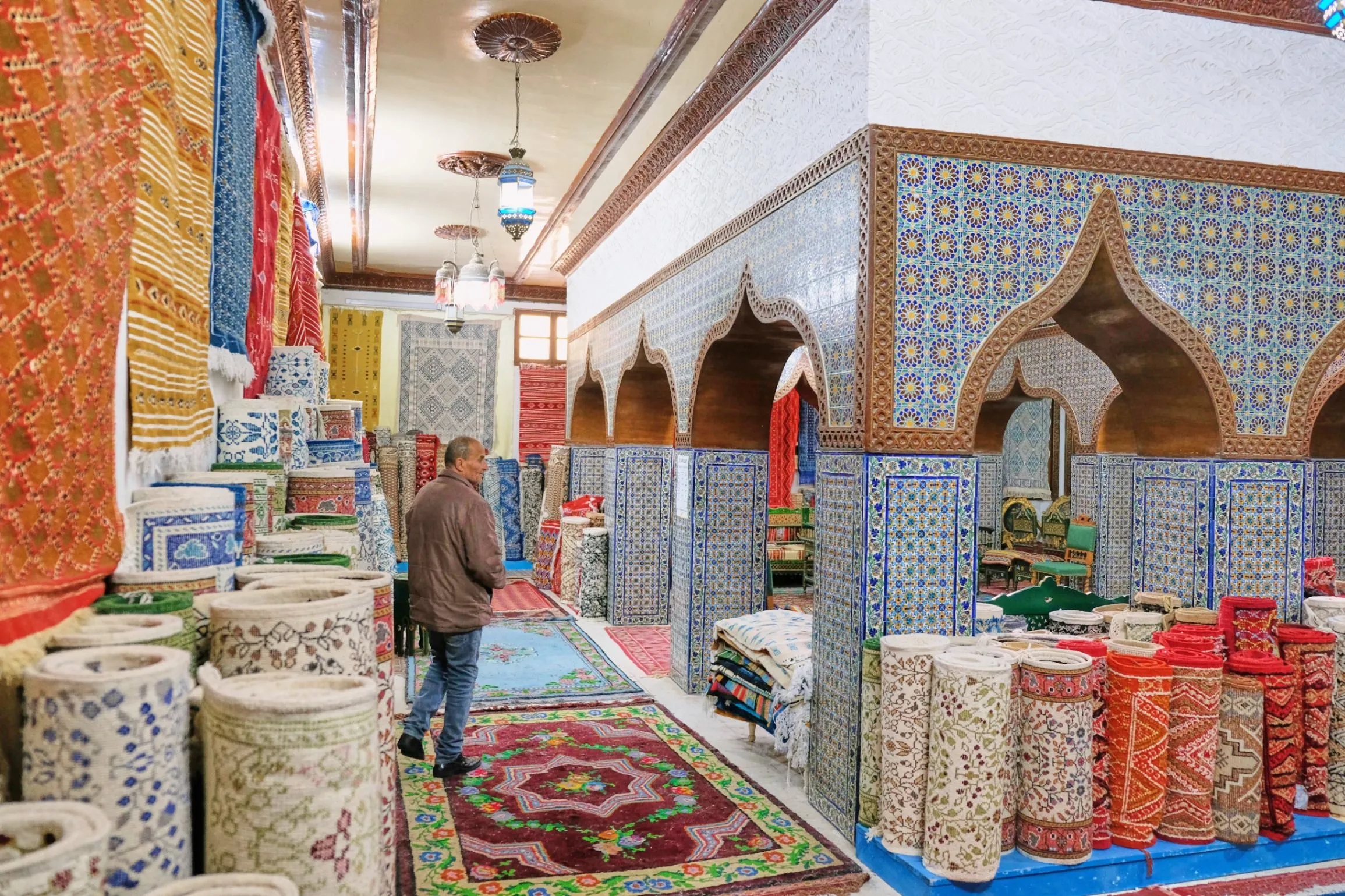
Governor's House — now home to a carpet shop. All the rooms of the former palace can be visited free of charge, and the historic interiors are fully intact.
Barruta Well, which is operated by a live camel.
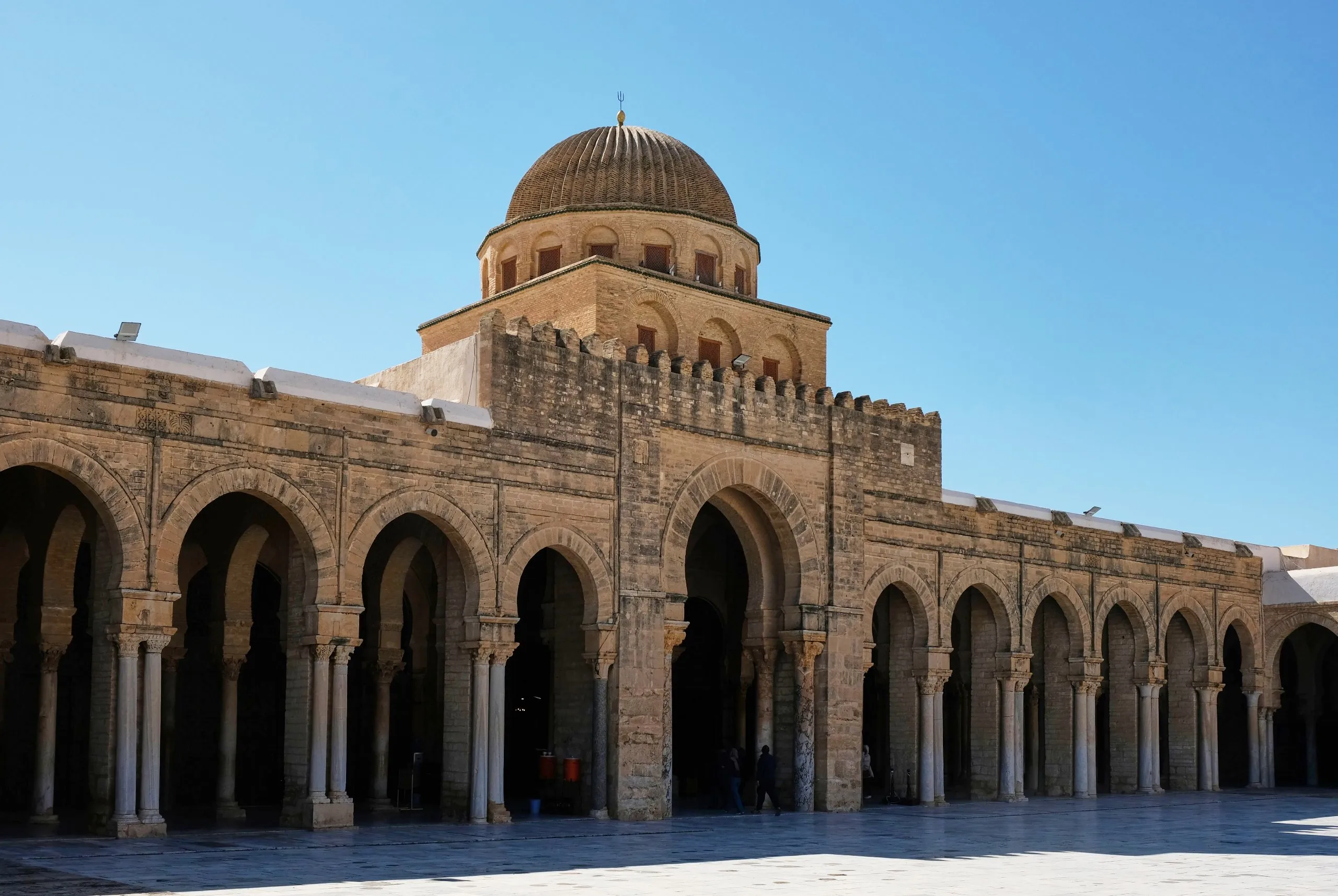
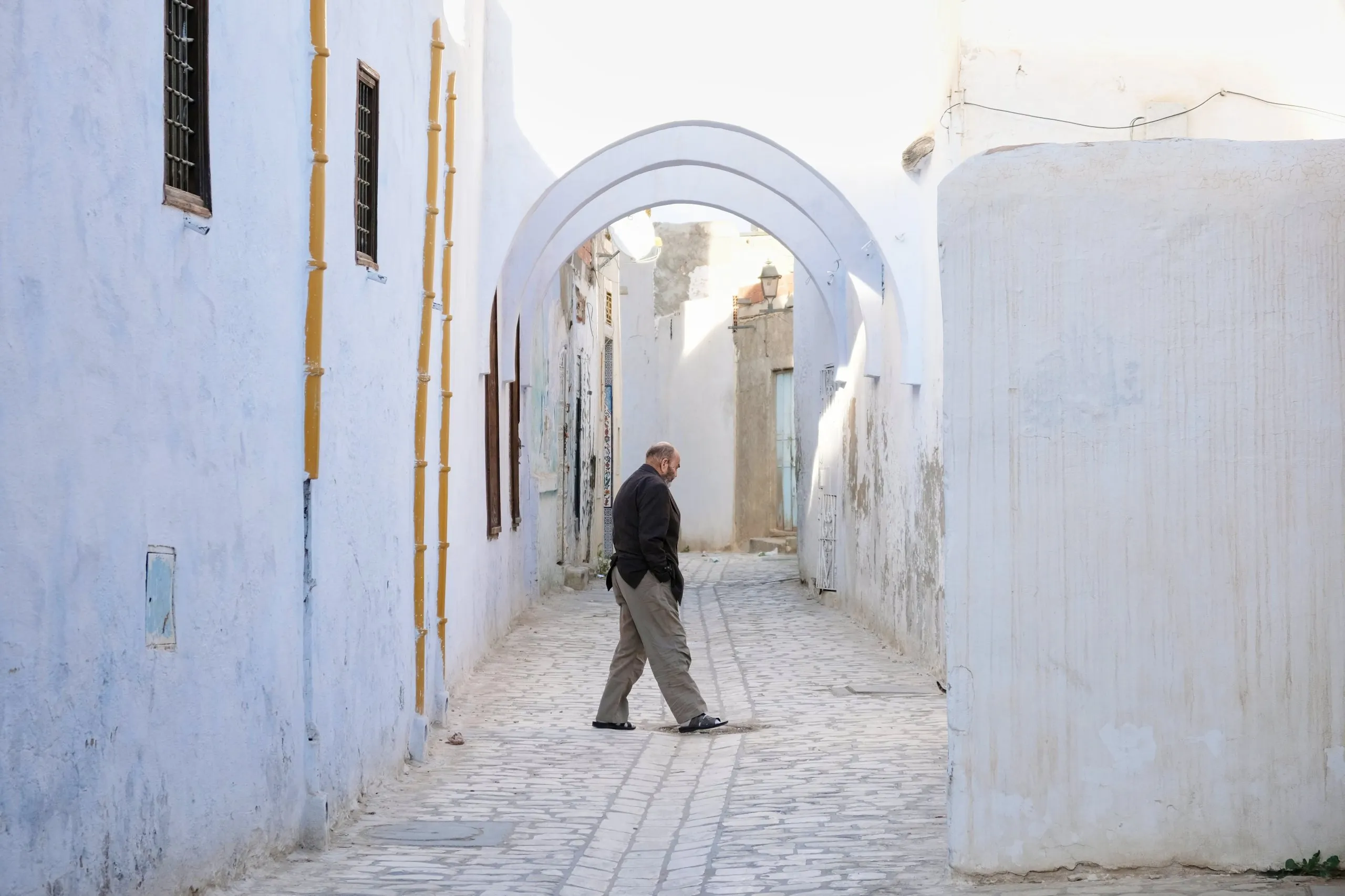
The medina, like the Great Uqba Mosque, is a UNESCO World Heritage Site. The medina also contains many ancient mosques and is enclosed by a massive wall. One of the old buildings in the medina now houses a cinema, Dar Kairouan. A single day is enough to see the city.
Where to stay. La Kasbah — a large hotel with rooms decorated in an oriental style, from 330 dinars per night (112 USD). Dar Hassine Allani — from 350 dinars per night (118.8 USD). Both hotels are located in the medina.
Getting there. Louages and buses from Tunis run regularly from the Moncef Bey bus terminal. The journey takes three to three and a half hours. A ticket costs 15 dinars (5.09 USD).
Ksars in Tataouine and the Surrounding Area
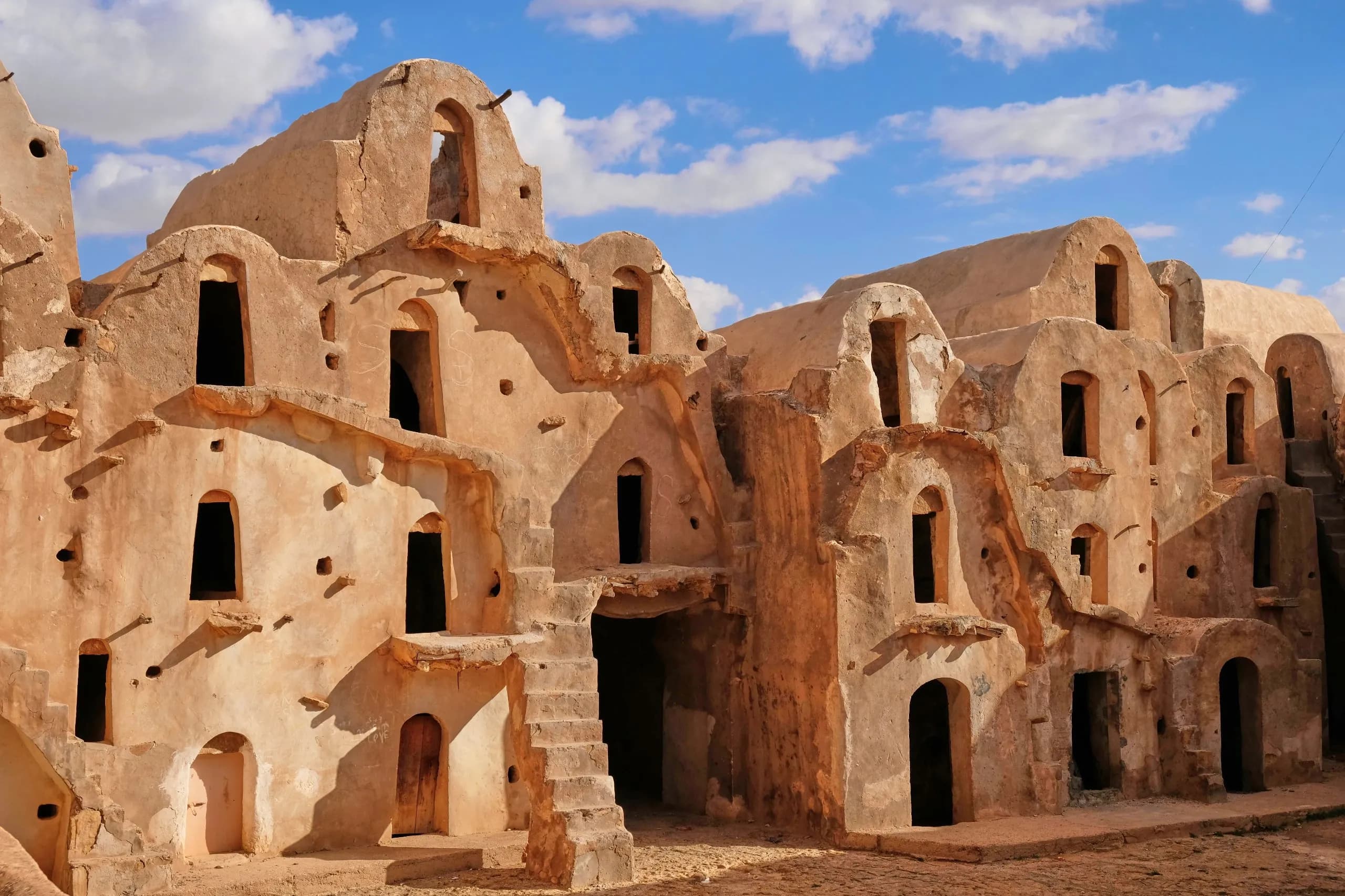
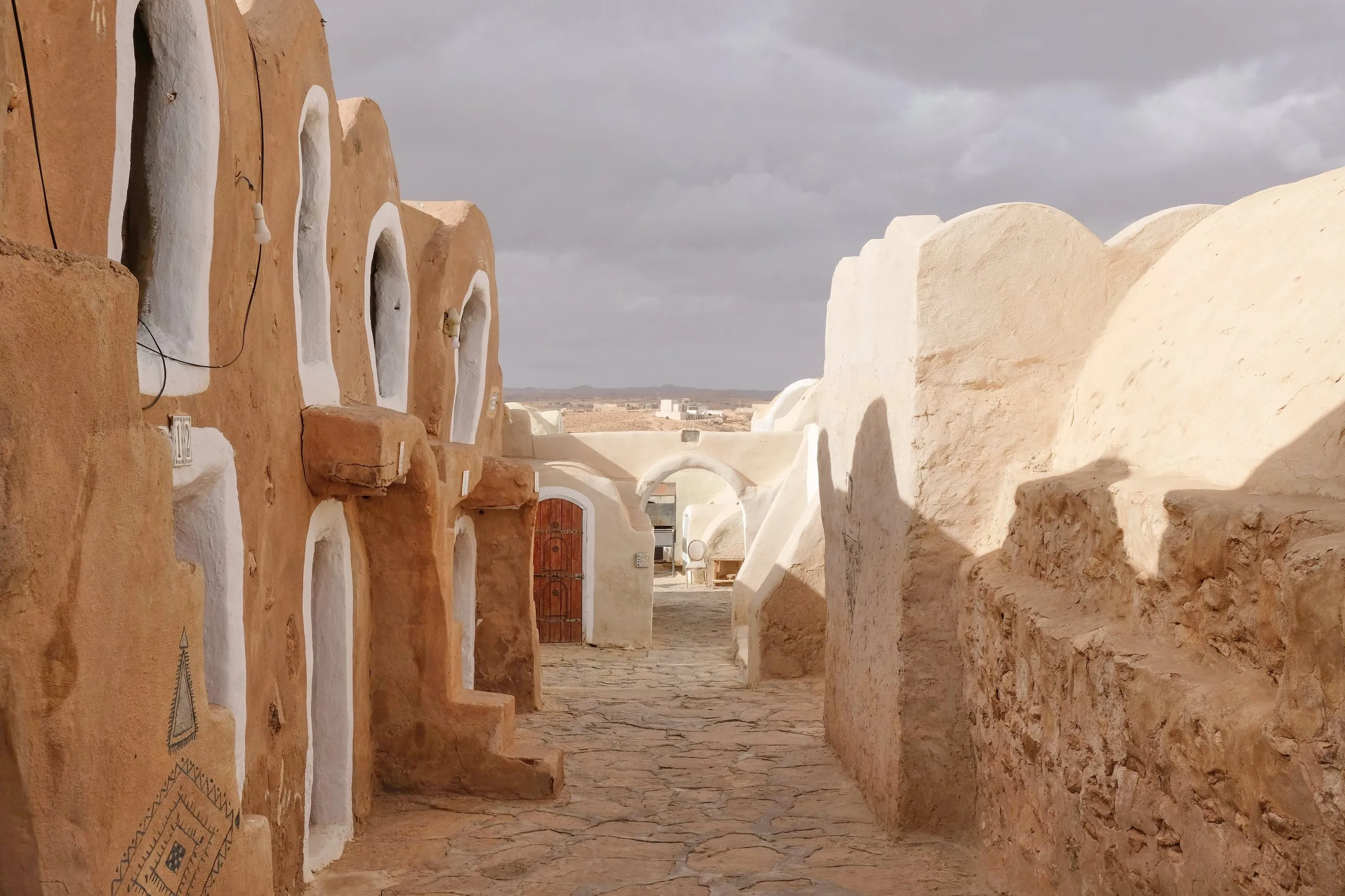
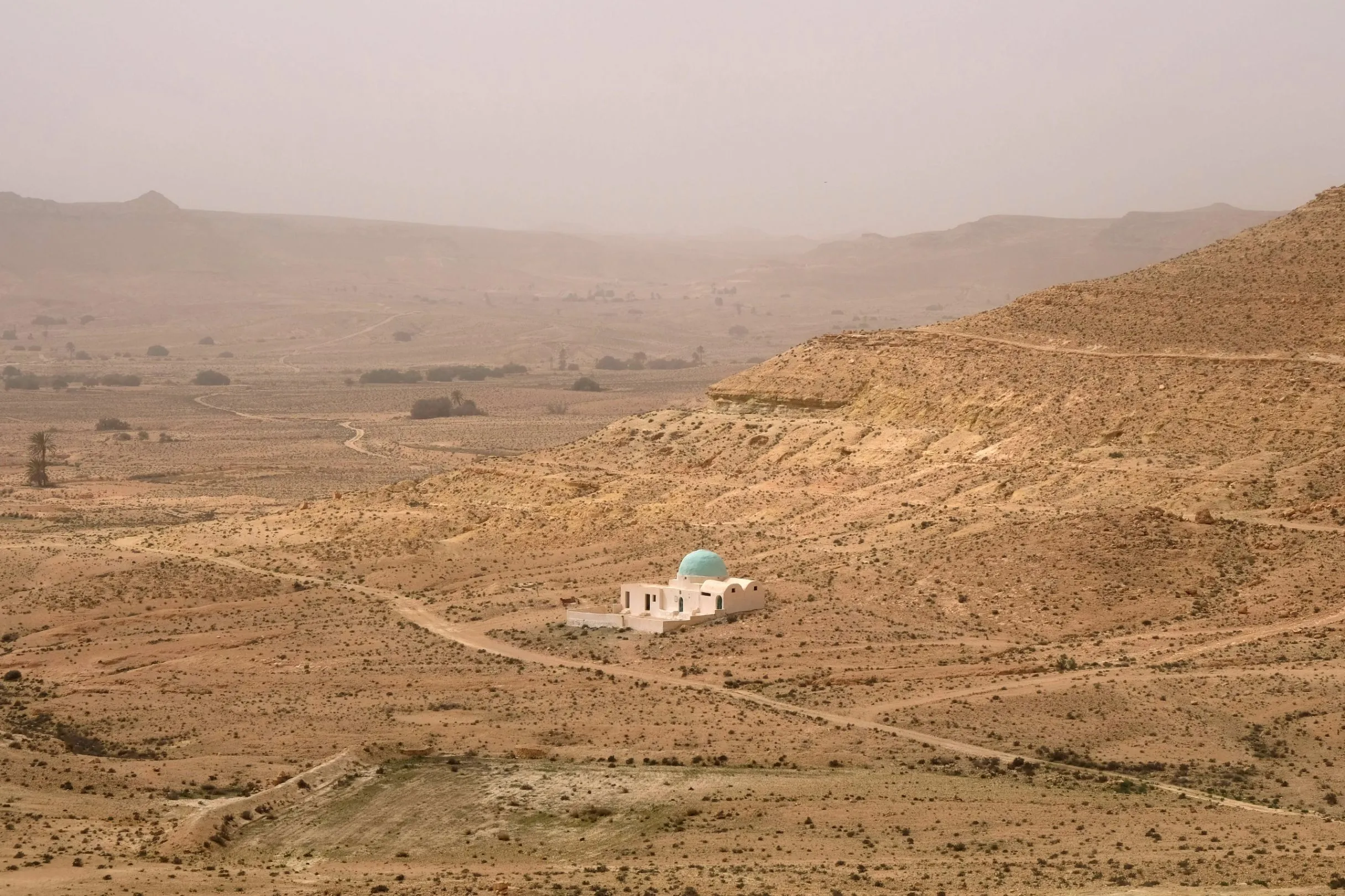
Ksars are multi-storey clay granaries scattered across small Berber villages in the desert terrain of the governorate (province) of Medenine. They were used centuries ago and are still in use today, though on a smaller scale. Even those granaries that are not particularly active are still preserved in great numbers. So what makes these ksars interesting?
First of all, they are extraordinarily picturesque. On one hand, they are chaotic structures, each built by its own owner independently. As a result, they all look similar because they form part of a single complex, yet each one is different because every storage unit had its own "architect."
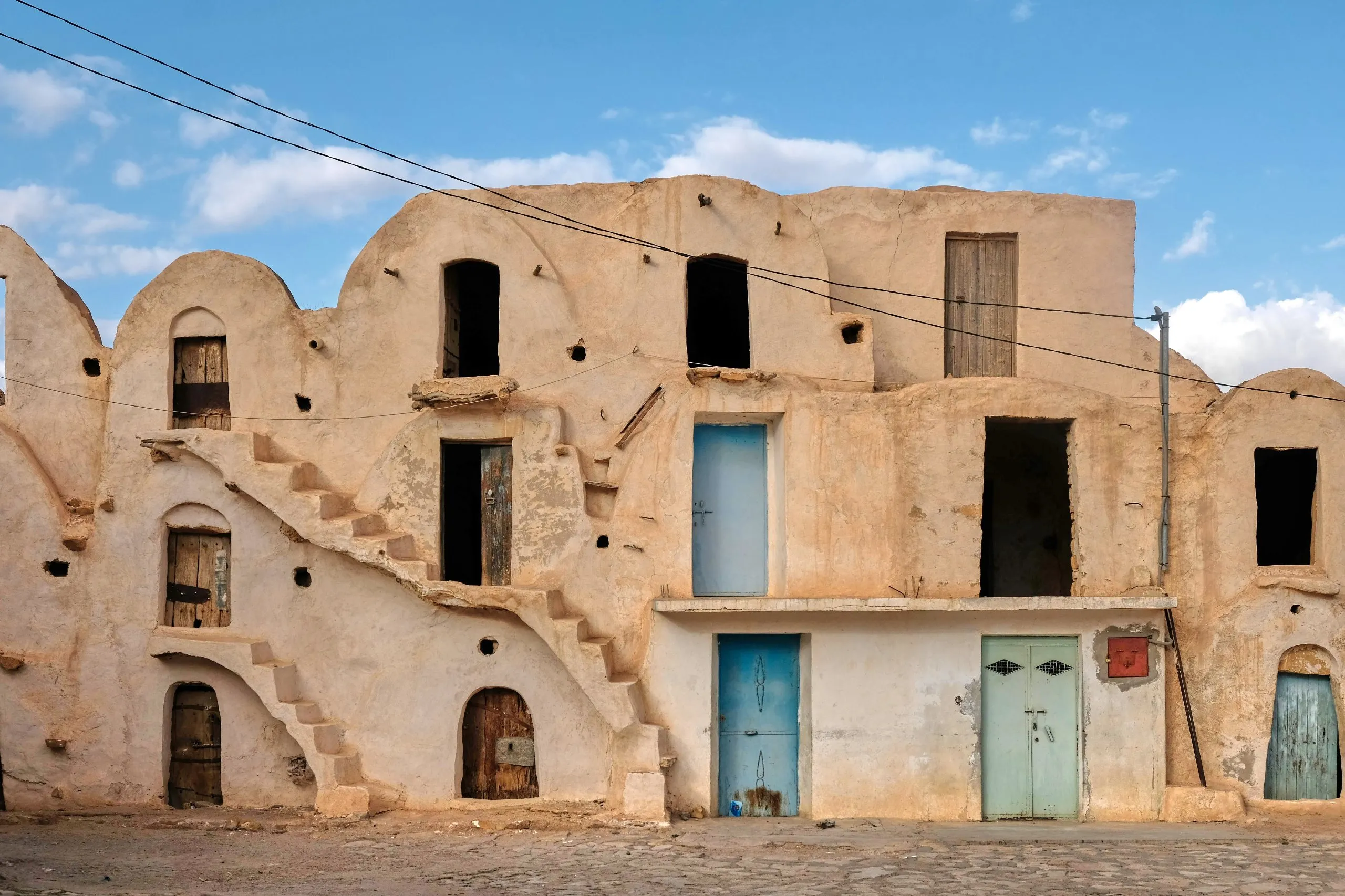
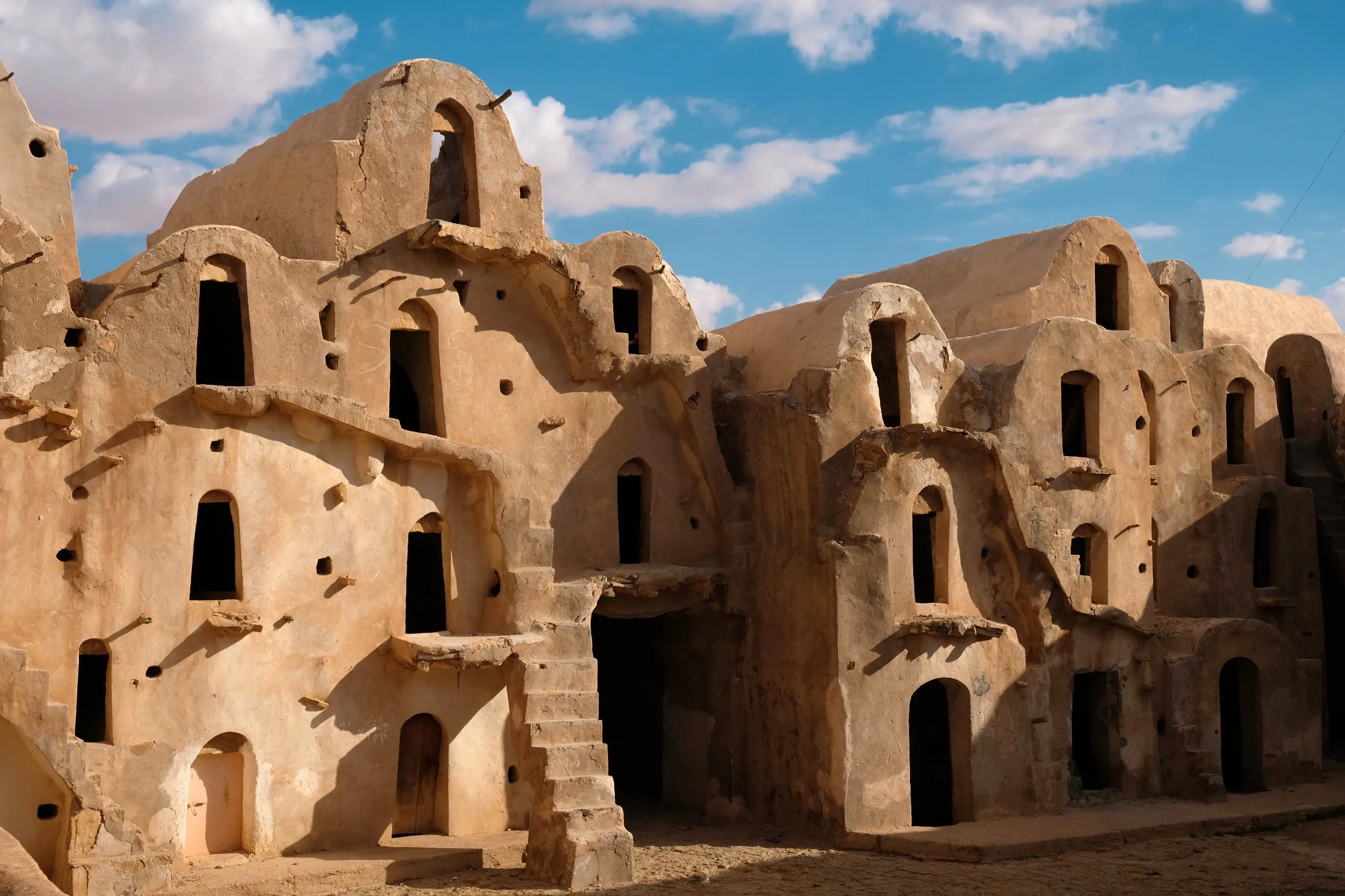
The architecture and design of these structures are extraordinarily archaic: flat stones embedded into clay walls in place of steps, doors assembled without nails, and other such details. All of this is fascinating to explore as you climb up to the third and fourth floors of the ksars. Inside, clay amphorae used for storing oil and grain are often still preserved, and in some places you can find stacks of hides.
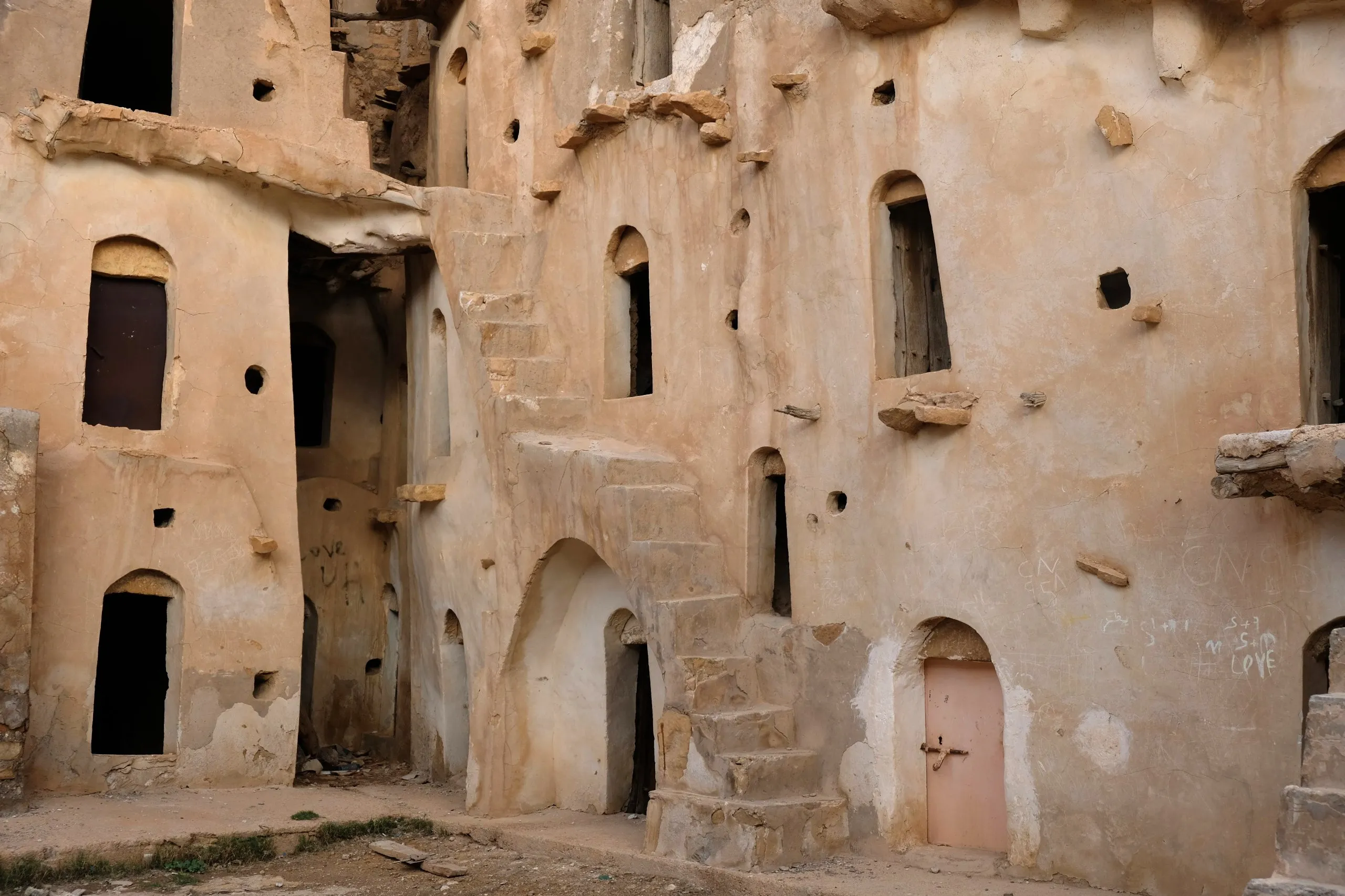
In Morocco and other countries, ksars refer not just to granaries but to fortified Berber villages. Four ksars in Mauritania and one in Morocco are included on the UNESCO World Heritage List.
The number of ksars in the Berber villages of Tunisia that have survived is remarkable, and all of them are located in the governorate of Medenine. The book Les Ksour du Sud Tunisien: Atlas Illustré d'un Patrimoine Culturel (2010) lists 98 ksars.
The plan for visiting the ksars is straightforward: decide which ones appeal to you, rent a car or hire a taxi, and drive around the area. If you are not a devoted architecture enthusiast, four or five complexes visited over a couple of days is plenty. The roads in the region are good and quiet, the scenery is beautifully hilly, and simply travelling from one ksar to the next is a pleasure in itself. There are very few tourists at the ksars. Tataouine or Medenine make convenient bases — they are the largest cities in the region. Admission to almost all ksars is free. A four-hour taxi costs around 150 dinars (50.9 USD).
Tataouine itself has nothing particularly interesting to offer. It is a genuinely remote provincial town with very basic cafés, a bustling market, a handful of mosques, a Carrefour supermarket, and one ksar.
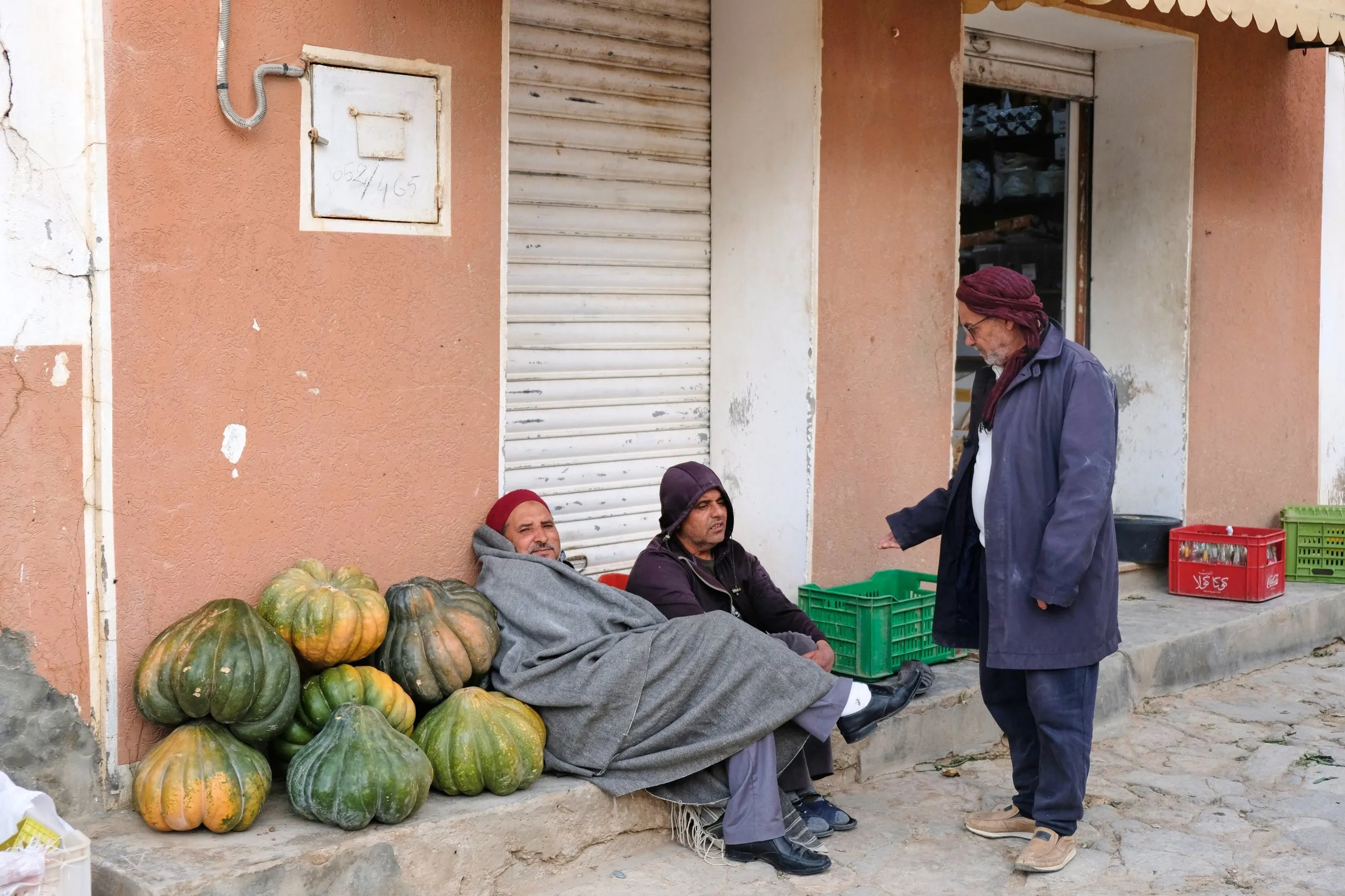
Here are a few personal recommendations and impressions:
Ksar Chenini is the most touristy ksar — vendors and guides are already mildly persistent here, though even so there are never more than a few dozen people at any one time. At the top you can drink tea with a wonderful view. Most of the ksars are still in use and therefore locked, which takes away some of the explorer's thrill. The most valuable thing here, then, is the view of the ksars themselves and the natural surroundings seen from above.
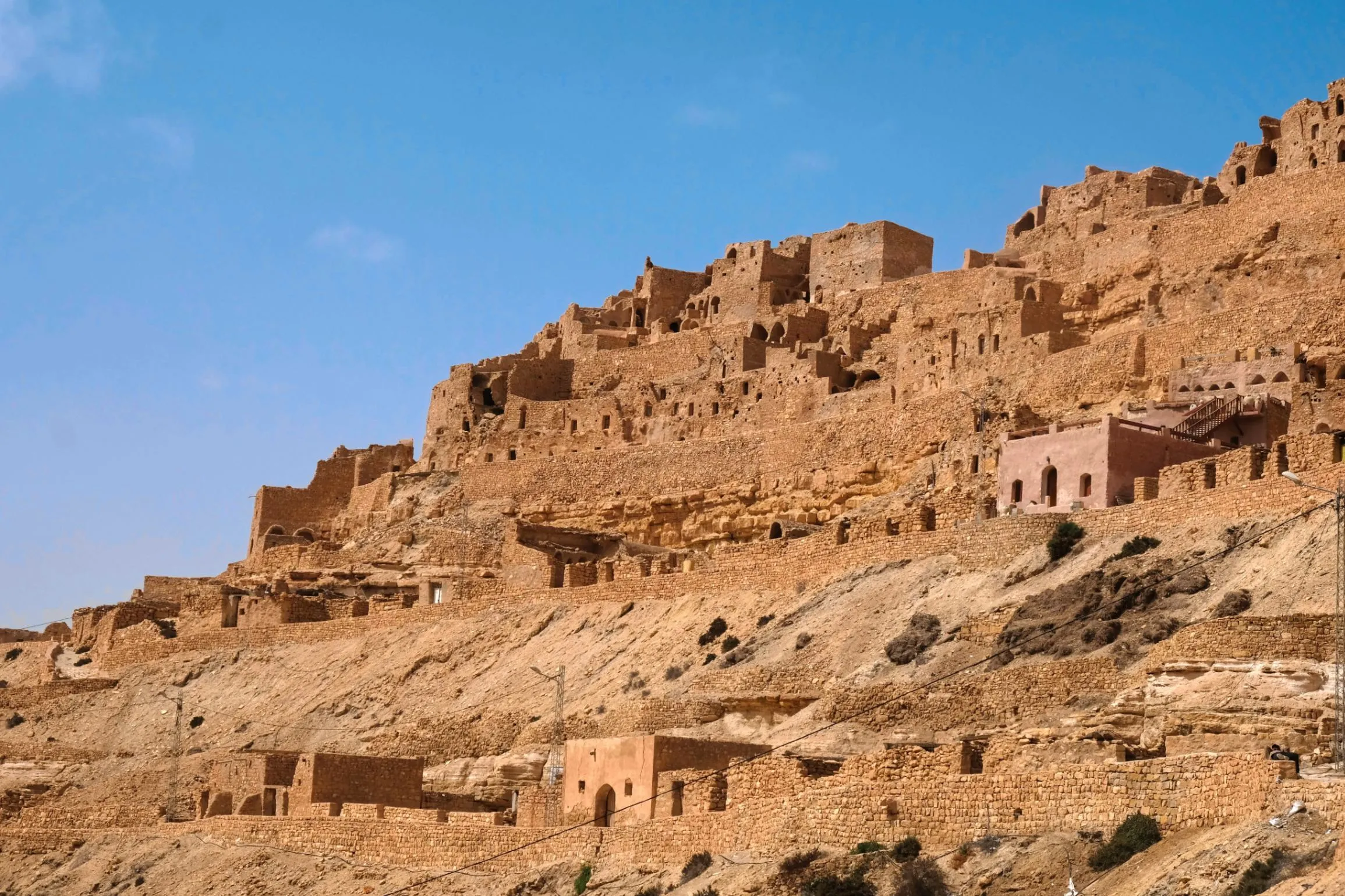
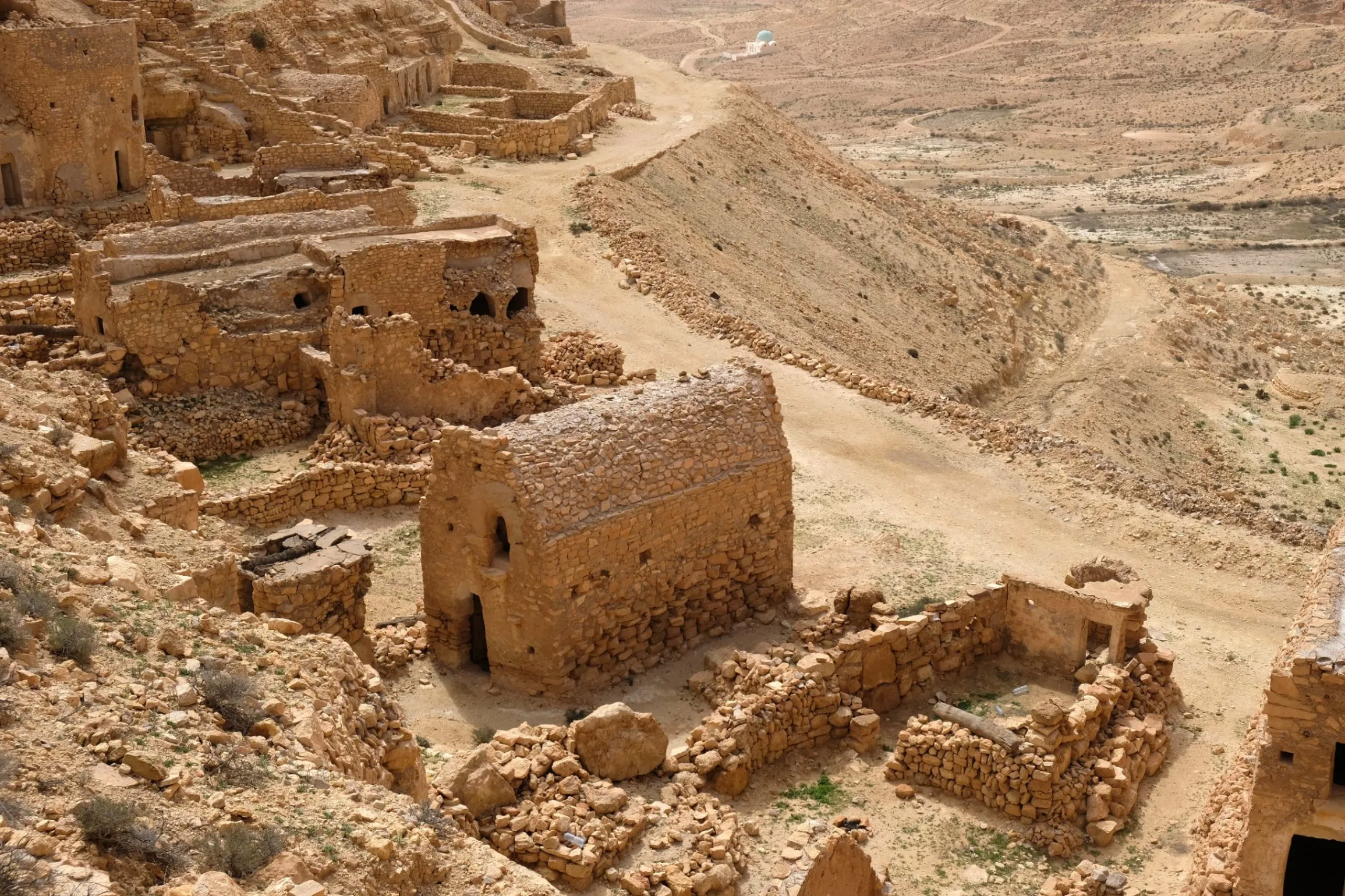
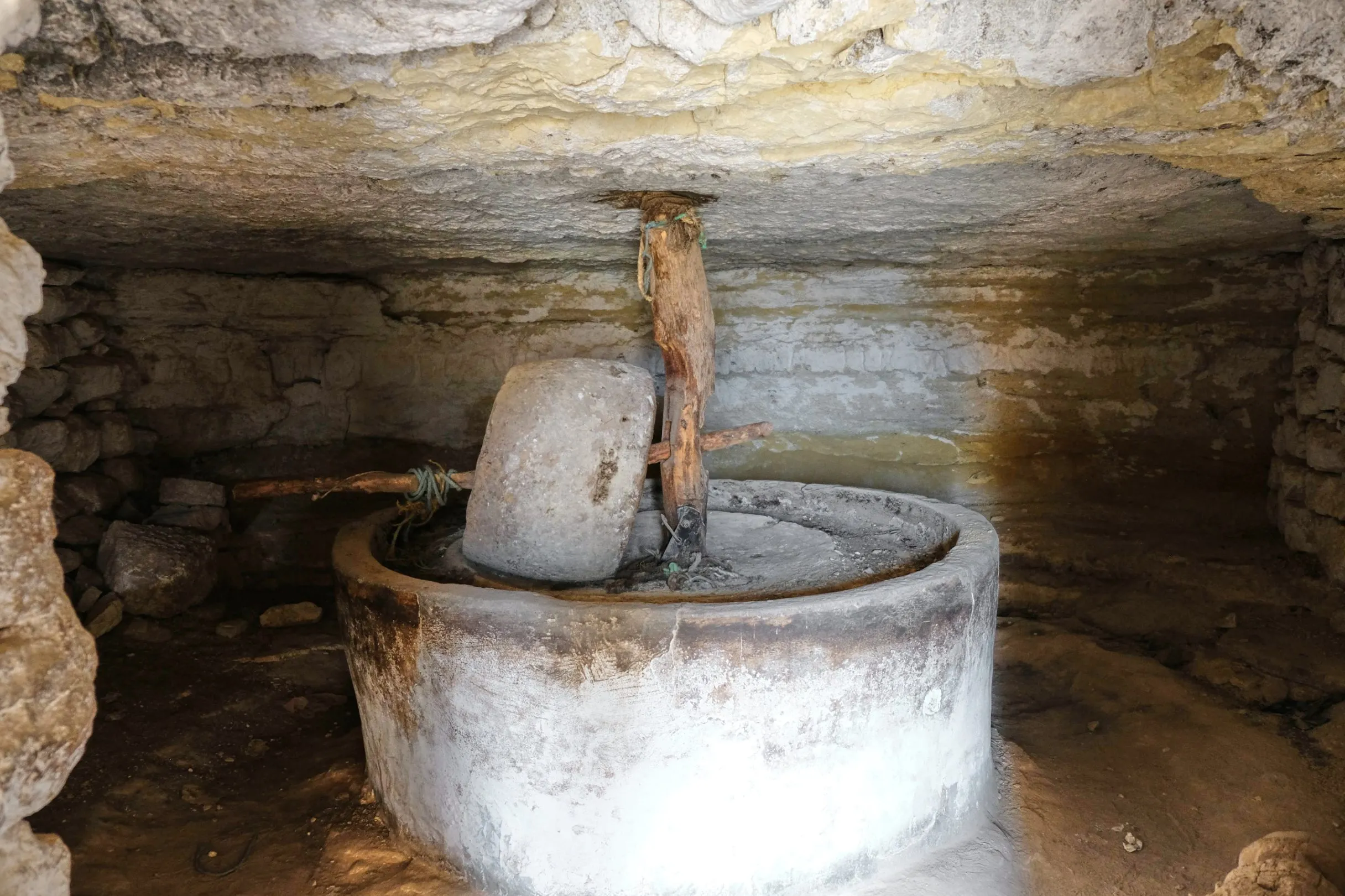
Ksar Douiret is a vast complex, almost entirely abandoned. If you wander around at a leisurely pace, you could easily spend half a day here. In season, a small café operates on site, and there is a guesthouse right next to the ksars. An old oil press has survived in one of the rooms. You can walk from Ksar Chenini to Ksar Douiret — it makes for an excellent hike of around nine kilometres.
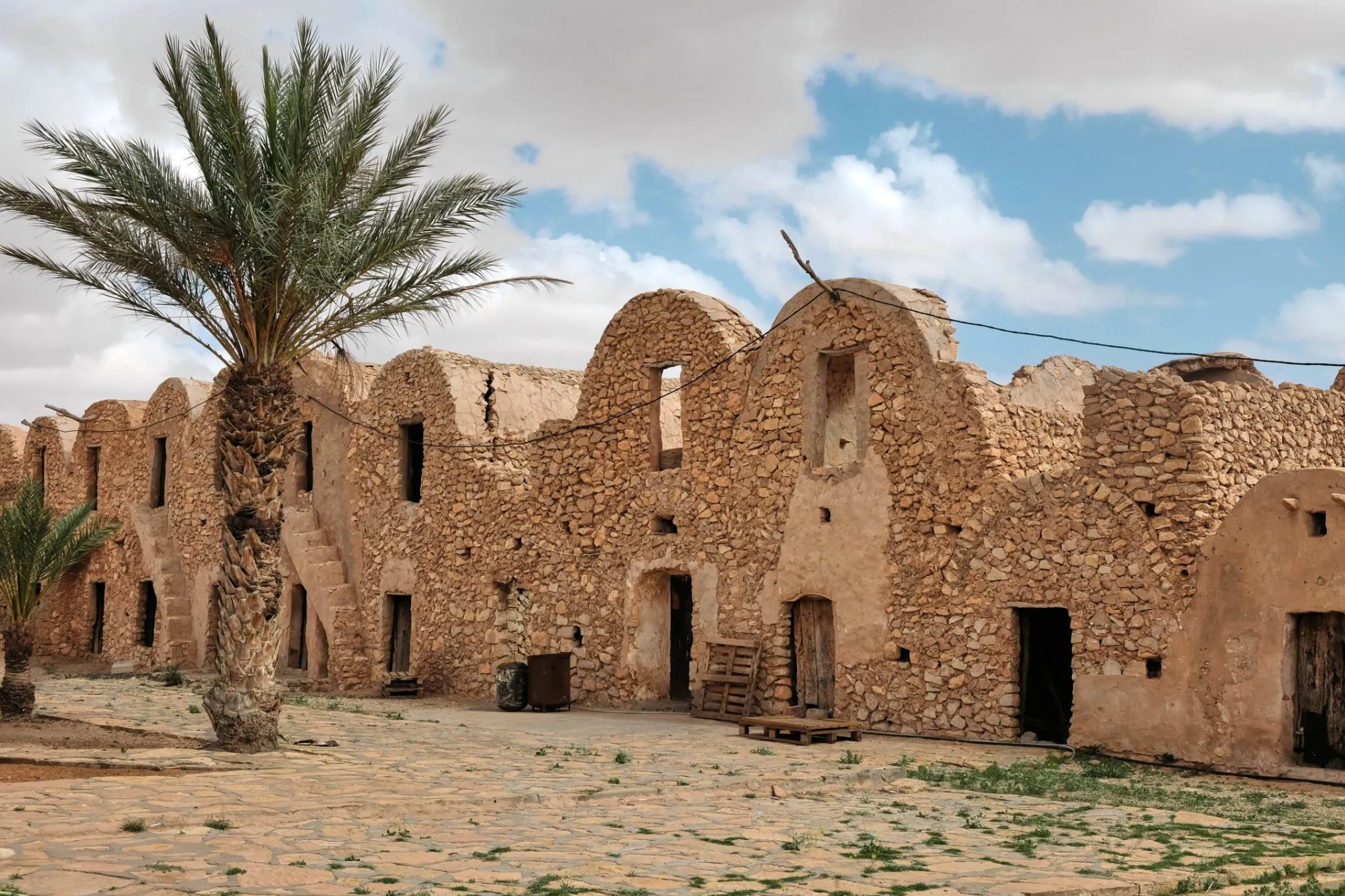
Ksar El Ferch is very geometric and photogenic, and was built relatively recently. Inside, everything is more or less uniform and little has been preserved in the storage rooms themselves. Still, it is worth a 20-minute stop en route — to stroll around and have a coffee at the café that occupies several of the granaries. Admission is free.
Ksar Ezzahra is a complex of historic ksars within a small village. Part of it is still in use, and the town also has many modern storage ksars, though these are scattered rather than forming a unified complex. The historic ksars are a delight to clamber through and explore. This is one of the most picturesque and lively complexes. Infrequent minibuses run here from Tataouine; the stop coordinates are 32.926256, 10.451216.
Ksar Haddada — Star Wars was filmed here, and there is a hotel inside the ksar, though it is fairly uncomfortable. Admission costs two dinars (0.68 USD).
Getting there. Minibuses and buses run to Tataouine from all cities in Tunisia. It is not the most popular route, so sometimes there are only two or three departures a day. You can travel first to Gabes by train and then continue by minibus — about two and a half hours on the road.
What else to see in Tunisia
Roman ruins
Bulla Regia — magnificent mosaics and underground houses.
Dougga — the best-preserved urban layout.
Sbeitla — ruins featuring baths, churches, and other structures.
Oudna — a beautiful amphitheater.
Haïdra — completely free to visit.
Chemtou — ancient marble quarries.
Carthaginian ruins
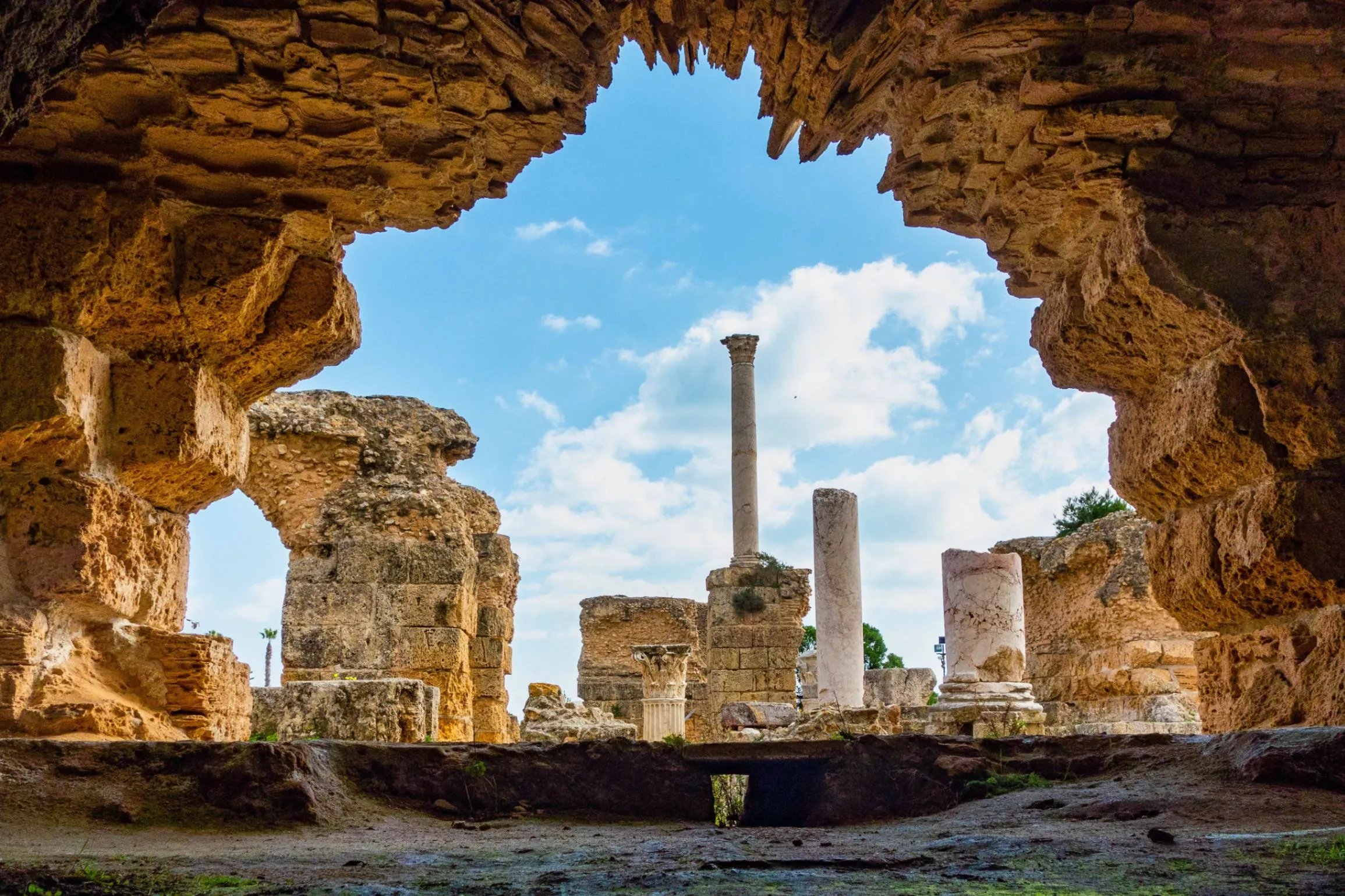
Carthage — an ancient state with a capital of the same name located 15 kilometers from Tunis. The ruins are spread across a large area, and most of them are free and entirely unfenced. However, admission to many of the sites costs 7–10 dinars (2.38 USD–3.39 USD). All the ruins are quite similar, so if you are not a fan of ancient remains, there is no need to see them all.
Kerkouane — an ancient Punic city 130 kilometers from the capital. Next to the ruins there is an archaeological museum housing all the artifacts found during excavations.
Both ancient Carthaginian cities are included on the UNESCO World Heritage List.
Bizerte — there is an Orthodox cemetery and chapel connected with the presence of the Russian Squadron there in 1920–1924.
Mountains are located in the northwest of the country, in the area around the towns of Ain Draham, Jendouba, and Tabarka. It is green there, rain falls frequently, and summers are not as hot as in other parts of the country. Jugurtha's Table is a mesa-shaped mountain.
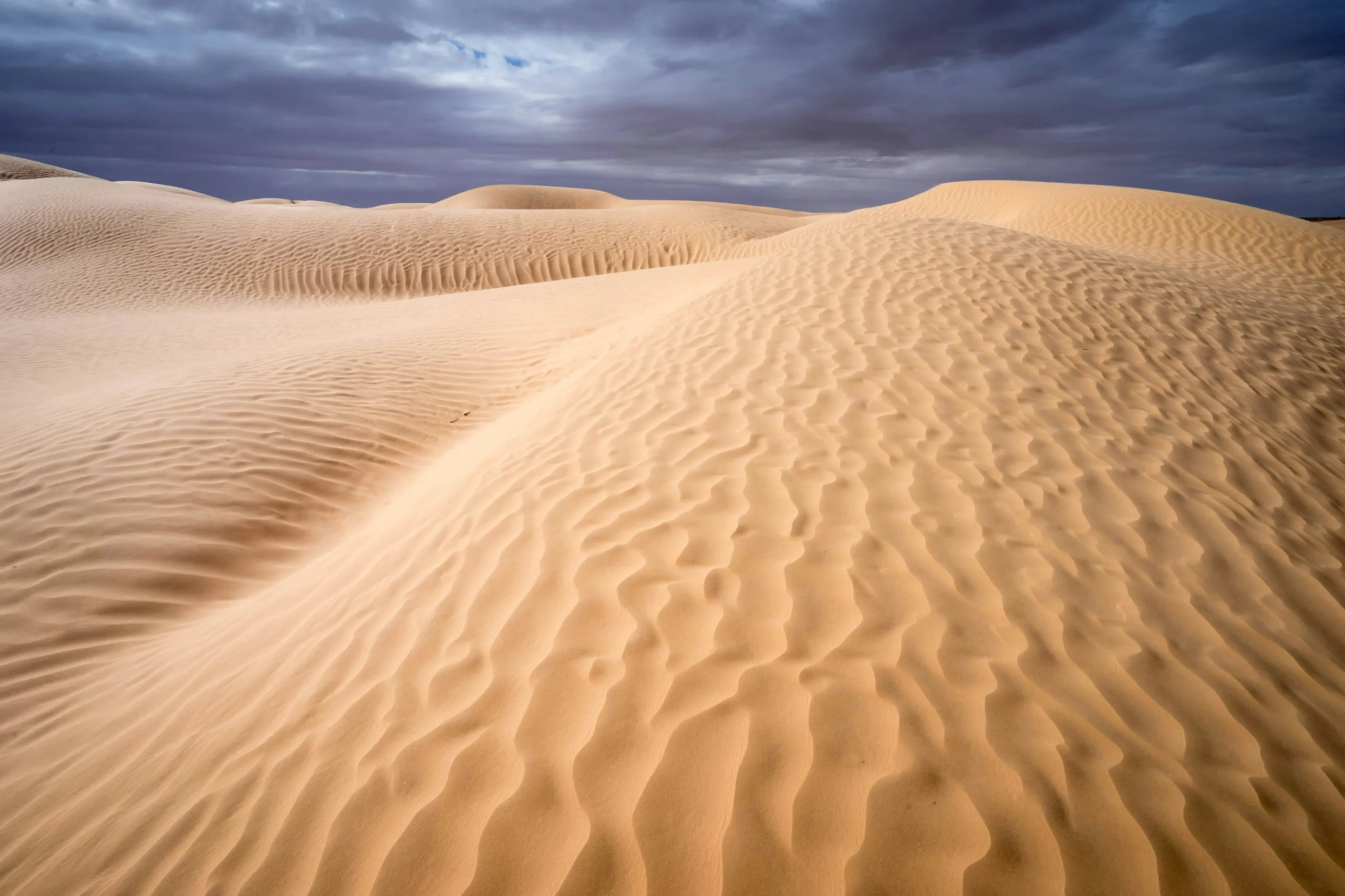
The Sahara Desert. There are not very many sand dunes in Tunisia. You can explore the desert simply by driving along the roads. Highway RN20 runs both along the edge of the desert and straight through it. You can stop in one of the towns and explore the desert on foot — for example, in Douz, which is considered the center of desert tourism. Various Sahara tours depart from here. One of the most remote ksars — Ghilane — sits on the border with the Sahara, making it an excellent option to combine the two.
Food
Tunisia has a fairly unremarkable local cuisine, and the overall food culture is rather low. There are few good restaurants and equally few simple street food spots. The one exception is that there are quite a lot of pastry shops and tea houses.
The main dish is couscous with vegetables, meat, or seafood. Grilled dishes are not very popular, but when something is grilled, it tends to be cooked until it has a dark, nearly charred crust. More often, vegetables or meat are deep-fried or slowly braised (oja). Harissa sauce — made from ground hot red peppers — is used in cooking almost universally. A popular snack is brik, a pastry similar to a cheburek, except the filling is more commonly egg, canned tuna, or potato rather than meat. Canned tuna appears in many contexts — in sandwiches and salads alike. Merguez are spicy sausages served both as a main dish and eaten in sandwiches. Tajine is a baked dish of eggs, vegetables, meat, and spices.
A meal at a simple café costs $5–10, a snack comes to under $5, and restaurants charge $15–30 for lunch for one person. There are not very many places to eat. Food delivery is available through Glovo (as well as Kool and Yassir, though those require a local phone number). Groceries are cheap, but the selection is limited. Most goods are locally produced; imports are scarce and expensive. Delivery is available from chains including Carrefour, Monoprix, Aziza, and Proxi. The one item that is very expensive is bananas — around 7 USD per kilogram. Entrance fees to attractions are cheap. Almost everywhere you will need to pay in cash; card terminals are only found at chain establishments, large hotels, and trendy cafés.
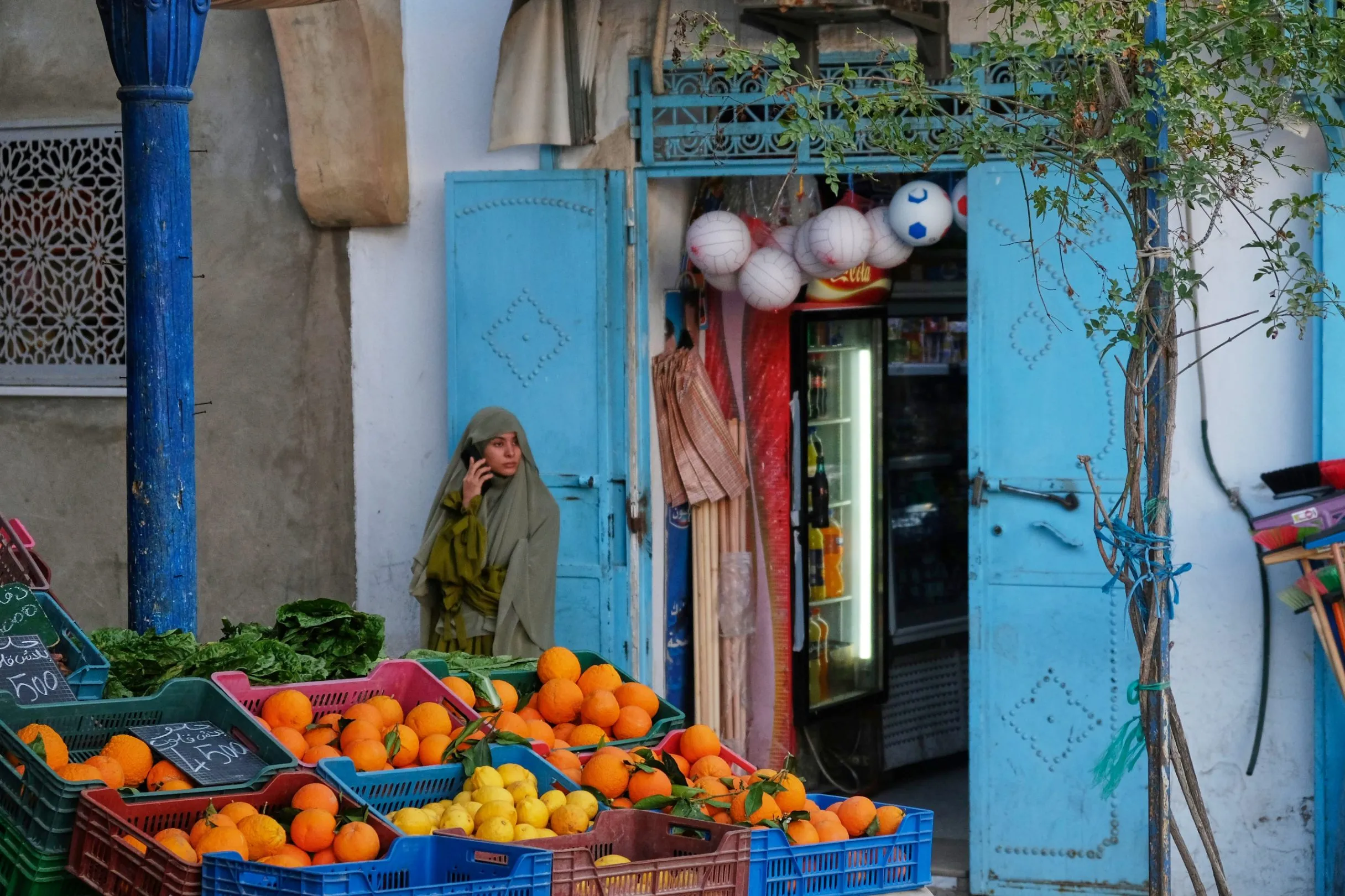
Here are approximate market prices: oranges (per 1 kg) — 3 dinars (1.02 USD), apples — 4 dinars (1.36 USD), strawberries — 10 dinars (3.39 USD), tomatoes — 2 dinars (0.68 USD), cucumbers — 4 dinars (1.36 USD), cherry tomatoes — 10 dinars (3.39 USD), bananas — 20 dinars (6.79 USD), mint — 1 dinar (0.34 USD) per bunch, avocado — from 5 dinars (1.7 USD) each, kiwi — from 0.6 dinars (0.2 USD) each, pineapple — 10 dinars (3.39 USD) each, baguette — 0.1 dinars (0.03 USD) each.
Mobile Coverage
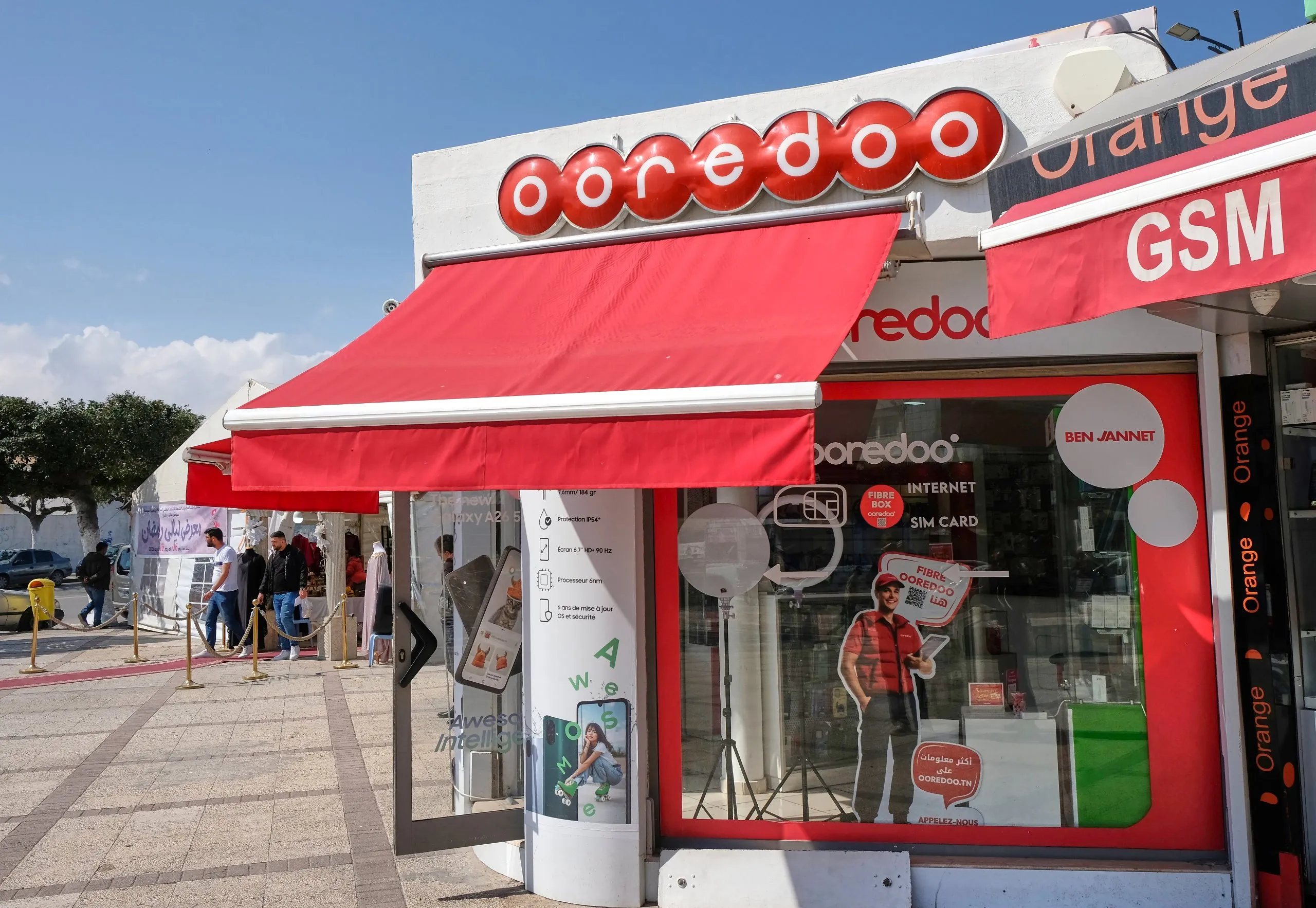
Tunisia has three mobile operators: Ooredoo, Orange, and Tunisia Telecom. Coverage is good everywhere and prices are affordable. The most prominent and popular operator is Ooredoo. 25 gigabytes costs 40 dinars (13.6 USD).
With the spread of international eSIMs (Airalo, Unisim, and others), for short trips it is often more convenient and cost-effective to use them rather than bothering with buying a local SIM card. The plane has barely landed and you already have a connection.
Here are the rates from the most popular eSIM providers for Tunisia:
• Trip.com — 10 gigabytes for 30 days costs $30.
• Yesim — 10 gigabytes for 30 days costs $20.50 (20.5 USD).
• Airalo — 10 gigabytes for 15 days costs $19.50 (19.5 USD). Promo code for new users: TRAVEL7460.
Money
Tunisia has a peculiar financial policy — upon entry you must declare any amount equivalent to more than 5,000 dinars (1697 USD) — 1,600+ dollars. When leaving the country, foreigners are searched, and anything above 5,000 dinars may be confiscated. Dinars can only be exchanged back into dollars upon presentation of a receipt from a bank or exchange office, or an ATM receipt, but for no more than 100 dollars. It is therefore better not to exchange a large sum all at once. Taking dinars out of the country (even coins) is prohibited.
There are plenty of ATMs and bank branches in Tunisia. Most ATMs dispense no more than 300 dinars (101.8 USD) per transaction, and the fee is 10 dinars (3.39 USD). Currency exchange offices, however, are rare. The exchange rate at Tunis airport is good. In almost all of Tunisia you need to pay in cash. Even where a card terminal is present, payment through it often fails — this seems to be intentional. The only places where terminals work reliably are chain supermarkets.
Getting around the country
Travelling around Tunisia is convenient. The roads are good, and the distances are not particularly long — it's rare to spend more than six hours on the road.
Train
Website: sncft.com.tn
Tunisia has a fairly extensive rail network.
The main line runs from Tunis to Tozeur (460 kilometres), with stops in Sousse, El Jem, Sfax, and other cities. The full journey takes 11 hours.
Tunis–Ghardimaou (200 kilometres) is the westbound route heading towards the Algerian border. There are three trains a day, with a journey time of four hours. Every day there is also a train from Ghardimaou to the Algerian city of Annaba.
Tunis–Bizerte (70 kilometres). There are two trains a day, departing in the evening only, with a journey time of two and a half hours. Getting there by minibus is usually faster.
Tunis–Kalaat Khasba (250 kilometres) – one train a day, five hours in transit.
Tunis–Nabeul (70 kilometres) – one train a day, one and a half hours in transit.
Trains can run late, but not by much. The carriages are not spotlessly clean, but they are far from the worst you will encounter. Windows are present in all carriages, though the doors between cars may not close properly. Tickets go on sale no earlier than 24 hours before departure – ask for first class if you can, as it costs only a little more but is noticeably more comfortable.
Bus
The main form of transport in the country is the shared minibus (louage). Unlike in many other countries, these minibuses are comfortable, typically seating seven or eight passengers, and tickets are purchased at a central ticket office rather than by haggling with the driver over the price.
Tunisia also has a bus company called SNTRI. Their route network is extensive and the buses are new and comfortable, though they travel more slowly than louages. On the plus side, buses offer night departures, which louages generally do not.
Taxis
Taxis in Tunisia are affordable — 10 kilometers costs around 3-4 USD, and people usually hail them by hand. All vehicles have a meter installed, and drivers generally play it straight. There are two tariff modes: daytime (5:00–21:00) — 0.9 dinars (0.31 USD) as the starting fare, and nighttime (21:00–5:00) — 1.45 dinars (0.49 USD). The one thing to watch is that the daytime mode is active on the taximeter when you're traveling during the day. It's displayed either as the number 1 or the letter J (jour — French for "day"), while the nighttime mode shows as the number 2 or the letter N (nuit). You can also book a taxi through the InDrive app, but the price there will always be higher than going by the meter, and you still have to pay in cash.
Car Rental
Renting a car is straightforward — there are both local rental agencies and all the major international companies such as Avis. Localrent also operates in Tunisia. A credit card is not required for booking. A day's rental costs 33–40 euros (37.9 USD–45.9 USD).
Driving in the country — both in cities and outside them — is not aggressive: drivers don't honk without reason, they give way to pedestrians at crosswalks, and don't get angry if pedestrians break the rules. The one thing to watch out for when walking along roads is that a car might roll over your foot or clip you with a wing mirror.
How to get there
By plane. The country's main airport is Tunis-Carthage. It receives flights from many European countries, with the greatest number of routes from France, Italy, and Germany. Tickets rarely cost more than 150 USD one way. Flying from Egypt, Turkey, or the Arabian Peninsula is somewhat more expensive, with one-way tickets running around 250 USD. There are also flights from more exotic West African countries — Niger, Burkina Faso, and Côte d'Ivoire — but one-way fares on those routes are around 700 USD.
By ferry. Ferries sail to the capital, Tunis, from France (Marseille) and Italy (Genoa, Palermo, Salerno, Civitavecchia). The crossing from Palermo takes 12 hours and a ticket costs 40 euros (45.9 USD). From Marseille it is a full day's journey and costs 150 euros (172.1 USD) per ticket.
By train. A train runs every day from the Algerian city of Annaba to Ghardimaou. The journey takes two hours.
Overland. The border with Libya is theoretically open, but the country is in the midst of a civil war. The borders with Algeria are open, and with a valid Algerian visa you can enter Tunisia without any difficulty.
When to go
Tunisia enjoys comfortable temperatures year-round. In winter the average temperature is around 13°C, in spring and autumn it ranges from 13 to 19°C, and in summer from 23 to 27°C.
Подписывайтесь на нас в соцсетях: телеграм-канал, Вконтакте, Яндекс.Дзен. Попробуйте нашего ИИ-бота в телеграме — @katusaibot