
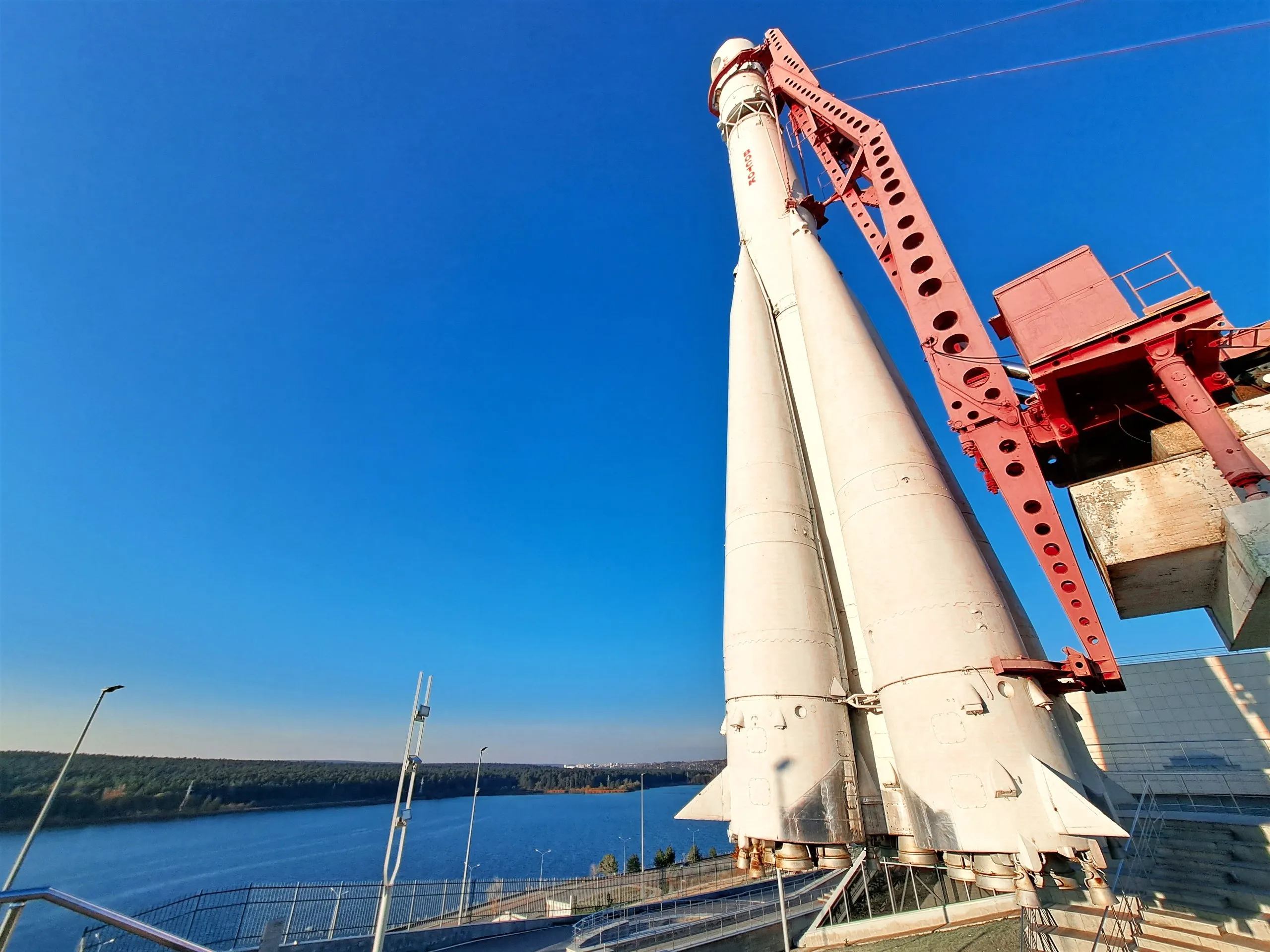
Kaluga is best known as one of the key points on Russia's "space map." This is where the rocket science theorist and inventor Konstantin Tsiolkovsky and the founder of space biophysics Alexander Chizhevsky lived and worked. The two scientists were acquainted and remained friends for over 20 years. As a result, Kaluga is home to a vast Space Museum and research center — and it's the main reason most tourists make the trip.
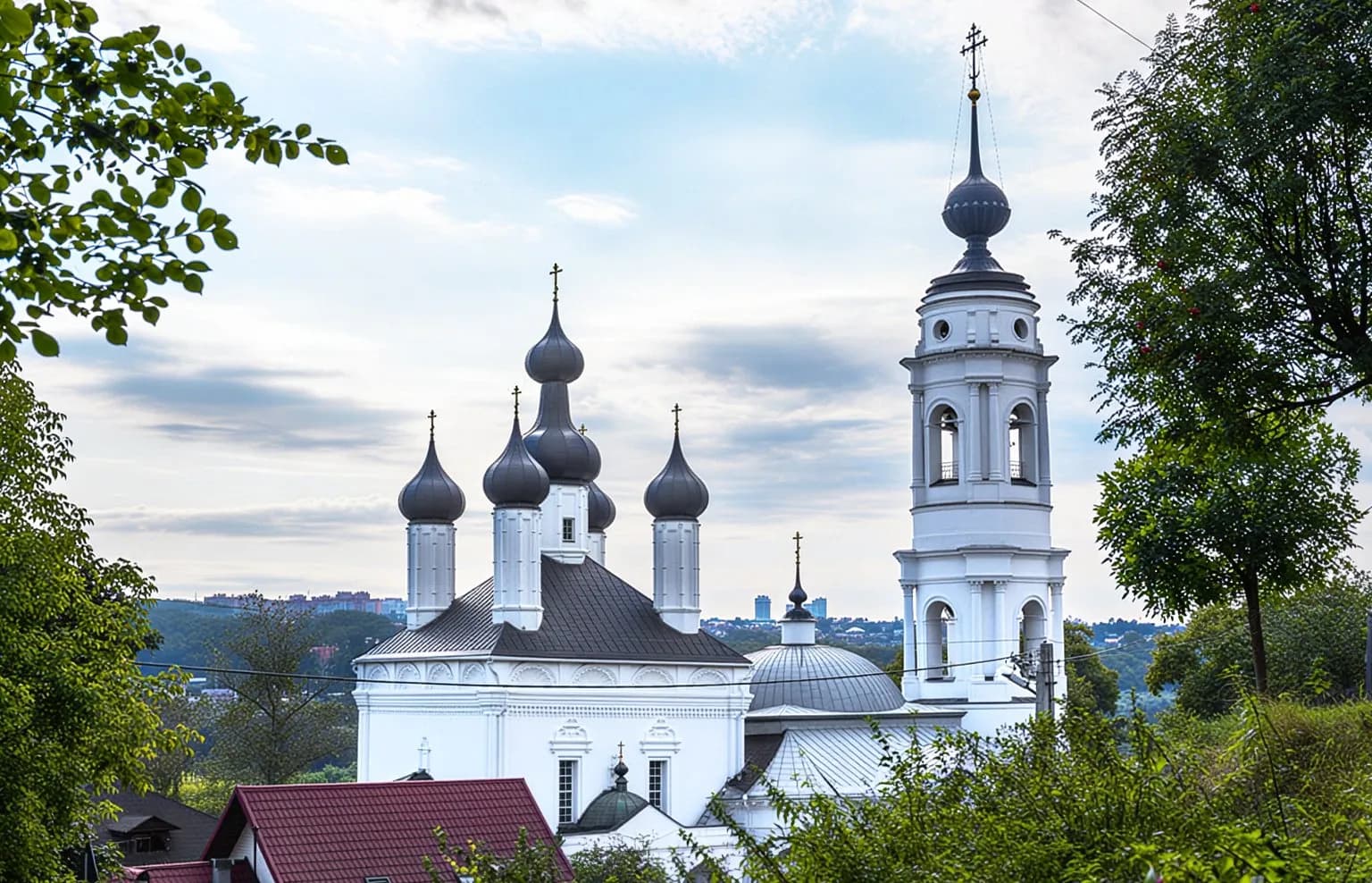
That said, the city itself is quite interesting, with enough curious spots to fill a day or two of leisurely exploring. The historic center is compact and hasn't been too badly affected by modern construction. The city's defining architectural feature is its many churches, often perched on picturesque hills, offering great views both on the way up and from their grounds.
You don't even need to plan ahead — just take the commuter train from Moscow, drop your bags at a hotel, grab a cappuccino at the café "1554," and head toward the first church you spot. Keep going from there, wandering the city from one temple to the next, and you'll end up seeing all of Kaluga. Views over the Oka River, merchant mansions, private museums, restored Soviet-era signs — and woven between them all, ancient churches with crumbling frescoes.
Ekaterina Smirnova is a writer, film critic, journalist, and author of a Telegram channel about art and travel — Ulysses Artbox— and an avid traveler. Over the past few years, Ekaterina has visited Kaluga and the surrounding region regularly and has watched the city change firsthand.
History
In the 14th century, Moscow and Lithuanian princes fought over the Kaluga lands — and the former prevailed. The new century brought a more significant confrontation: in 1480, Khan Akhmat of the Great Horde marched against Moscow. Prince Ivan III of Moscow and his sons established a defensive line 64 kilometres long and, armed with firearms, successfully repelled the attacks, forcing Akhmat to retreat. The so-called Great Stand on the Ugra River (the area is now home to the national park of the same name national park) brought the Mongol yoke over Rus to an end.
In 1512, the Kaluga lands were raided by Crimean Tatars, and shortly after their defeat, the Kaluga Principality — which had existed for just 11 years — was absorbed into the Muscovite state. In 1576, Ivan the Terrible established his headquarters in Kaluga to command troops against the Tatars. During that period, Kaluga became one of the centres of icon painting. Today, the Museum of Icon Painting operates in the town of Borovsk in the Kaluga region. The Time of Troubles stalled the city's development: Kaluga fell under the control of False Dmitry I, then the rebel Ivan Bolotnikov, False Dmitry II, and Polish interventionists. Taking advantage of the political uncertainty, the city was attacked by both Crimean Tatars and free Zaporozhian Cossacks, as a result of which the Kaluga lands lost more than half their population.
On the heels of these raids, the city suffered famine and a devastating fire that destroyed the wooden Kaluga Kremlin. After the Romanov dynasty came to power, Tsar Mikhail Fyodorovich exempted Kaluga from taxes for six years. From the 17th century onward, the city was rebuilt, with many formerly wooden buildings and churches replaced by stone ones.
Furthermore, owing to its proximity to Moscow, Kaluga became a strategically important industrial centre: one of the first cast-iron foundries in Russia was established here. In the early 18th century, another strategic industry was added to metallurgy: the production of sailcloth. On the orders of Peter I, in 1720 the Polotyany Zavod was built on the Sukhodrev River. Today it is an urban-type settlement where paper, cardboard, and cellulose fibre are produced.
The Kaluga lands played a key role in the events of the War of 1812, serving as the main rear base of the Russian army. Kaluga became Napoleon's primary objective after he found himself without food or supplies in burned-out Moscow. But Kutuzov's forces compelled the French to advance not directly to the city along the Old Kaluga Road, but to turn onto the New Road, where Napoleon's forces were routed in the Battle of Maloyaroslavets.
Empress Catherine II visited Kaluga and, as part of her urban planning reforms, ordered the city to be redesigned. The modern layout of the city centre reflects the construction and street plan of the late 18th and early 19th centuries — for example, the Gostiny Dvor buildings and the central streets of Kirova and Pushkina.
The subsequent events of the 19th century brought economic decline and a slower pace of life to the city. Kaluga had once been a dynamic centre of river trade, but as the Oka River grew shallower and rail transport developed, the city lost its significance, becoming a quiet refuge and a place of exile for the last Crimean Khan, Shahin Giray, and for Imam Shamil, who had been defeated in the Caucasian War. Shamil lived in Kaluga for nine years and was moved by the generosity and magnanimity shown by the Russian authorities toward their former enemies.
In the early 20th century, the city was shaken by the First World War, and Kaluga became an important rear medical centre. In 1915, future Marshal Georgy Zhukov left for the front from Maloyaroslavets. The Revolution of 1917 gave rise to political circles and large-scale agitation in the city, particularly among the military; a struggle broke out between the Bolsheviks and supporters of the Provisional Government, which brought the city to a state of martial law. In 1918, for five months, there existed the Kaluga Soviet Republic.
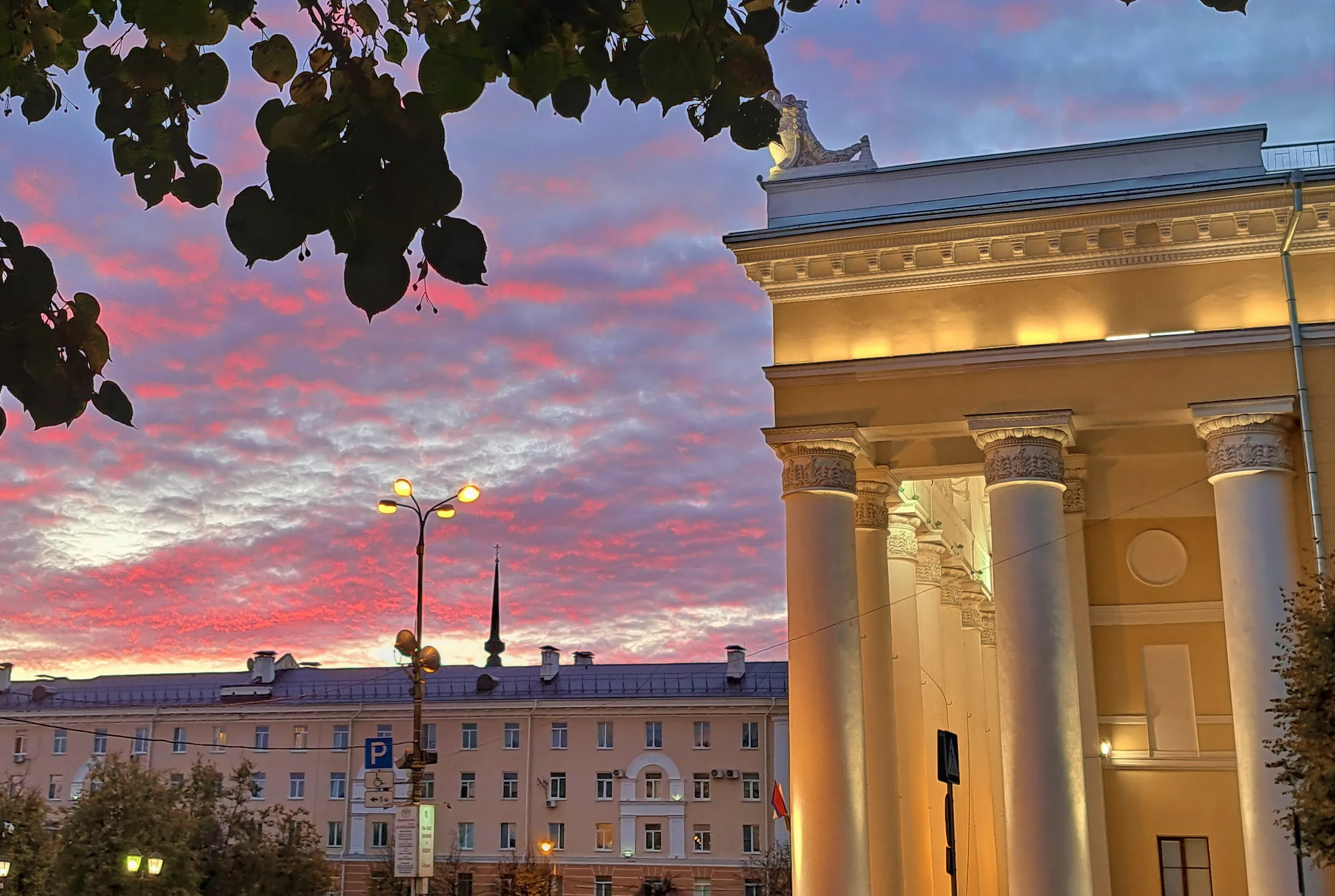
Only after the end of the Civil War did the revival of industry, trade, and culture begin. This played an important role in the lead-up to the Great Patriotic War: as an engineering hub, Kaluga contributed significantly to the needs of the army. When the war began, the city resisted the invaders, and Kaluga was occupied only from October to December 1941. In 1943, French pilots of the Normandie squadron entered combat for the first time in the skies over the Kaluga region. After the war, Kaluga was partially rebuilt, a new drama theatre opened, a trolleybus line was launched, and roads were widened. In 2026, Kaluga will mark its 655th anniversary.
A Walk Around the City
Kaluga sits on the Oka River, so it comes as no surprise that its main promenades are the riverfront embankments.
The Oka Embankment is paved with stone tiles and lined with benches, and in summer a city sand beach with a volleyball court opens right at the water's edge. There are no cafés or restaurants along the embankment itself, as it runs parallel to a busy road.
The Yachensky Reservoir Embankment is more peaceful. There is no traffic noise, and you will find street food and coffee stalls dotted along the path. In season, the Yachensky embankment is home to a water sports club offering water skiing and other aquatic activities, as well as a beach with wakeboard and boat rentals. Cafés are open year-round, including the chain café Pur Pur Coffee — reasonably priced, with a wide selection of desserts and main dishes.
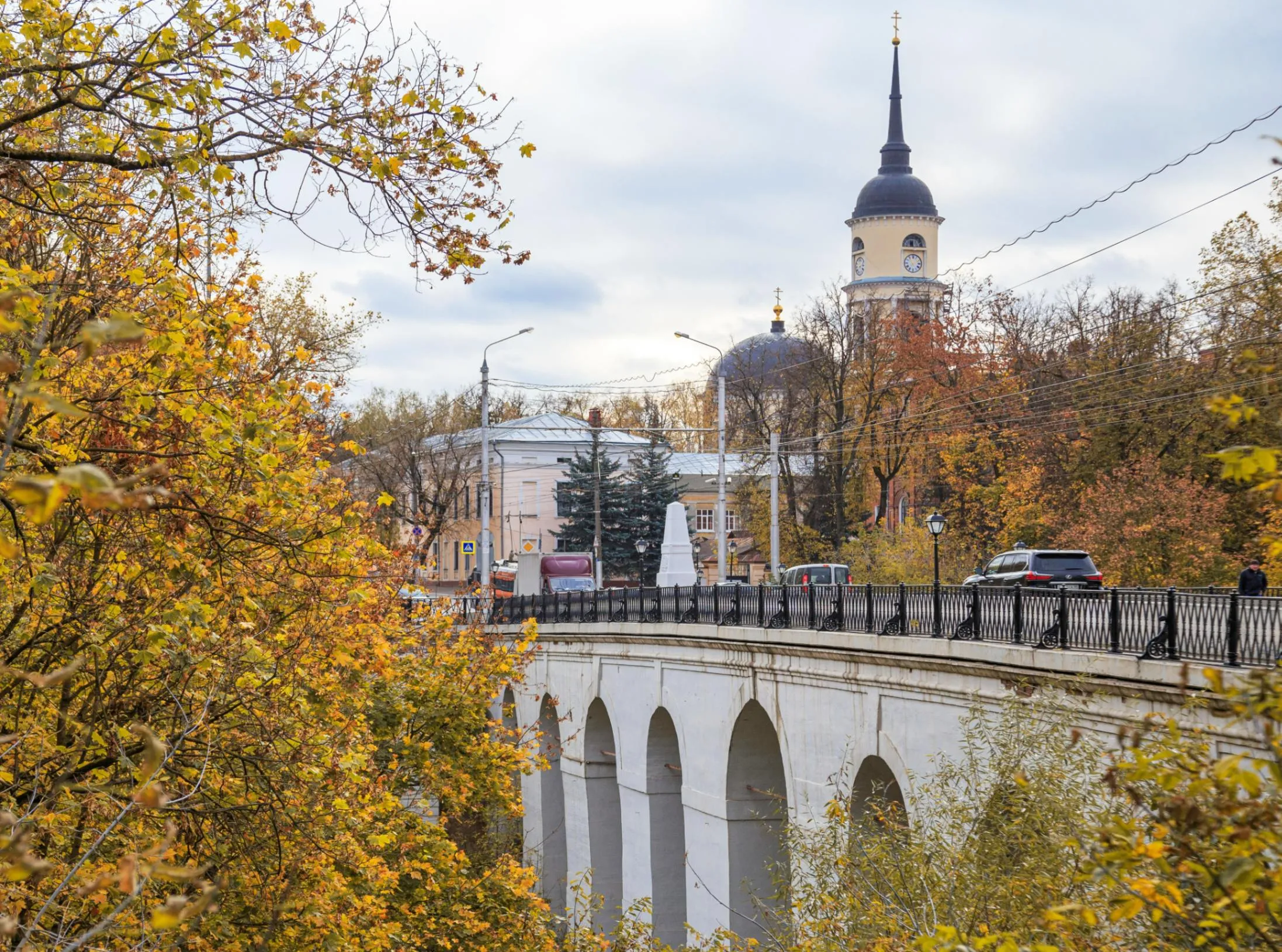
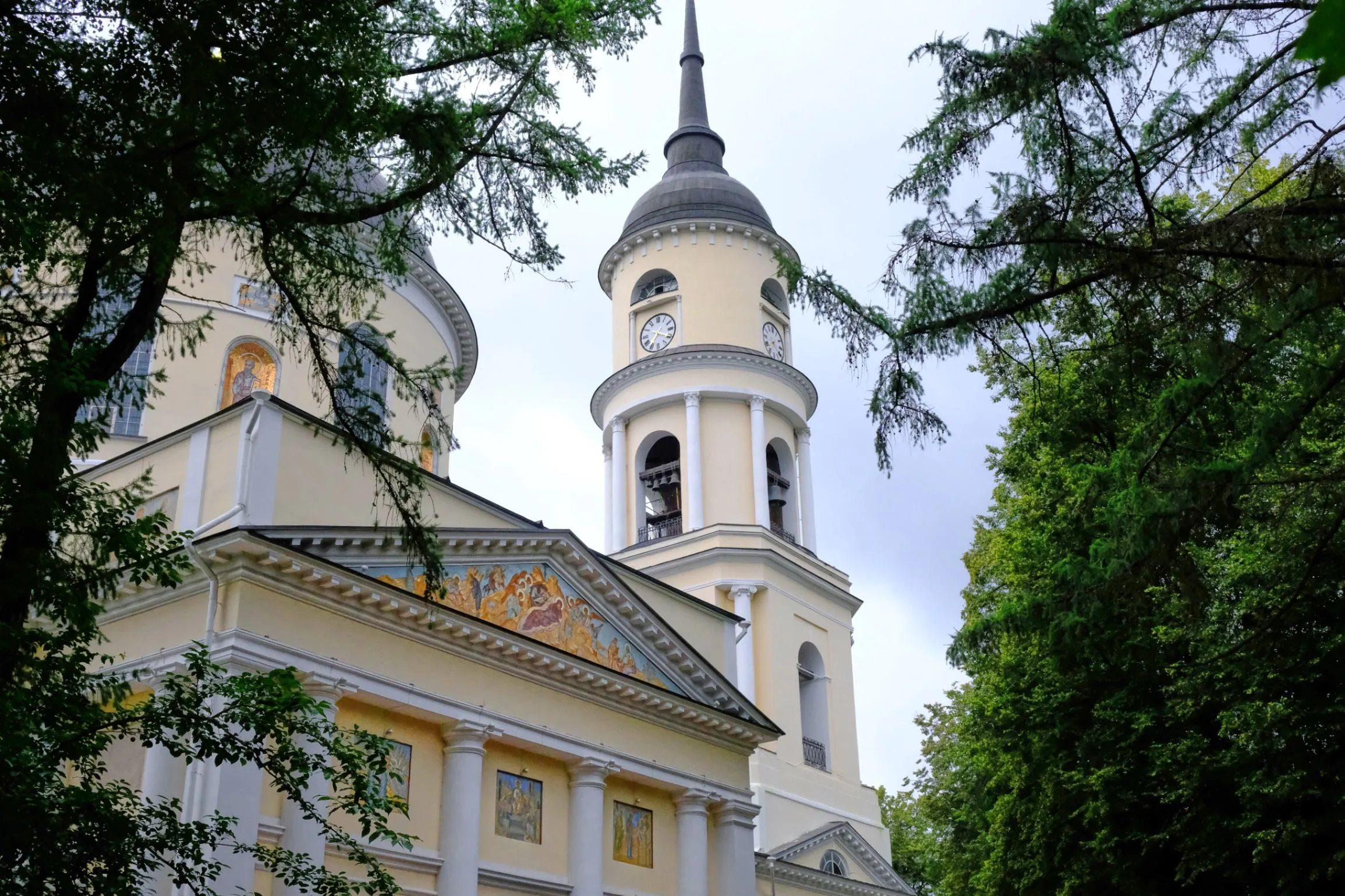
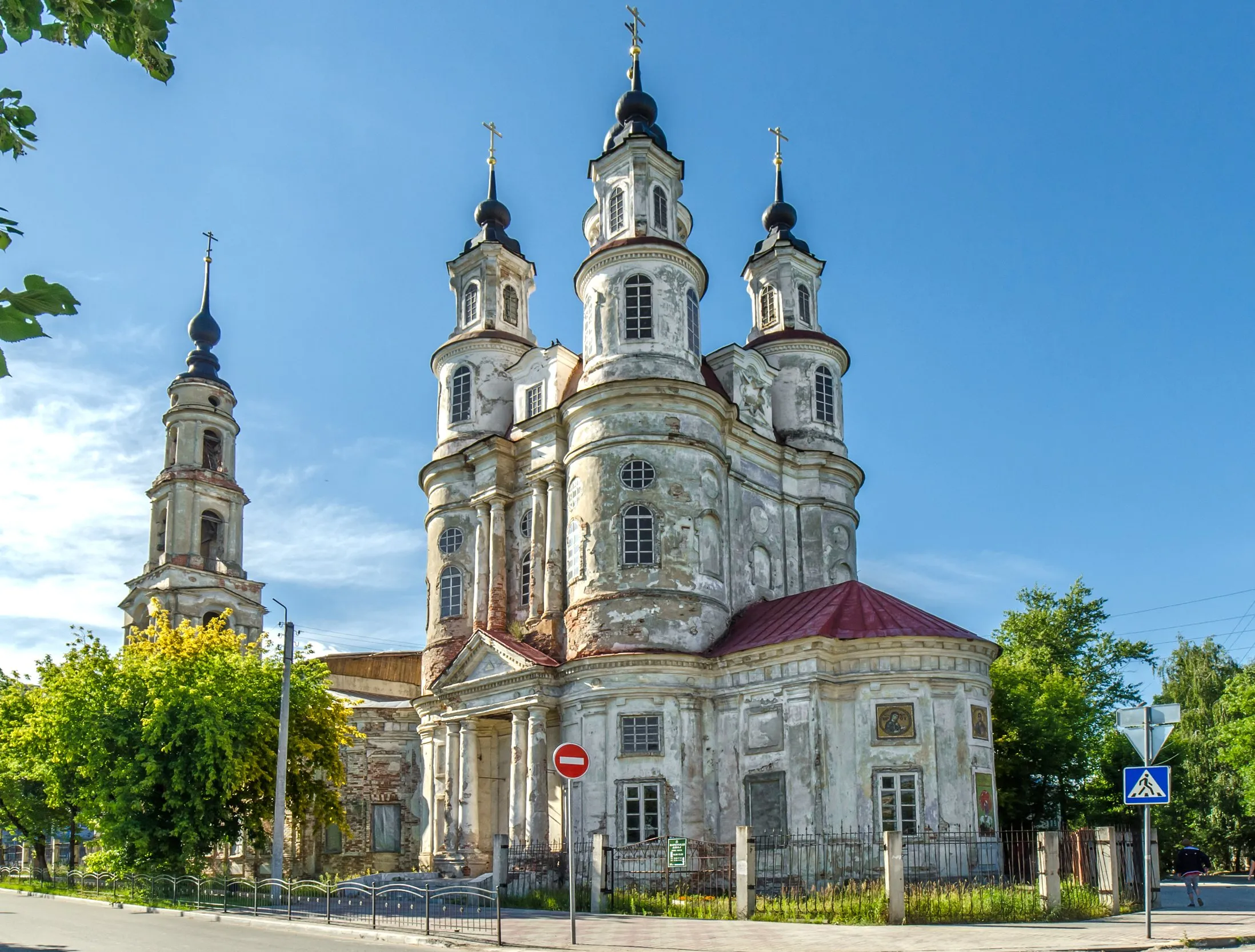
Central Park is another great spot for a stroll. You can enter from the city centre or climb a path up a steep hillside from the Oka Embankment. The view of the river from the panoramic observation deck is magnificent, especially at sunset. The park is home to the Holy Trinity Cathedral, built in the early 19th century. Inside is a multi-tiered iconostasis; the cathedral has been beautifully restored, as has the Church of Cosmas and Damian — an 18th-century Baroque church.
Both embankments and the park lie outside the city centre. The concept of a "city centre" in Kaluga has no clear geometric boundary, but it can roughly be defined as the rectangle formed by Kirova, Lenina, Pushkina, and Gagarina streets. The Space Museum, the embankments, and Central Park are all some distance away, but the city is compact, and on a fine day it is entirely possible to visit all the main sights on foot.
Along Kirova Street, a number of typical 18th- and 19th-century residential buildings have survived: the Kuptsov House (now a puppet theatre), the merchant Cheshikhin House and the Kozhevnikov Estate. The latter is particularly valuable because the entire complex has been preserved — the main blocks, a wing, and the rather dilapidated wooden stables. These are all examples of the development that followed Empress Catherine II's approval of the city's new urban plan.
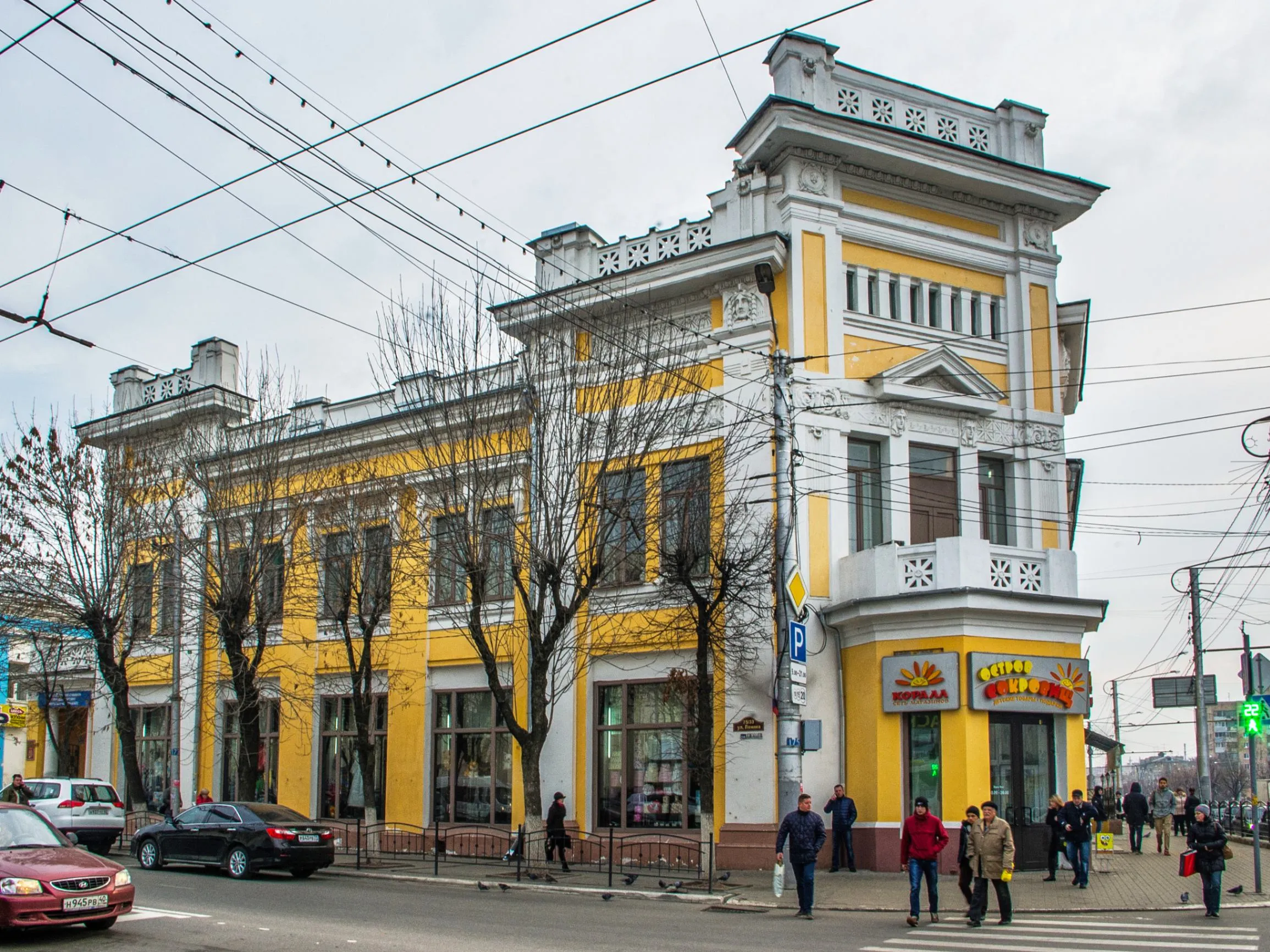
At the corner of Lenina Street stands the striking Rakov merchant store building: today, unfortunately, it is an ordinary budget multi-brand shopping centre. The design and decorative elements conceived by Kaluga architect Vasily Vinogradov in 1911 take into account the oblique angle of the two intersecting streets and the practical requirements of a department store on the ground floor, including tall, wide display windows.
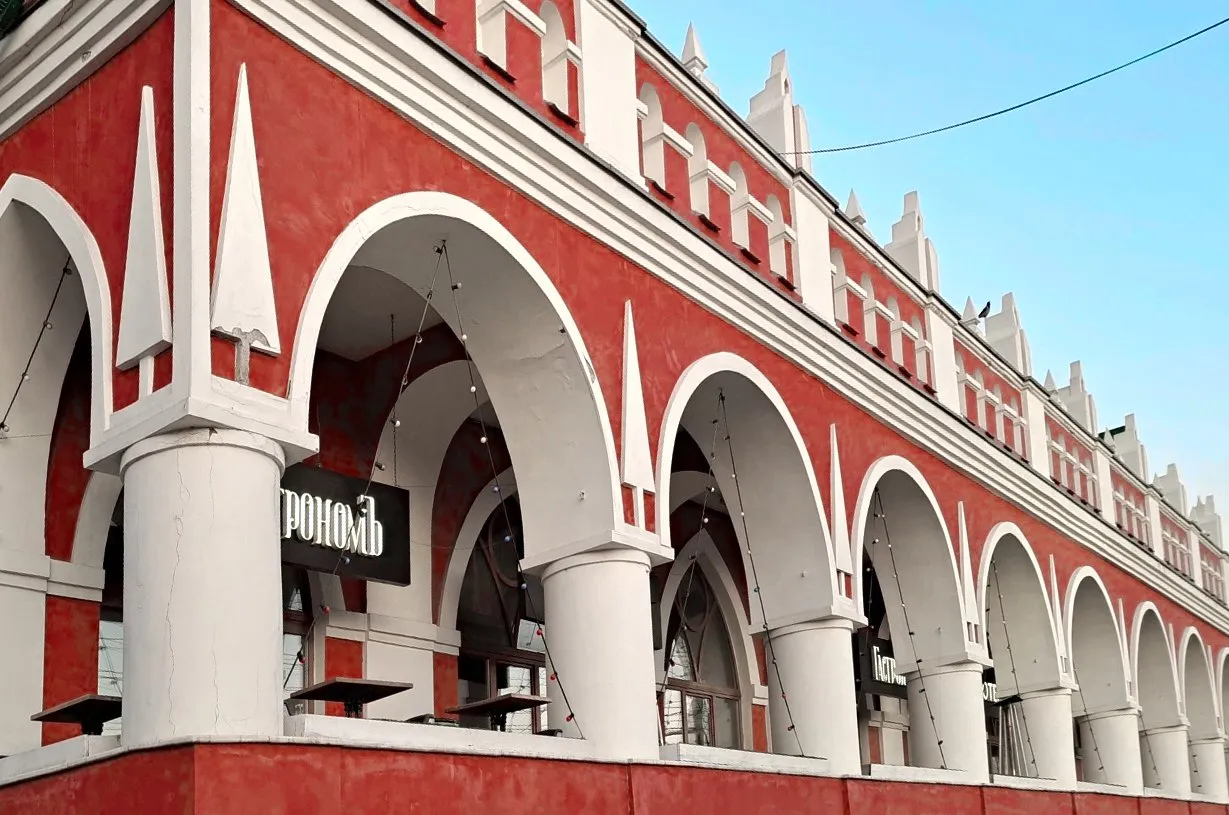
Gostiny Dvor — the former trading arcade built in 1784 in the Russian Gothic style — is now a retail and exhibition passage, tourist information centre for Kaluga and the surrounding region, where you can learn about the city and, for example, the Ugra National Park. It also houses museums, art galleries, restaurants, a venue for seasonal festivals and workshops, and dedicated shops selling toys, glassware, and souvenirs.
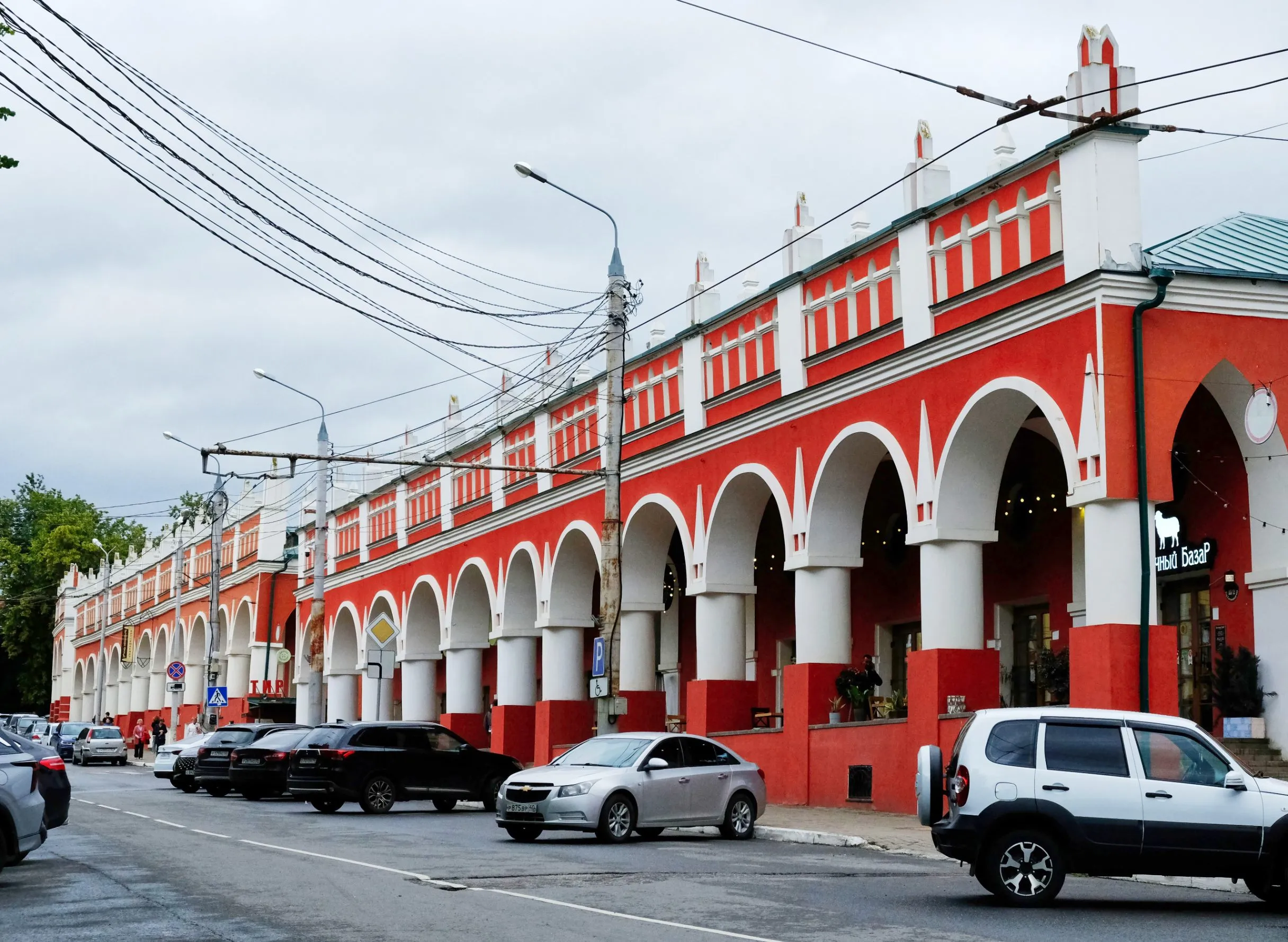
On the subject of trade: an important part of Kaluga's history and the shaping of its present-day appearance is its merchant class: local shops traded in leather, timber, confectionery, and baked goods. It was the merchants who controlled passenger and towboat shipping on the Oka, and who invested in the construction of churches, hospitals, orphanages, and the first railway.
Here are some notable places associated with the merchant heritage: the Makarov merchant chambers, the estates of the Kuvshinnikovy-Smirnovy and the Zolotaryovyfamilies, the Vashkov House, and the Bilibin Estate. Many of these buildings are in need of restoration.
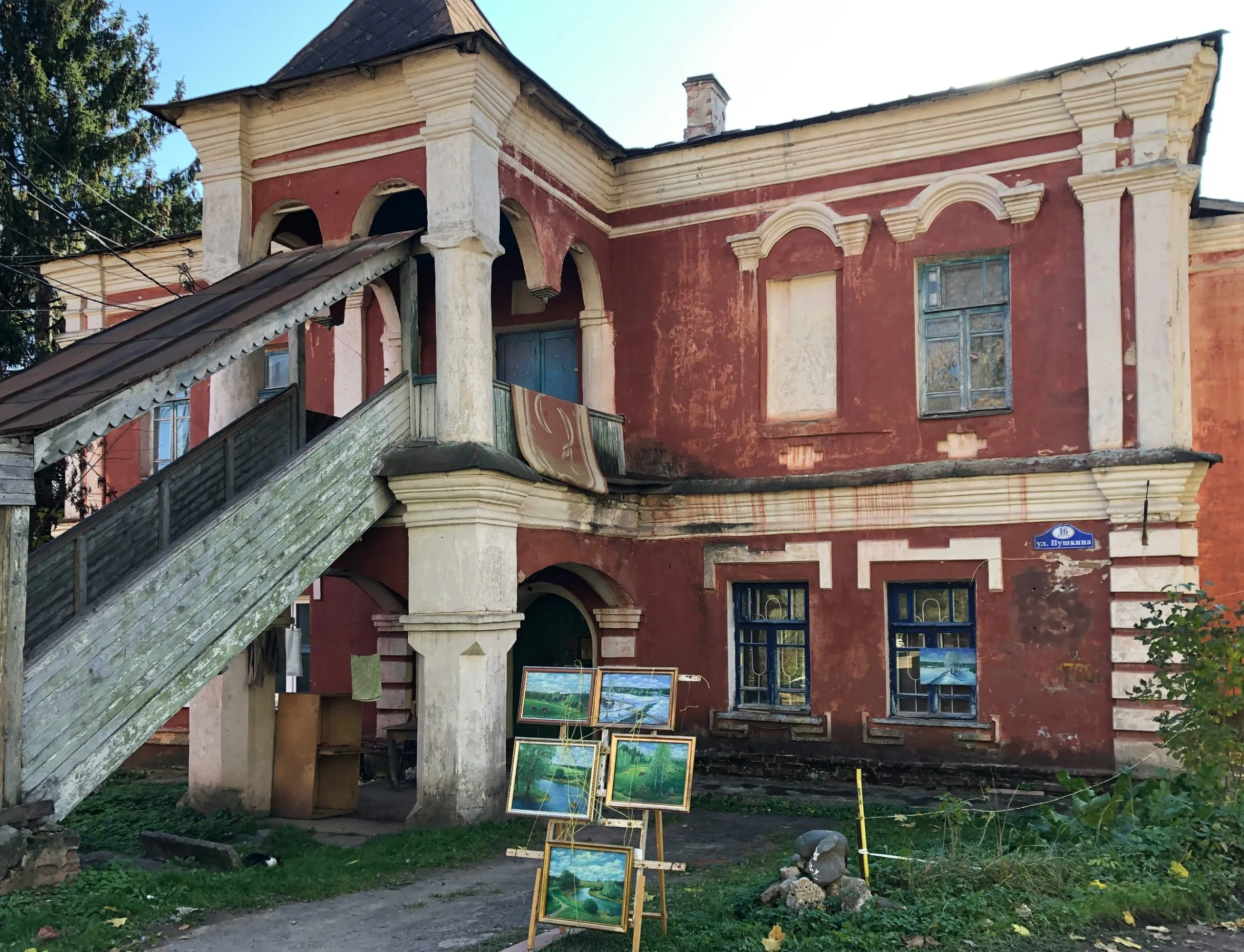
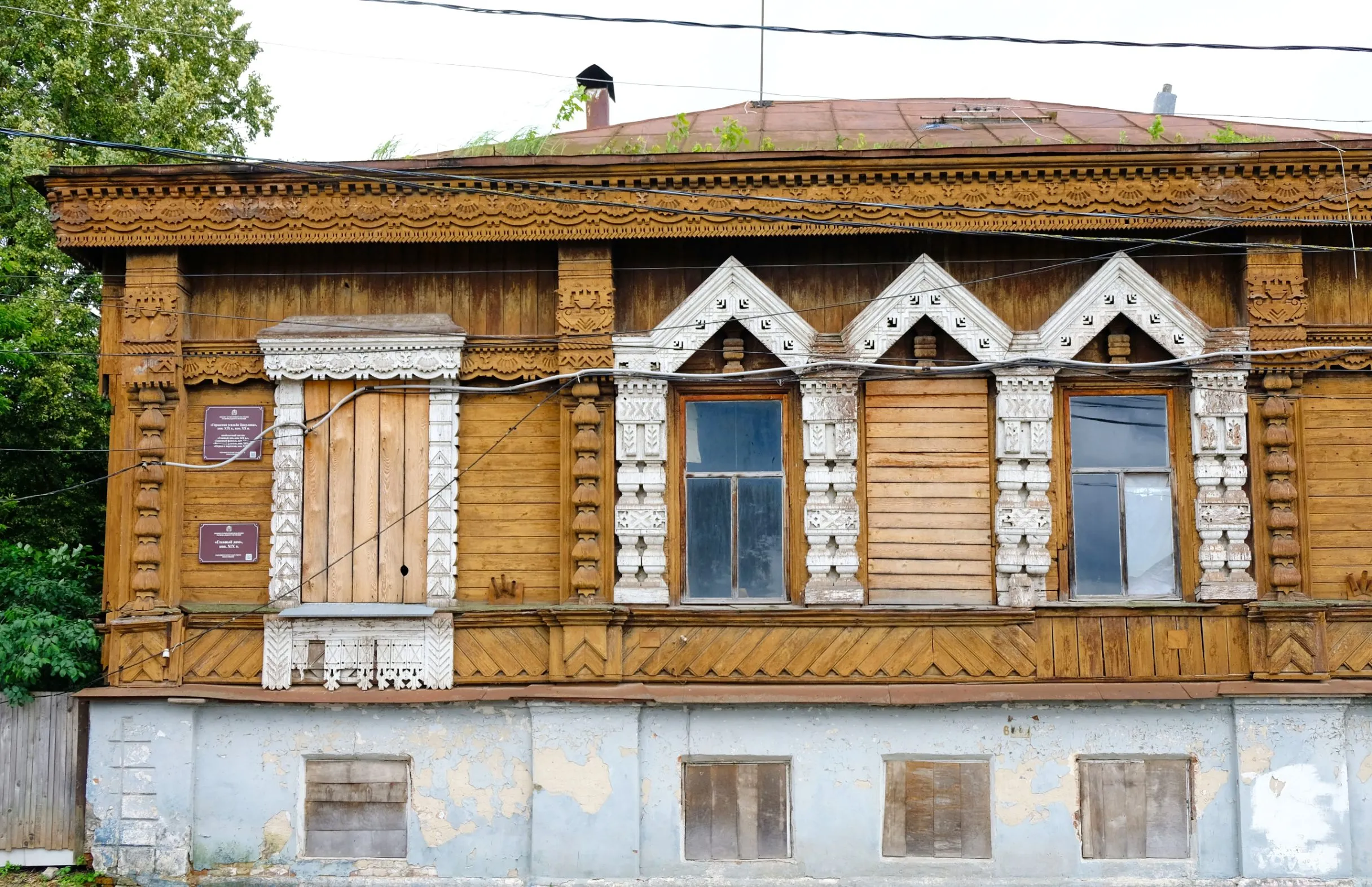
The Ivan Bilibin House is home to the local history museum, and one of its branches occupies the wooden house of Decembrist Batenkov. There are already some results from the restoration of historic buildings. The Pyat Mam kindergarten occupies a wooden house in the city centre (5 Voskresensky Lane), and the Usadba restaurant is located at 7 Vilonova Street. Houses restored by the Tom Sawyer Fest volunteer movement are clustered on Ryleeva Street — there are five of them (buildings 62, 64, 65, 67, and 73).
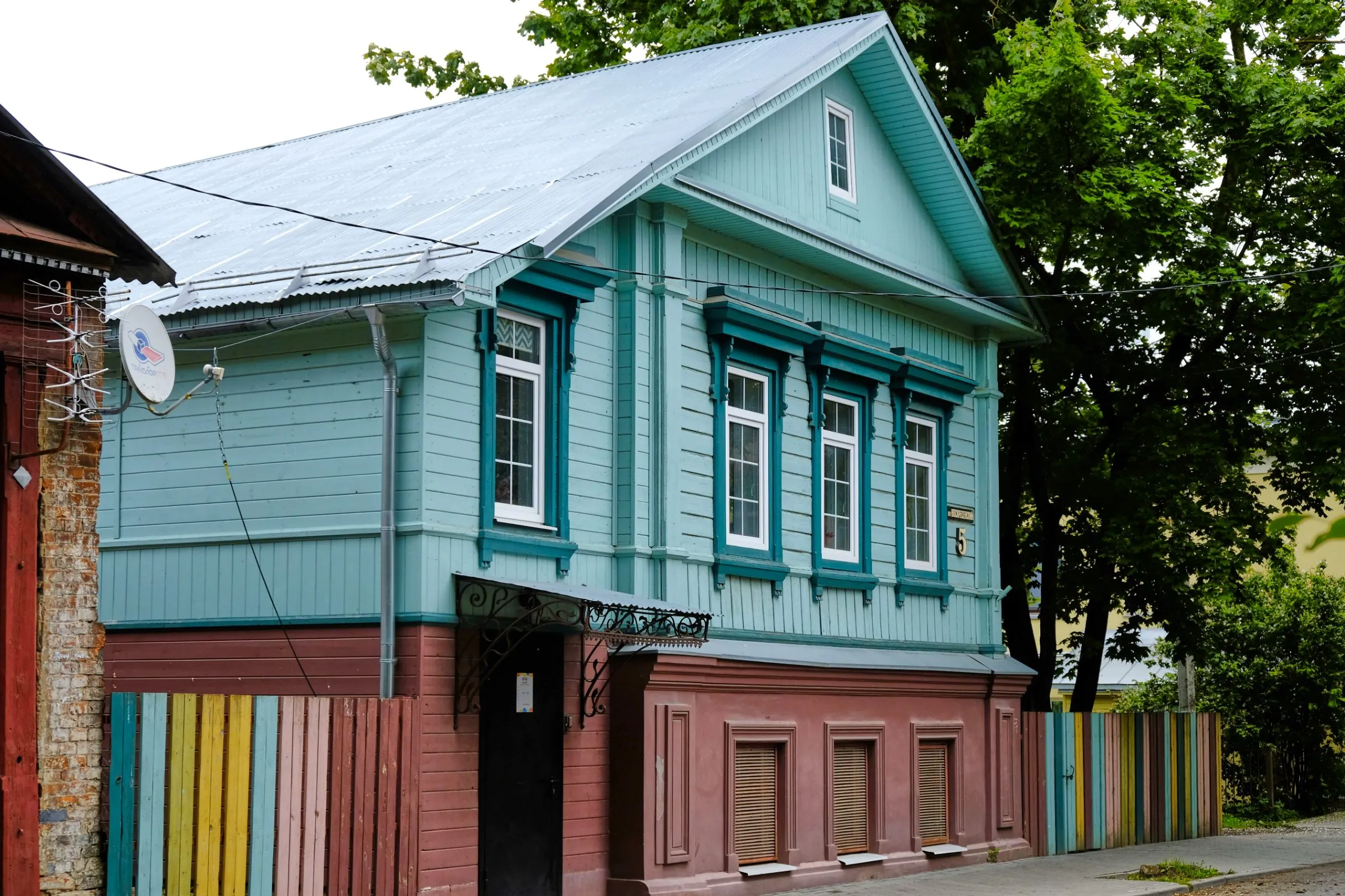
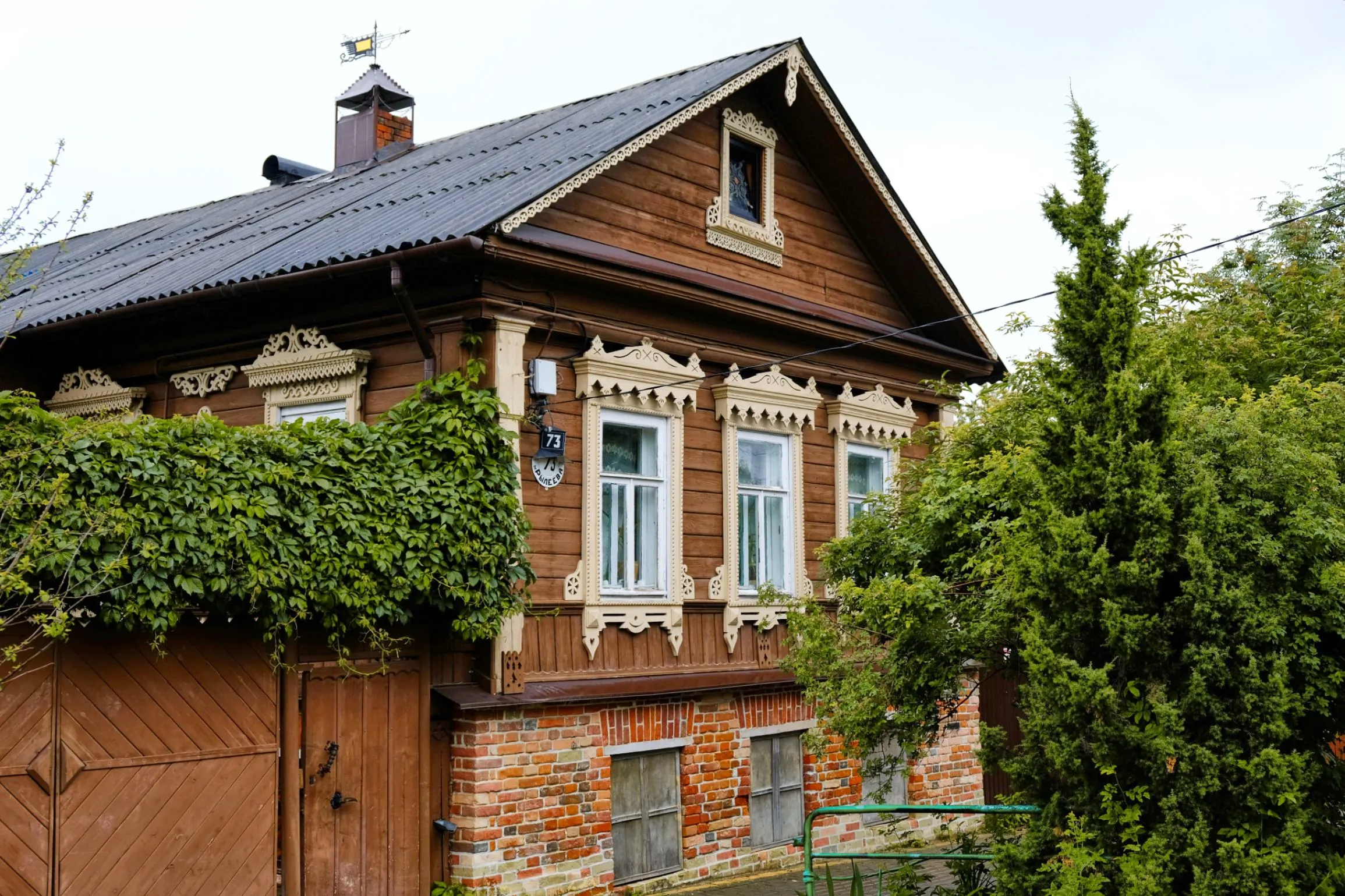
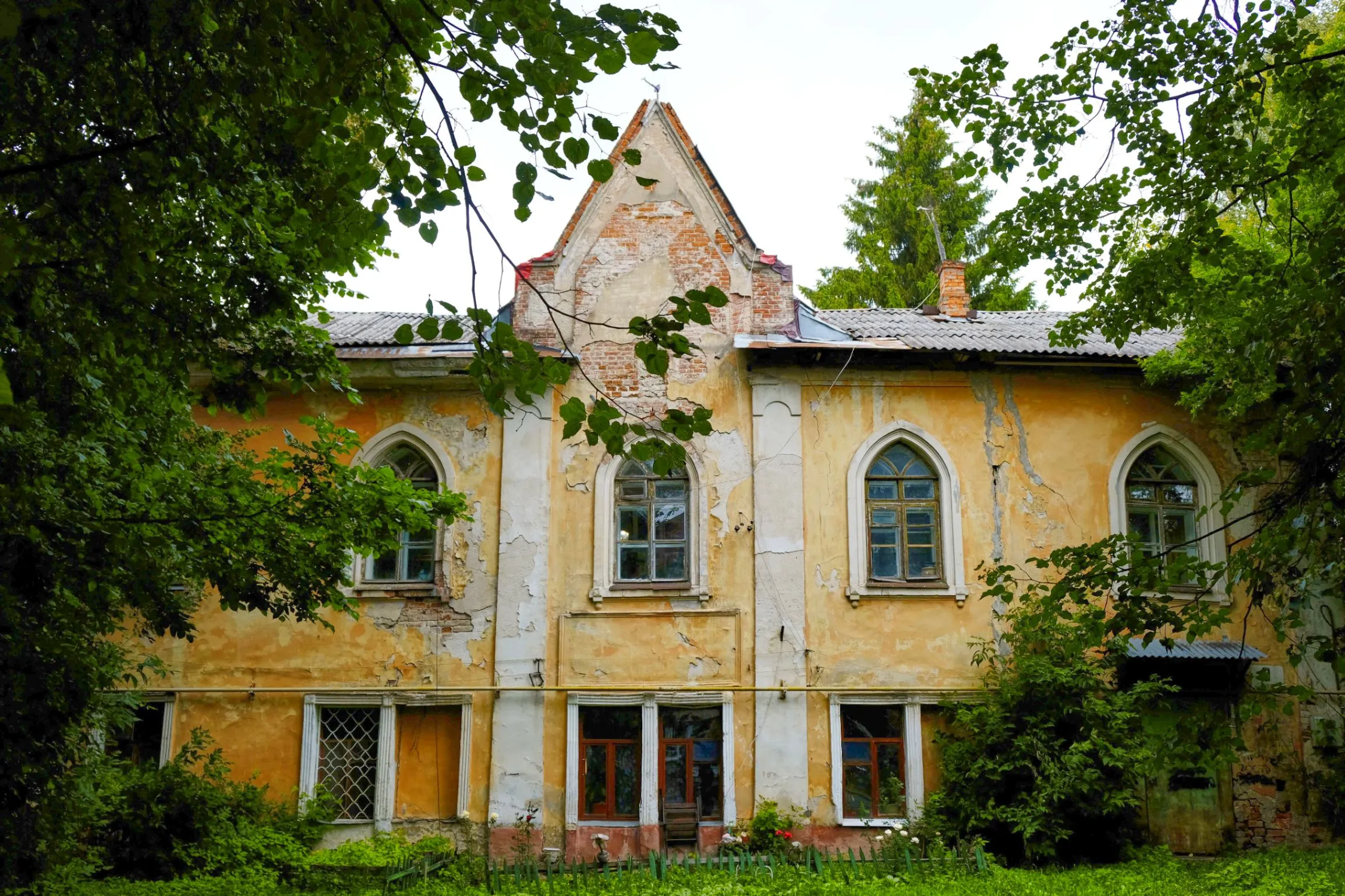
A few more examples: the house of shipping company owner Tsipulin (3 Podvoyskogo Street) — a great wooden building; the mansion at 9 Vilonova Street — charming Gothic; the Registry Office (2/1 Starichkov Lane); and the Koltsov Estate (14 Voskresenskaya Street).
Churches stand out in Kaluga's cityscape in a particularly striking way — they are picturesquely positioned on hilltops.
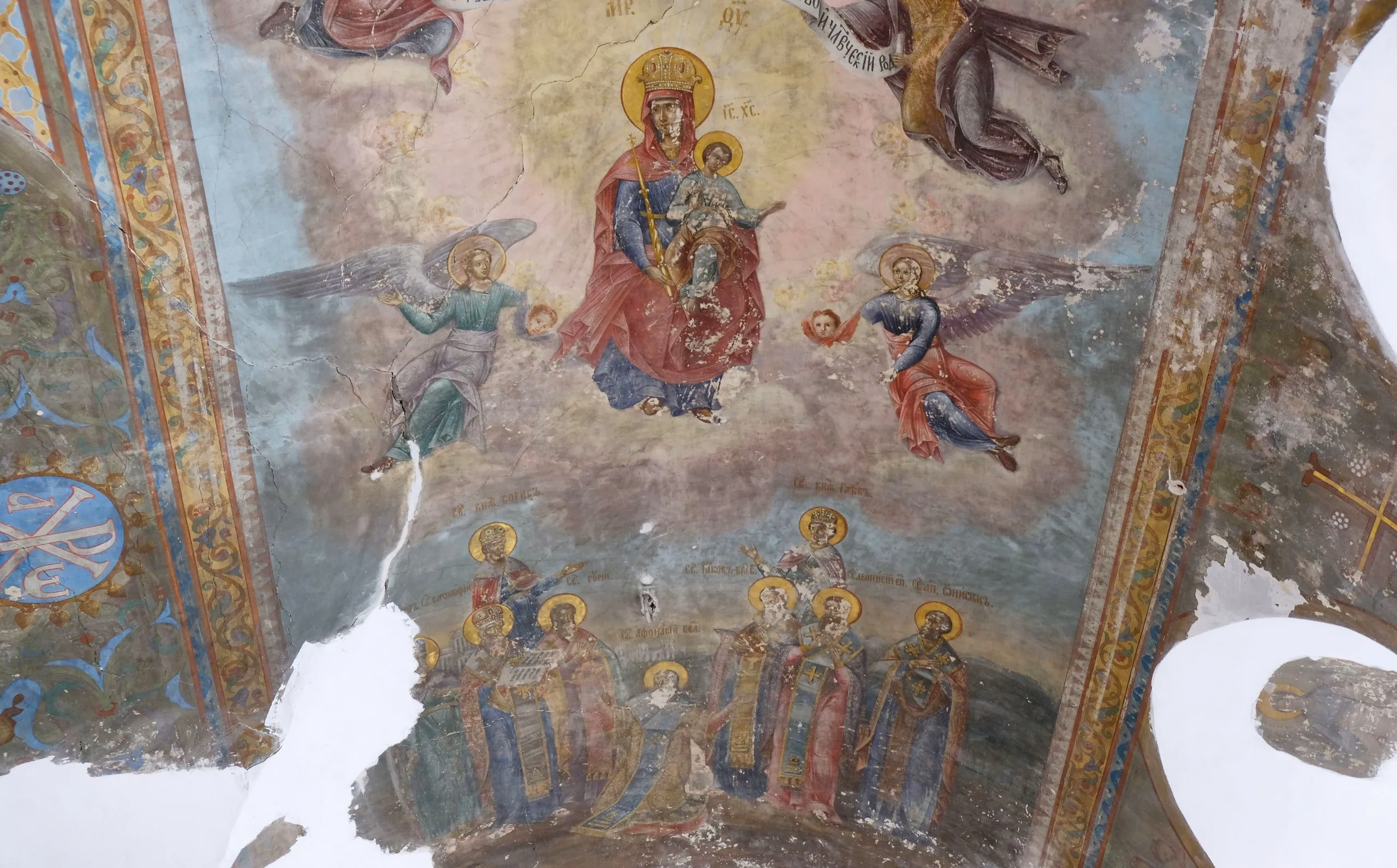
The Church of the Transfiguration 'na podole' (7 Podvoyskogo Street) retains its original frescoes from the early 18th and 19th centuries. The staircase on Monastyrskaya Street offers a great view of the church.
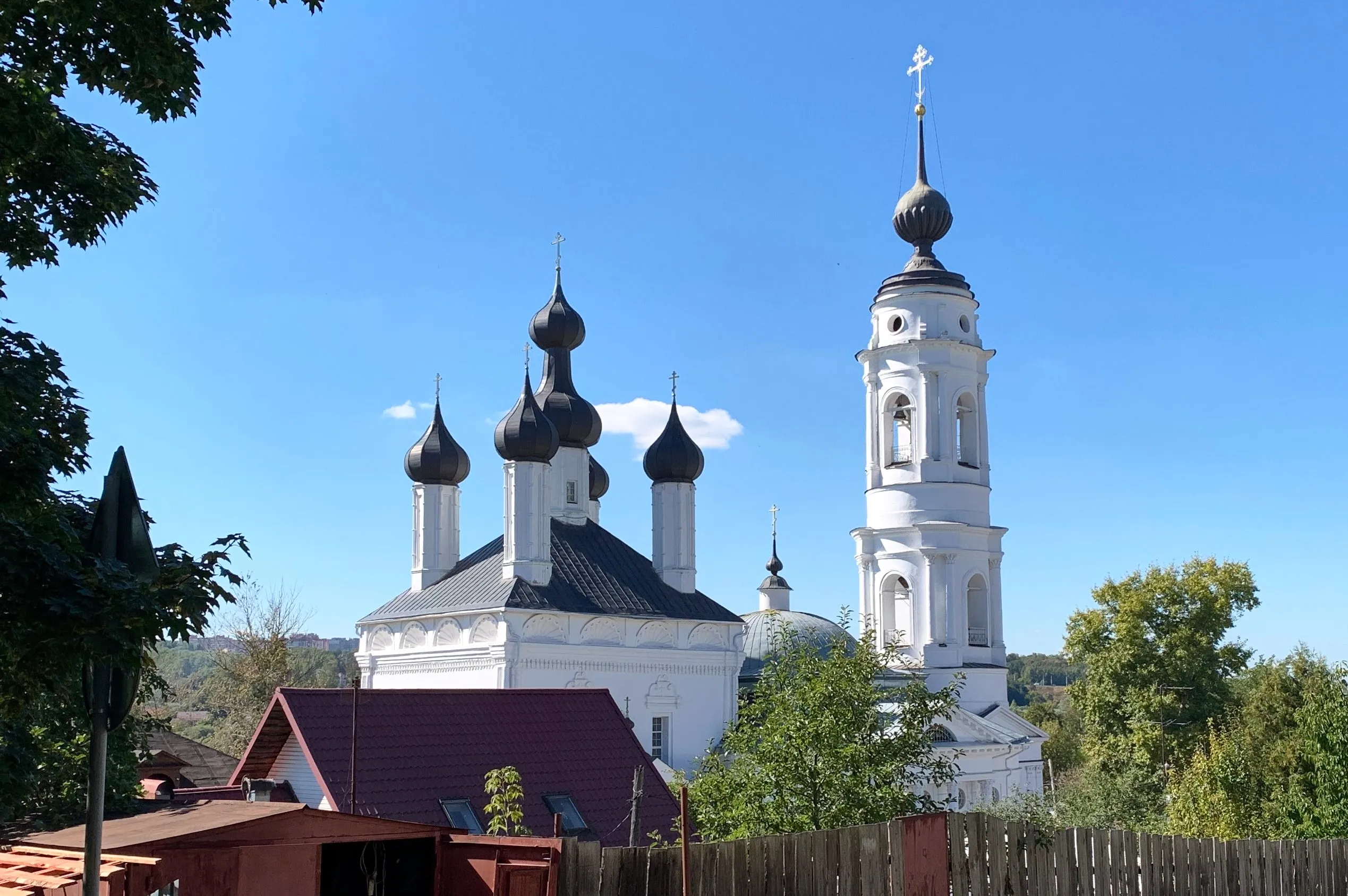
The Church of the Kazan Icon of the Mother of God (1 Monastyrsky Lane) has lost its interior decoration, as has the Epiphany Church (23 Kutuzova Street). Both, however, impress with their architecture.
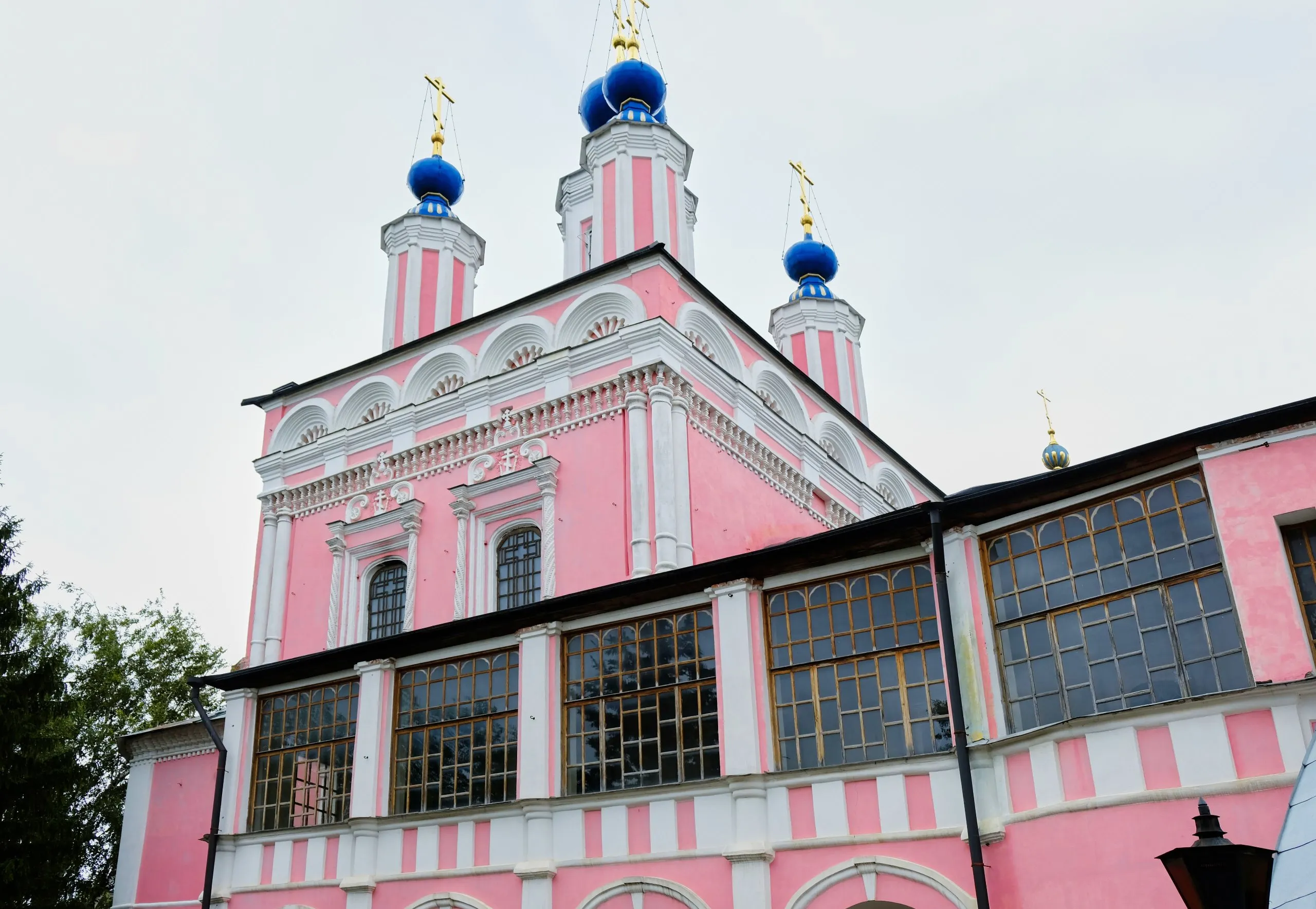
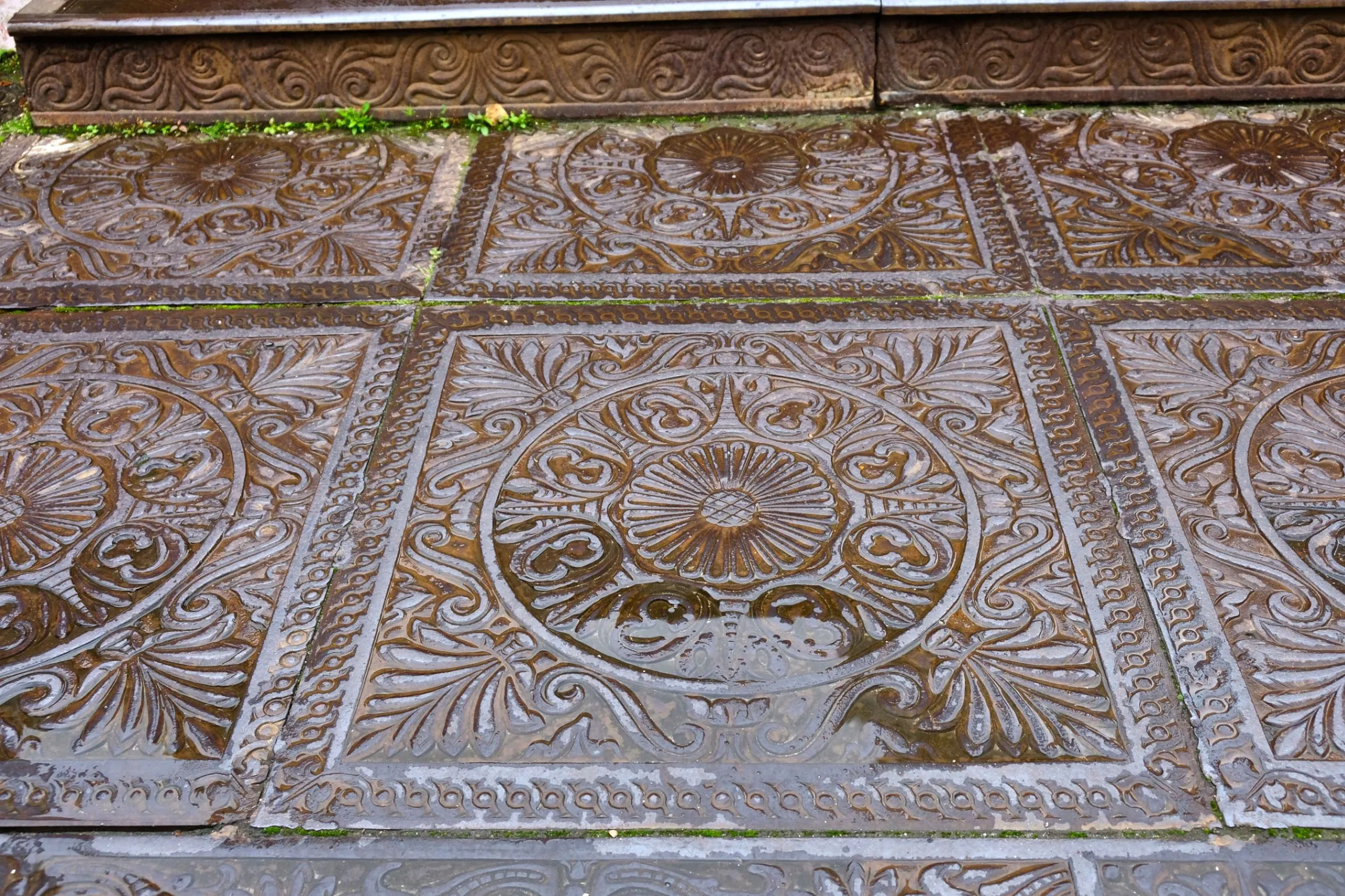
The Cathedral of St. George the Victorious 'za verkhom' (14 Baumana Street) retains its original external cast-iron staircases.
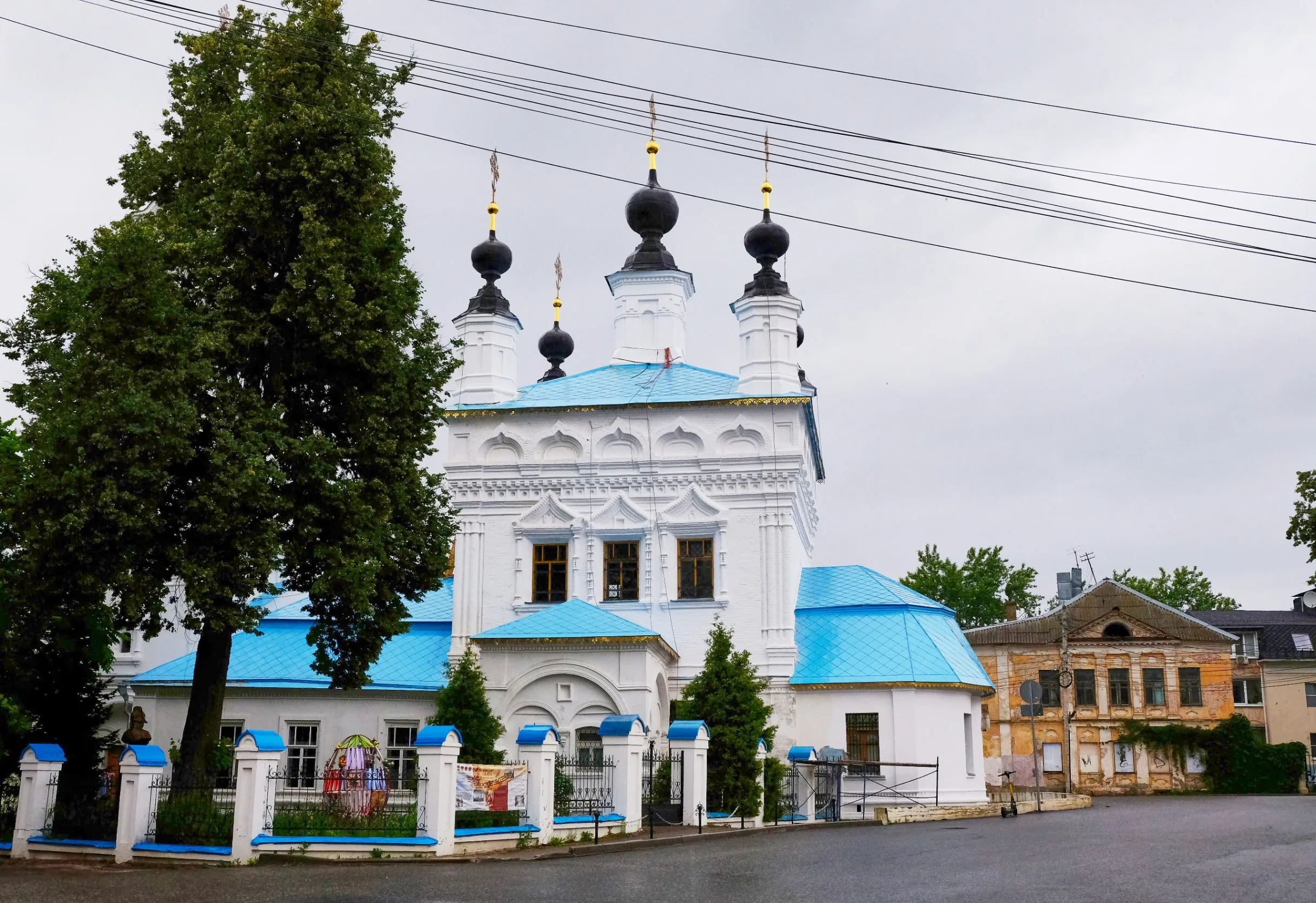
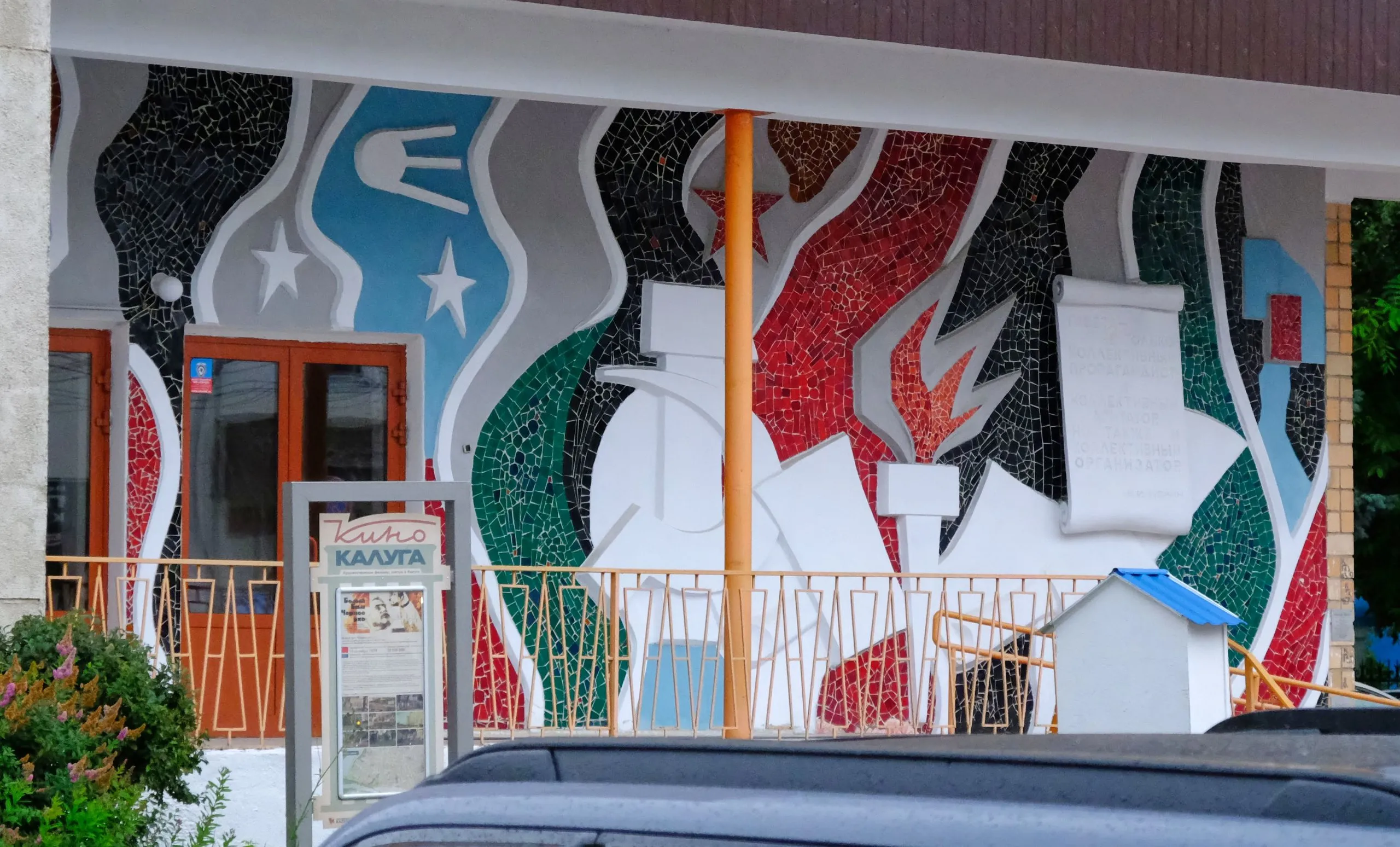
The Church of the Intercession of the Holy Virgin (4 Marata Street) is interesting in its own right, and nearby a Soviet-era mosaic has also survived (10 Marata Street).
The Church of the Transfiguration 'za verkhom' (8 Smolenskaya Street) was built in 1700; the altar retains its original frescoes from the year of construction, and the north chapel has a tiled stove.
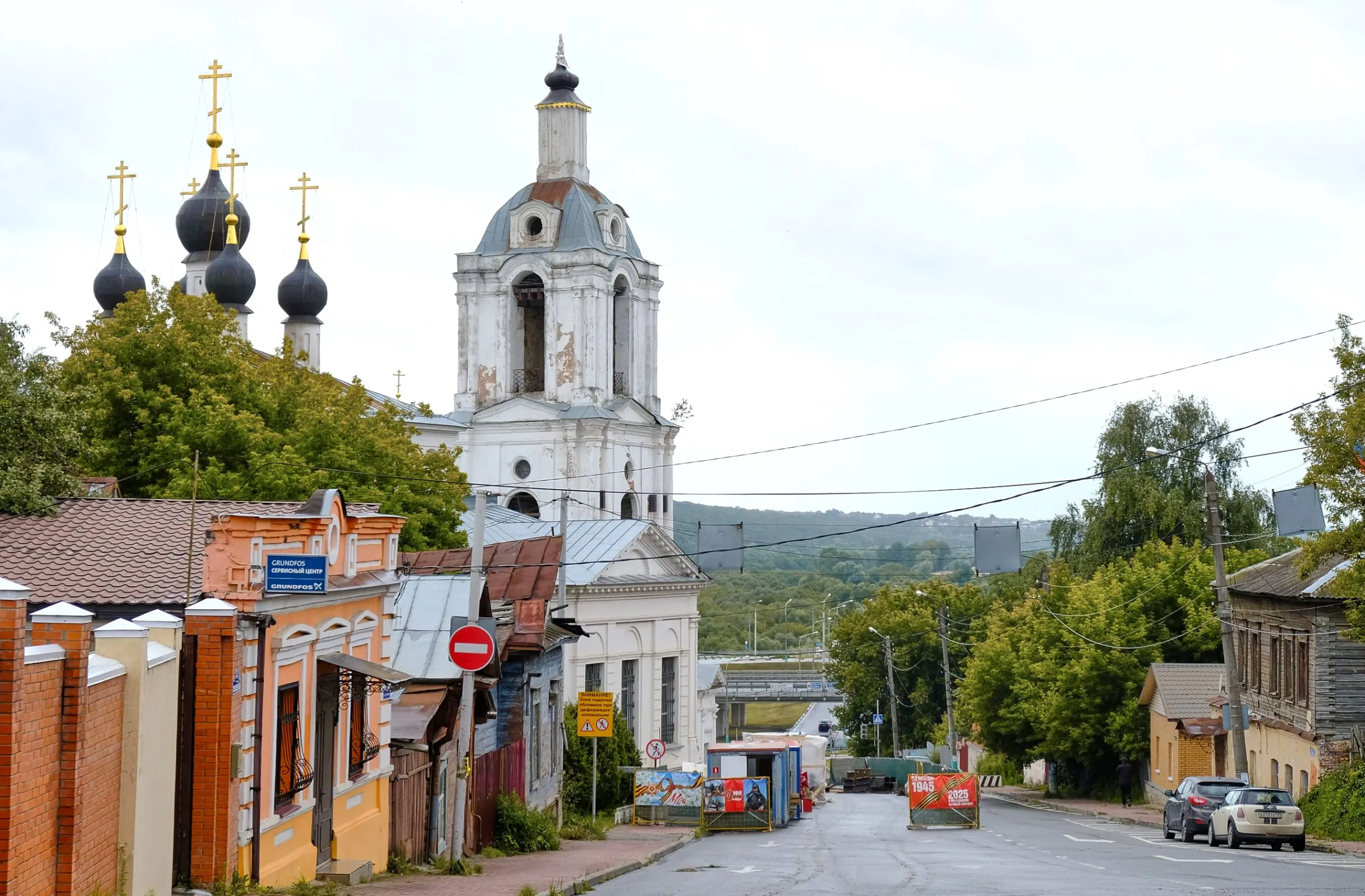
Tip: if you don't feel like following a set route around the city, you can simply wander aimlessly from church to church. The historic centre is dotted with old and beautiful churches. In some spots they are surrounded by equally handsome 19th- and 20th-century buildings, while in others nothing of the historic streetscape remains apart from the churches themselves, and the old churches stand amid grey Khrushchev-era apartment blocks.
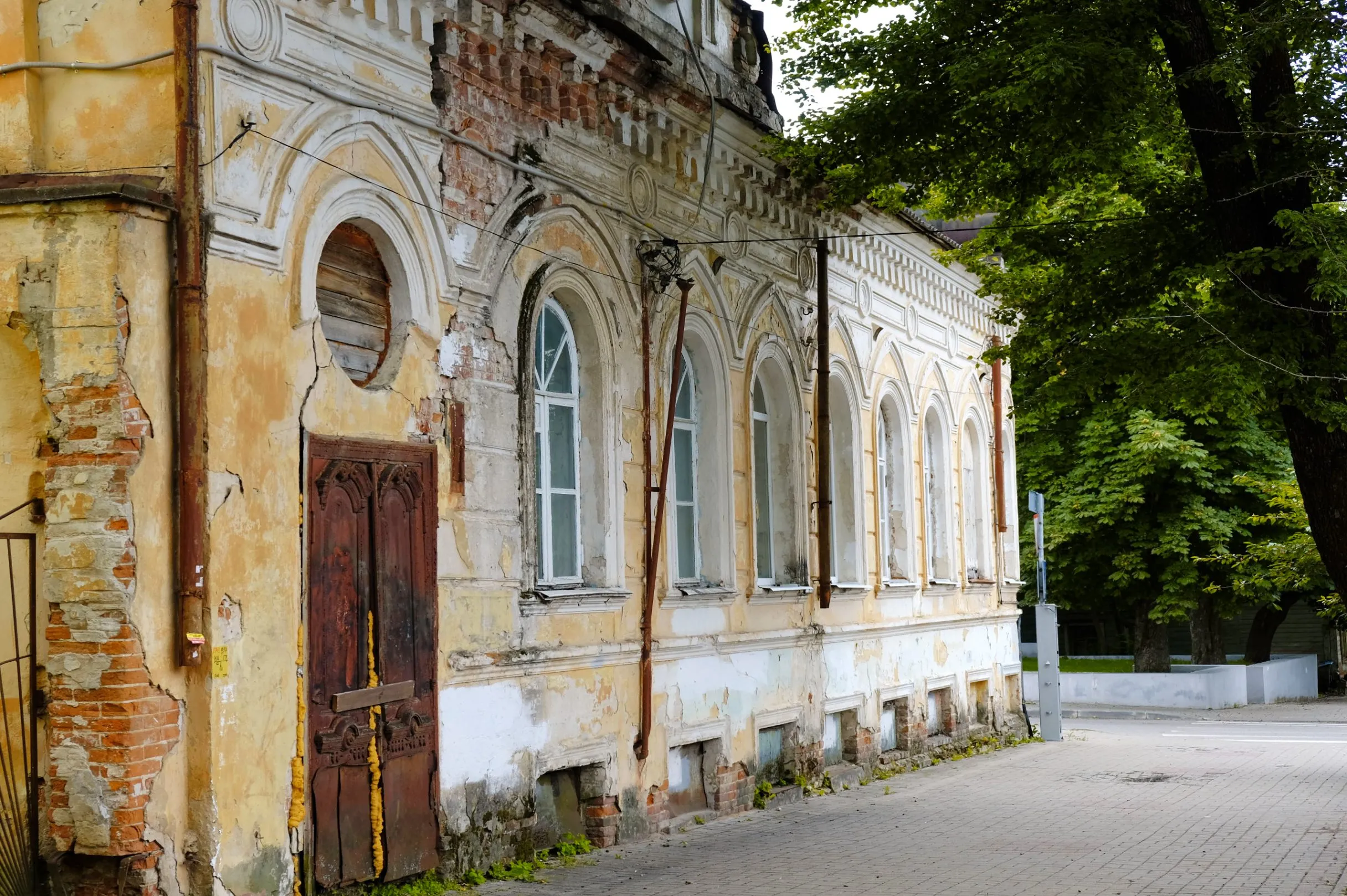
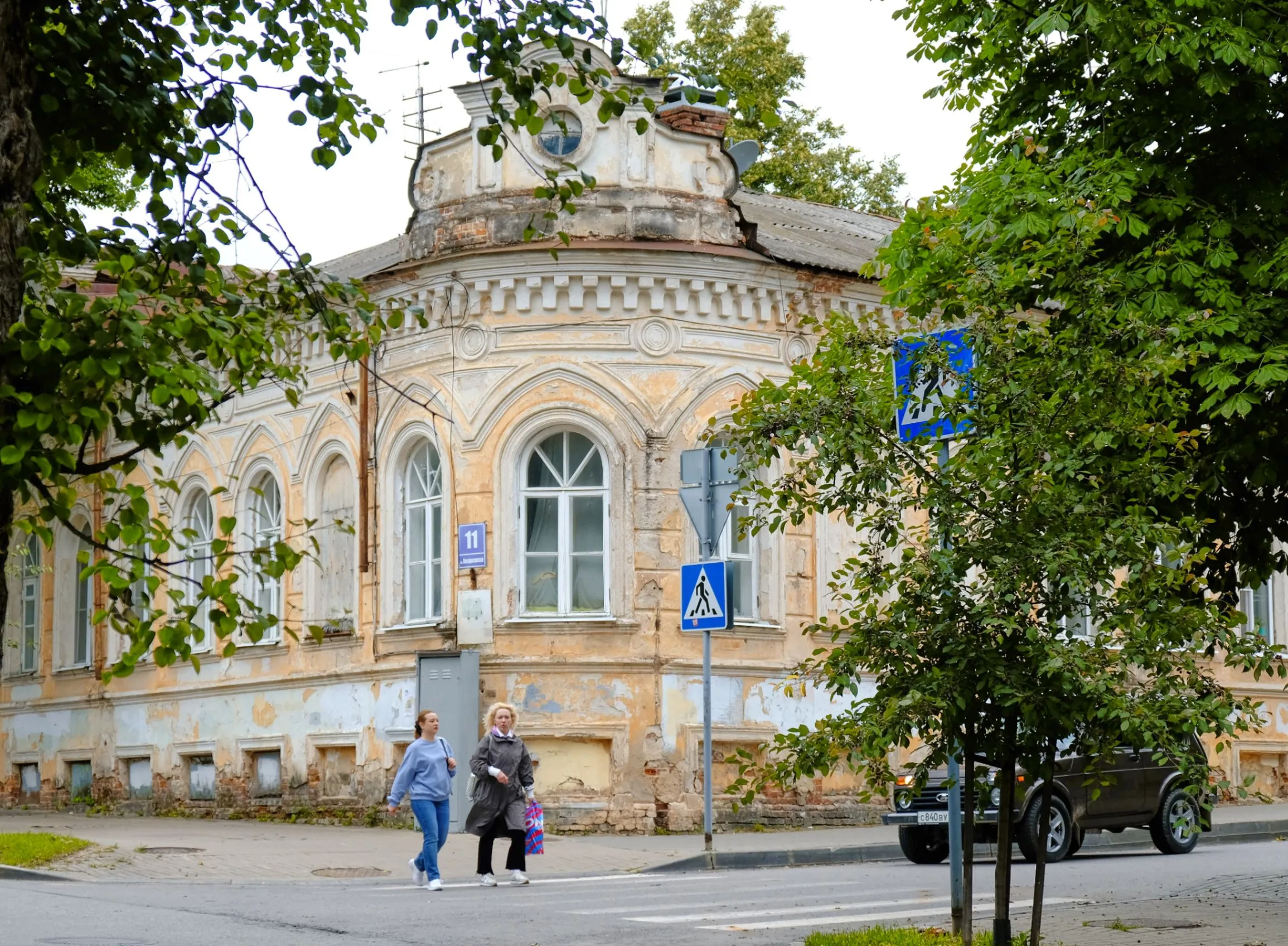
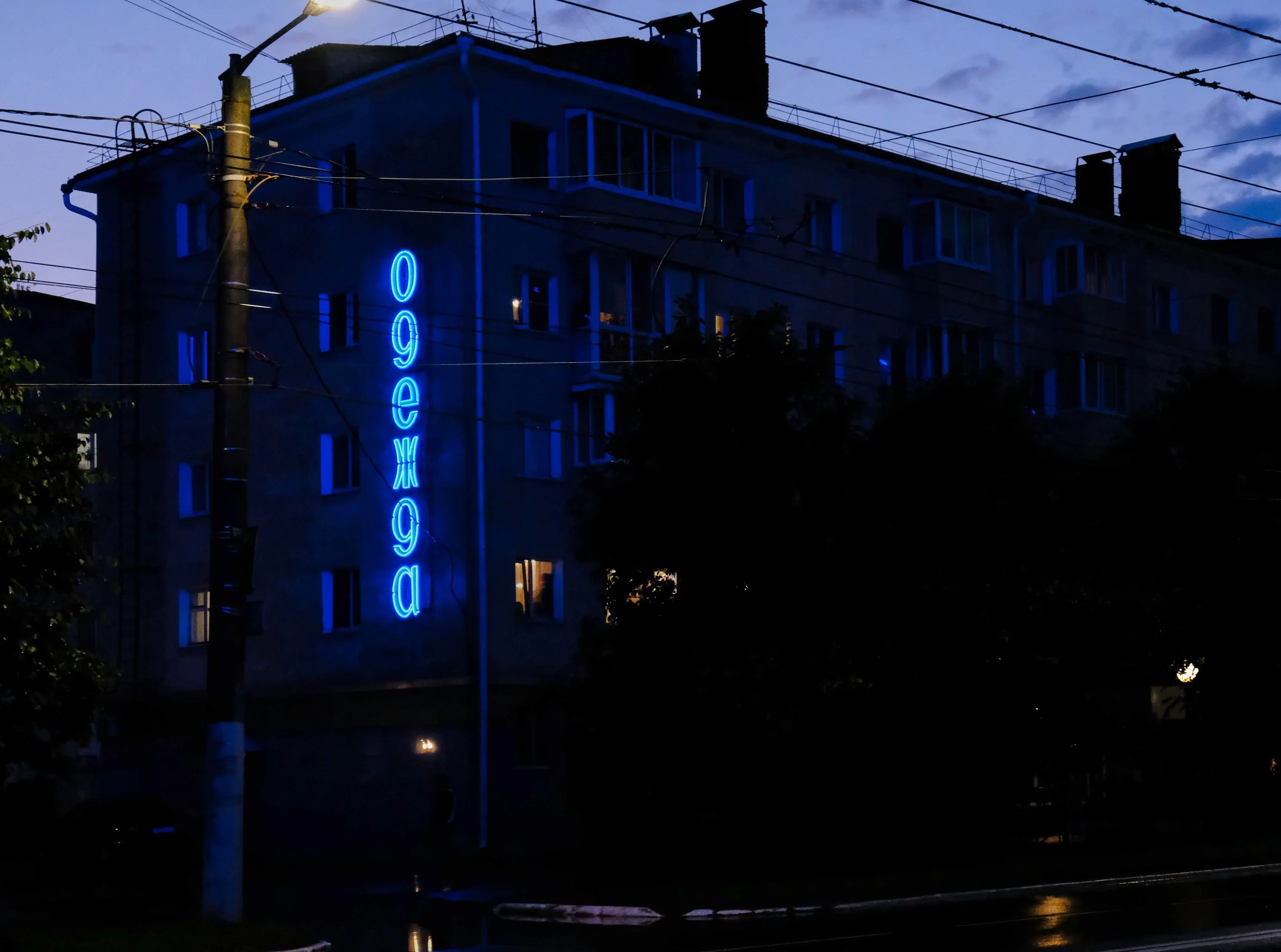
The more modern part of the city lies around the Museum of the History of Cosmonautics and Gagarin Street. On a Khrushchev-era apartment building at 56 Lenin Street, two Soviet neon signs reading "Odezhda" (Clothing) have survived and been restored with the involvement of local Soviet heritage enthusiast Yan Li and the foundation "Vnimanie" (Attention). Very nearby, at 59 Lenin Street, there is another restored Soviet sign — "Keep your money in a savings bank."
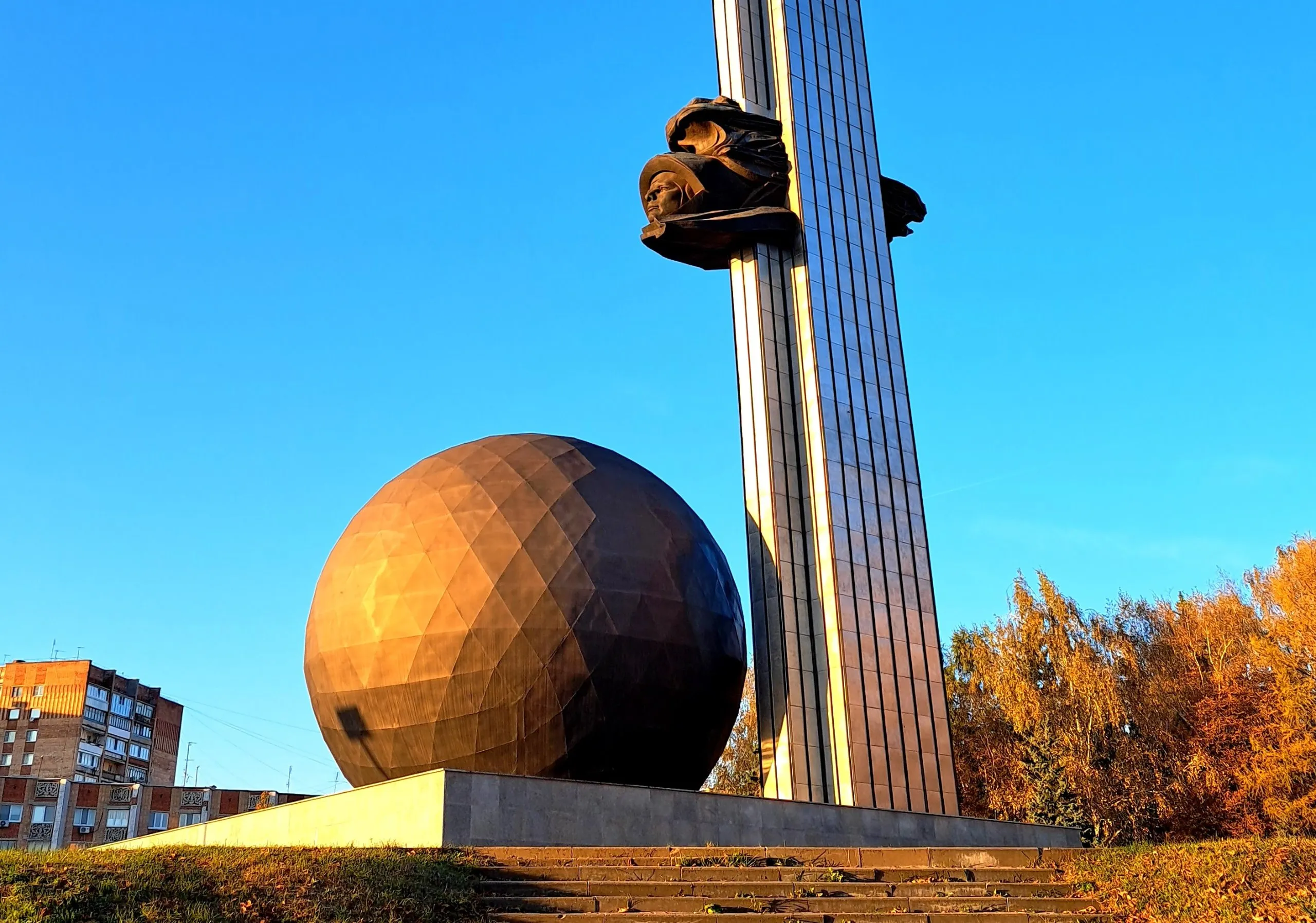
In the 1970s, a monument marking the 600th anniversary of Kaluga was unveiled on Gagarin Street, closer to the bridge over the Oka: a 50-meter pylon topped with a sphere, flanked by symbolic steles chronicling key milestones in the city's history. Today the monument is surrounded by a small park, and nearby stands an art installation called the "Giant Bench" — a decorative bench two and a half meters tall that appeared in 2016. Interestingly, it was created in the spirit of the internationally renowned Big Bench Community project, which now counts more than 230 giant benches around the world.
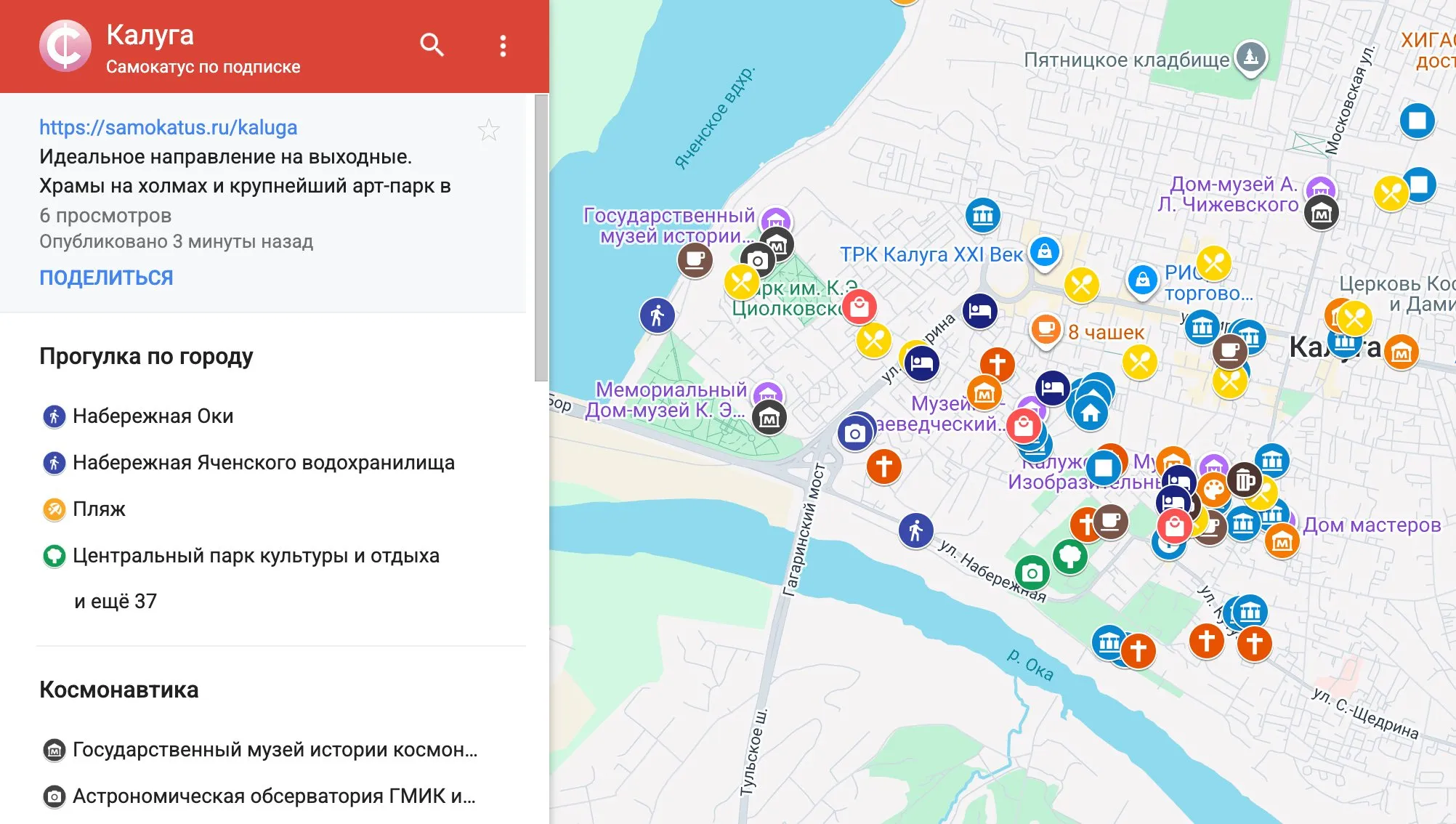
Map of Attractions
Space Exploration
A huge chapter of Kaluga's history is tied to the development of Russia's space industry. From 1891 to 1935, the city was home to the theoretical father of cosmonautics and inventor Konstantin Tsiolkovsky. From 1913 to 1929, it was also home to Alexander Chizhevsky, the founder of space biophysics. The two scientists were acquainted and remained friends for more than 20 years.
Museum of the History of Cosmonautics. Yuri Gagarin and Sergei Korolev personally took part in its creation, laying the first stone during construction and advising museum staff on the development of the exhibition. In 2021, a new wing opened that is five times larger in area than the main exhibition. The museum is truly impressive — not only informative but also accessible, with elevators and gentle ramps inside. A combined museum ticket costs 850 rubles (11.6 USD).
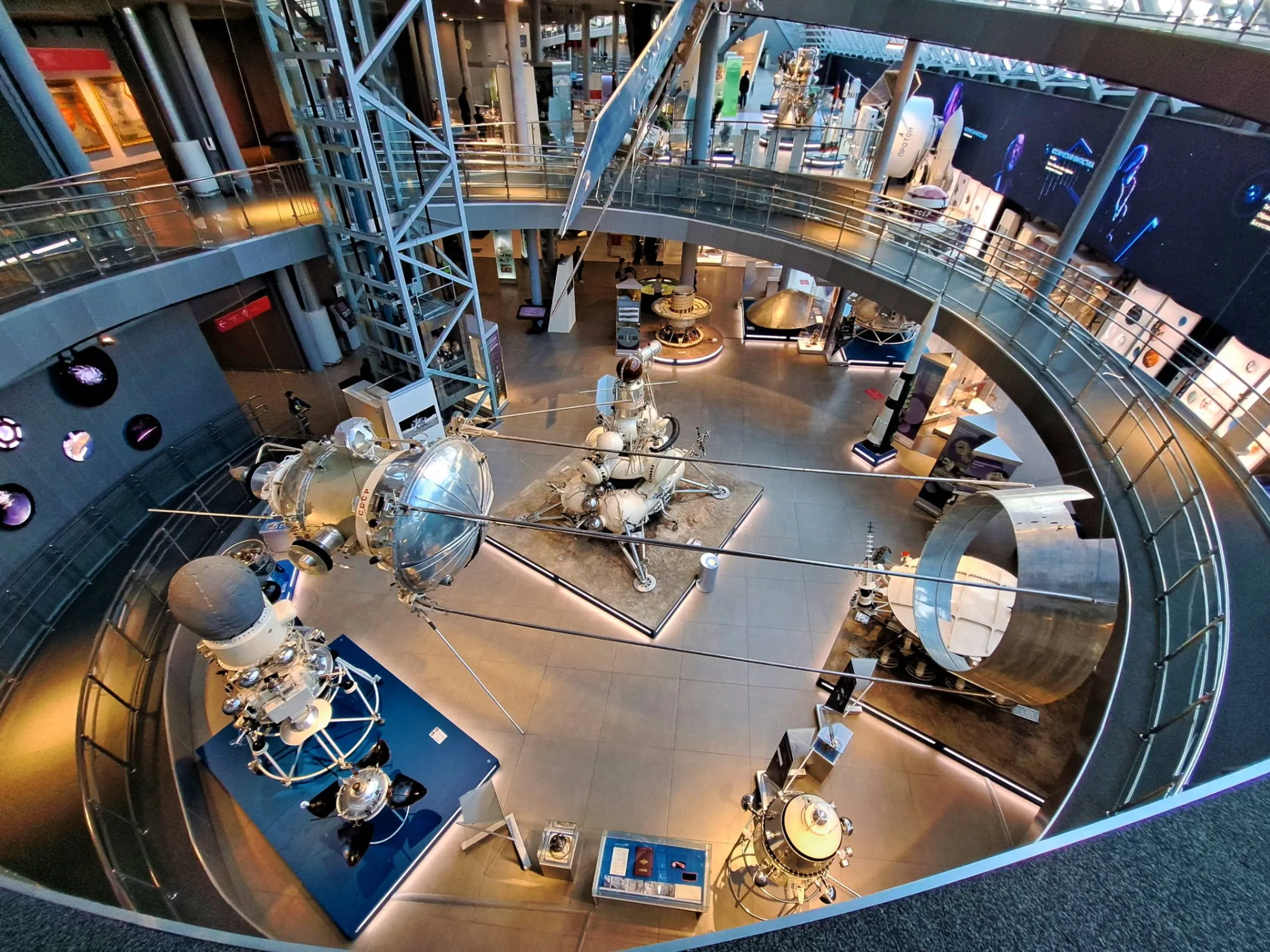
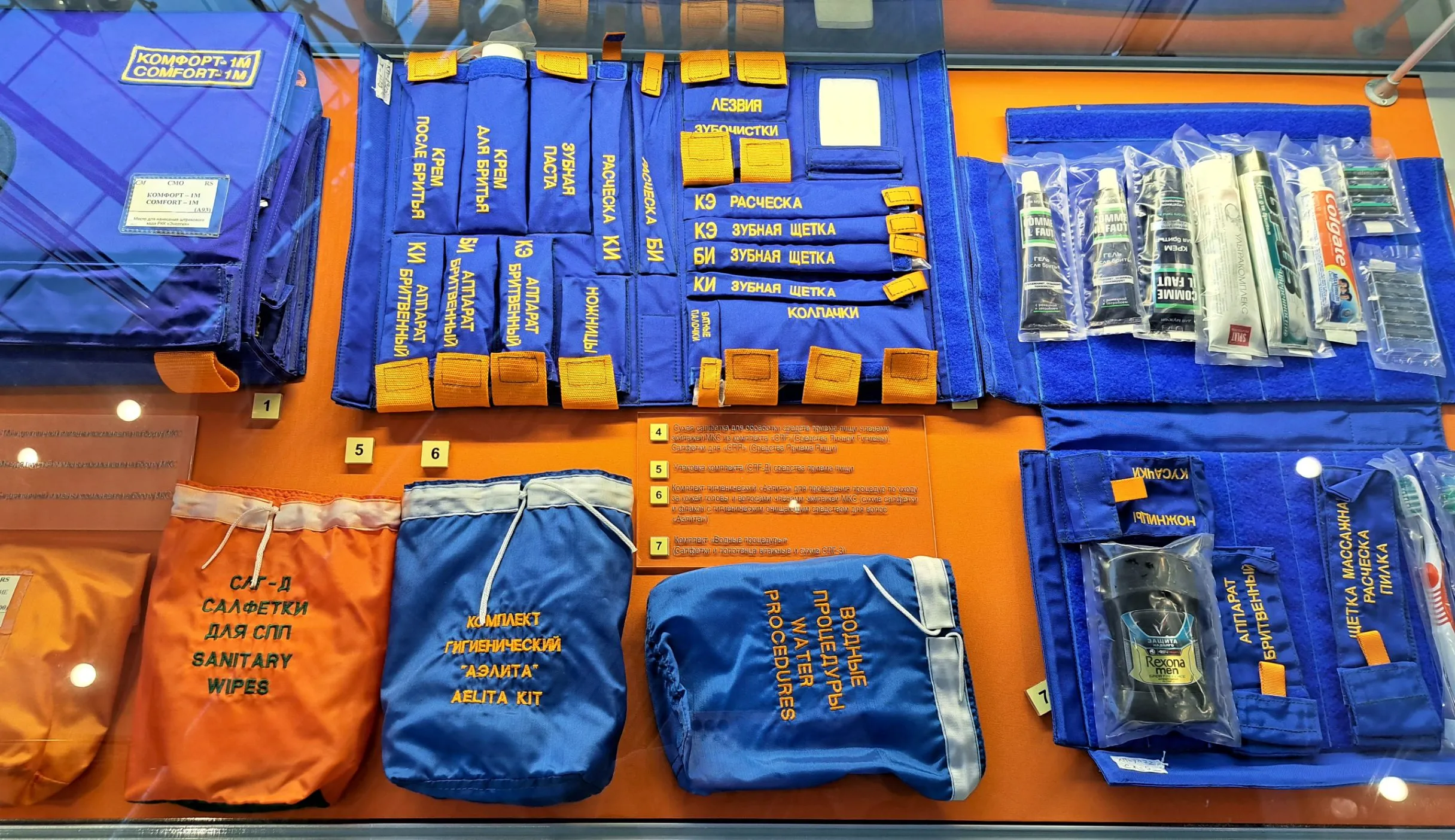
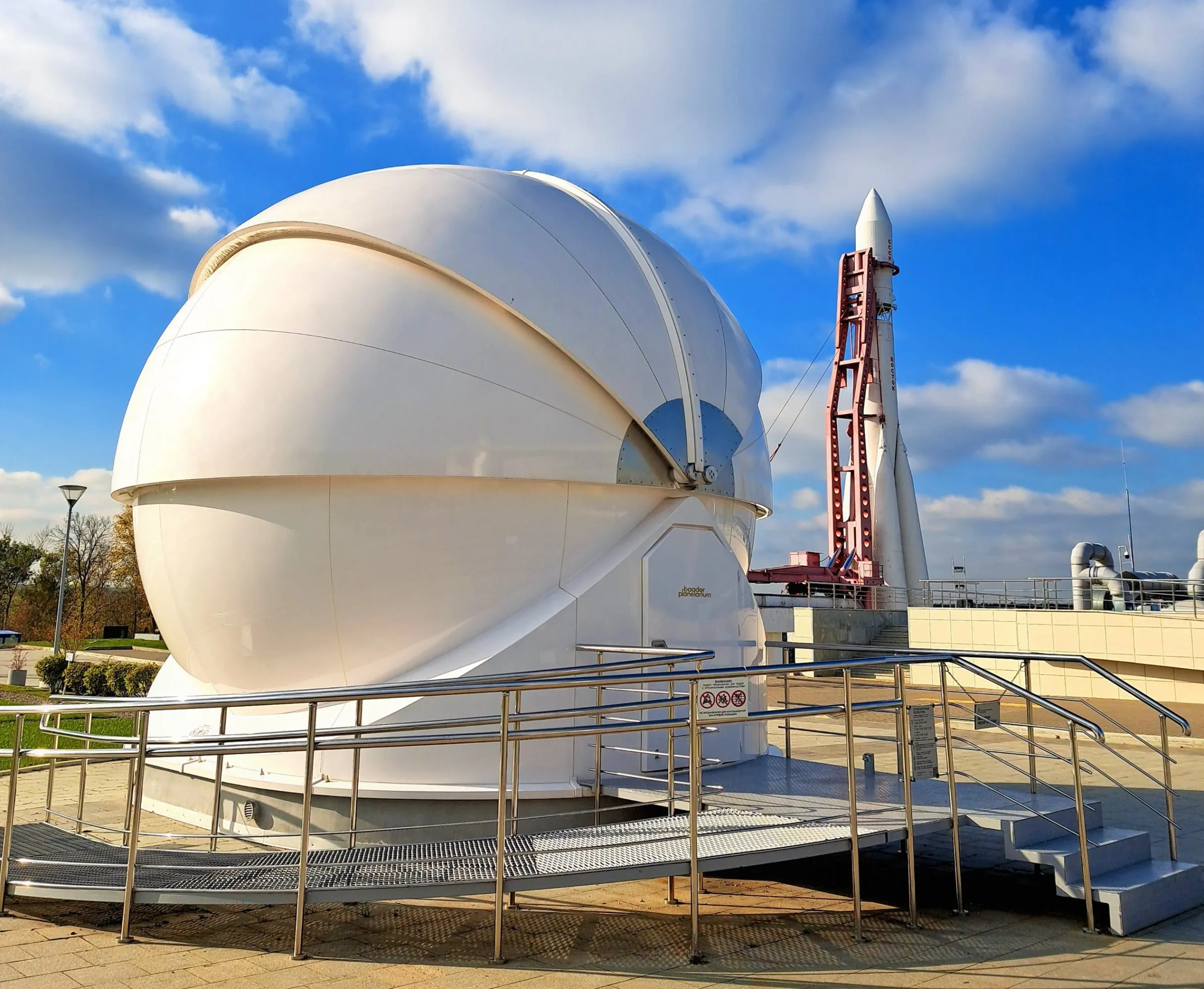
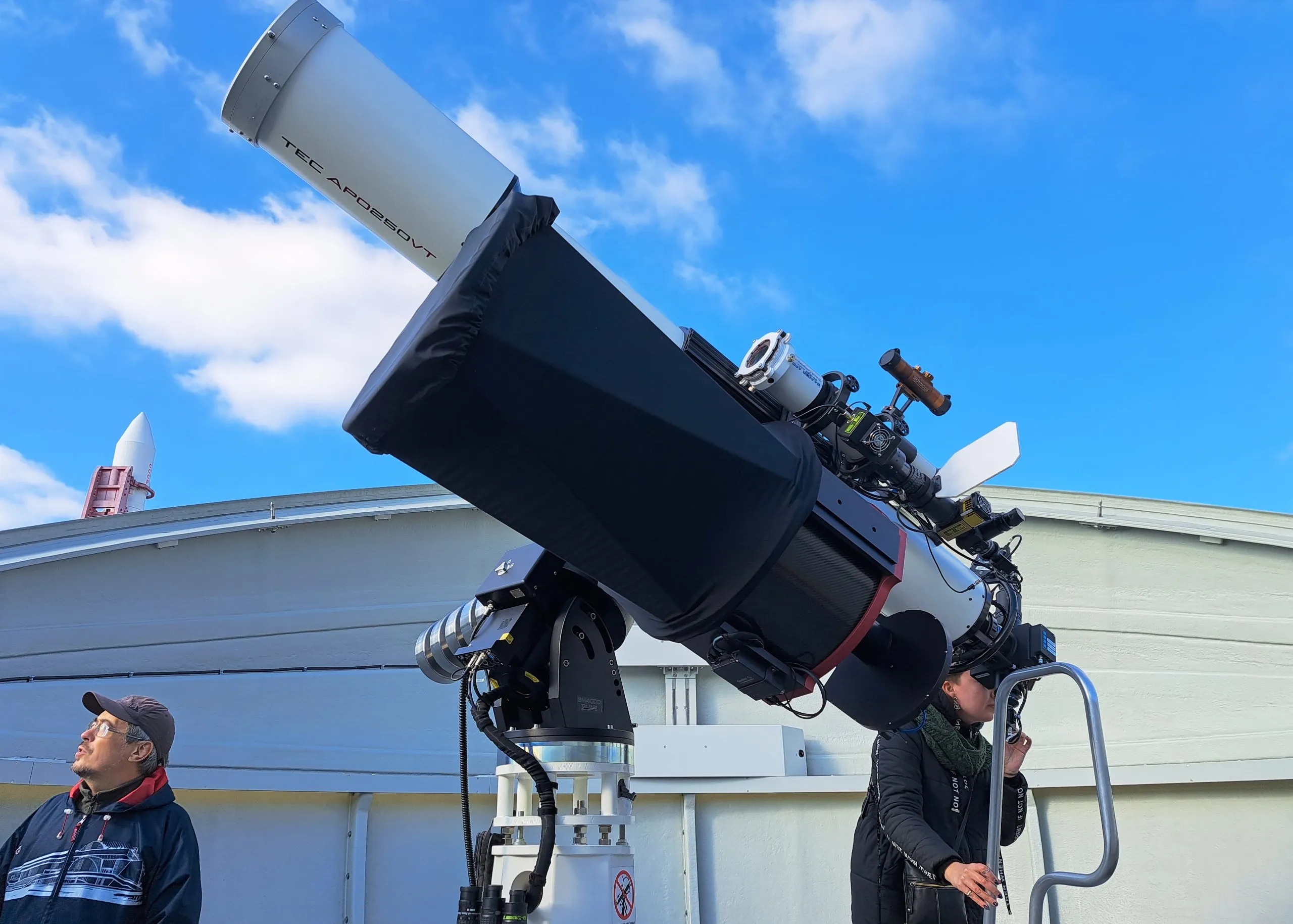
The museum serves not only as an exhibition space but also as a research center; on its grounds there is a working scientific observatory equipped with professional reflecting and refracting telescopes. Day and night viewing sessions can be booked in advance. The best time for astrotourism is from April to October. Even if there are no special astronomical events — such as a planetary parade, solar or lunar eclipse, or a visible comet trajectory — a standard tour will still have astronomers pointing out dark spots (prominences) on the Sun and the nearest visible planets from Earth: Venus and Mercury.
Tsiolkovsky House-Museum. The wooden house where the scientist lived for 29 years carefully preserves the atmosphere of his era. Tsiolkovsky's grandson took part in restoring the authentic interior, the yard, and the garden. Admission costs 250 rubles (3.42 USD).
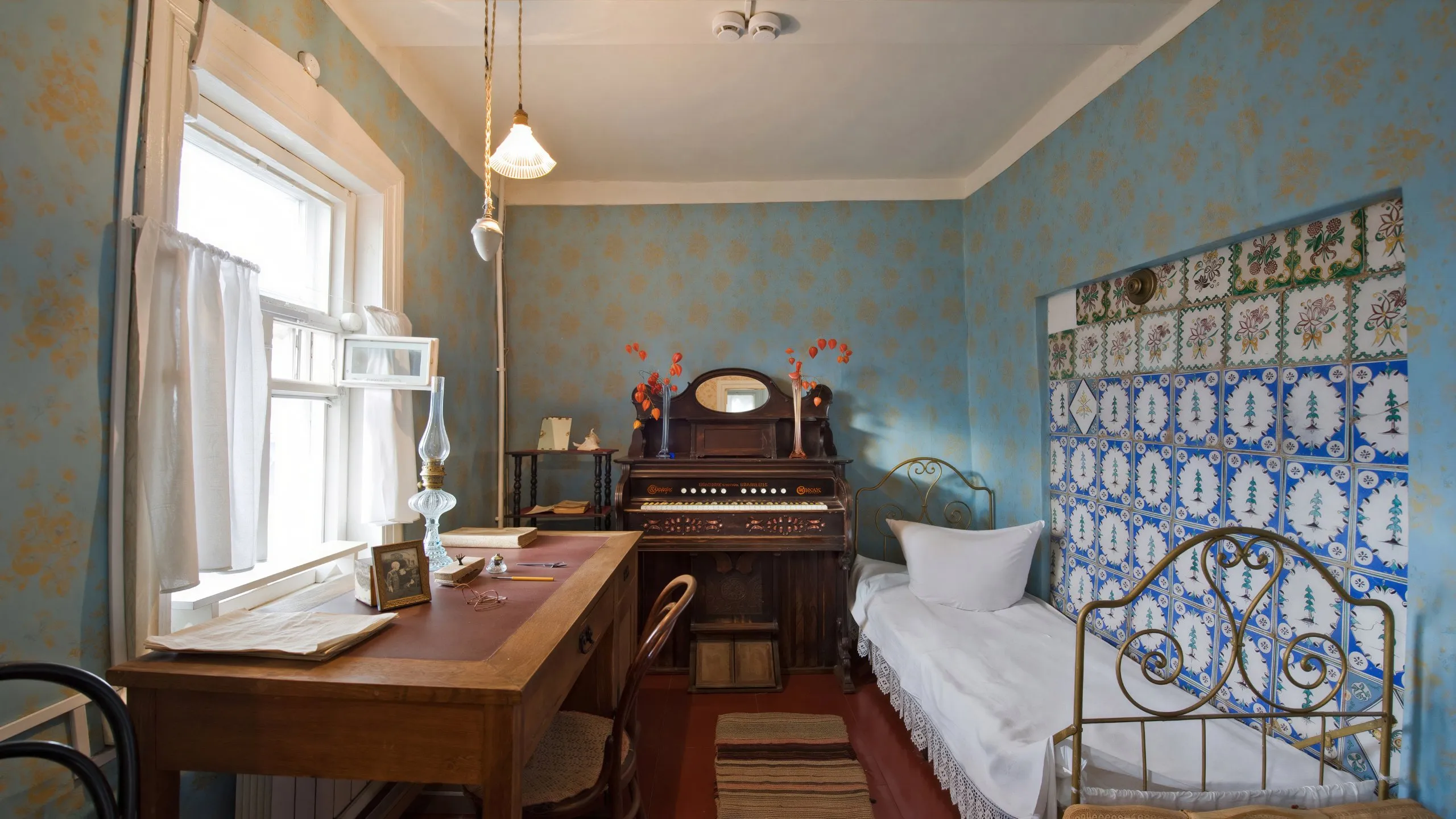
Chizhevsky House-Museum is located in a two-story building where the Chizhevsky family lived from 1913 to 1929, and where Alexander began his scientific research. Admission costs 250 rubles (3.42 USD). Both house-museums are part of the Museum of the History of Cosmonautics and share a single website and online ticket service .
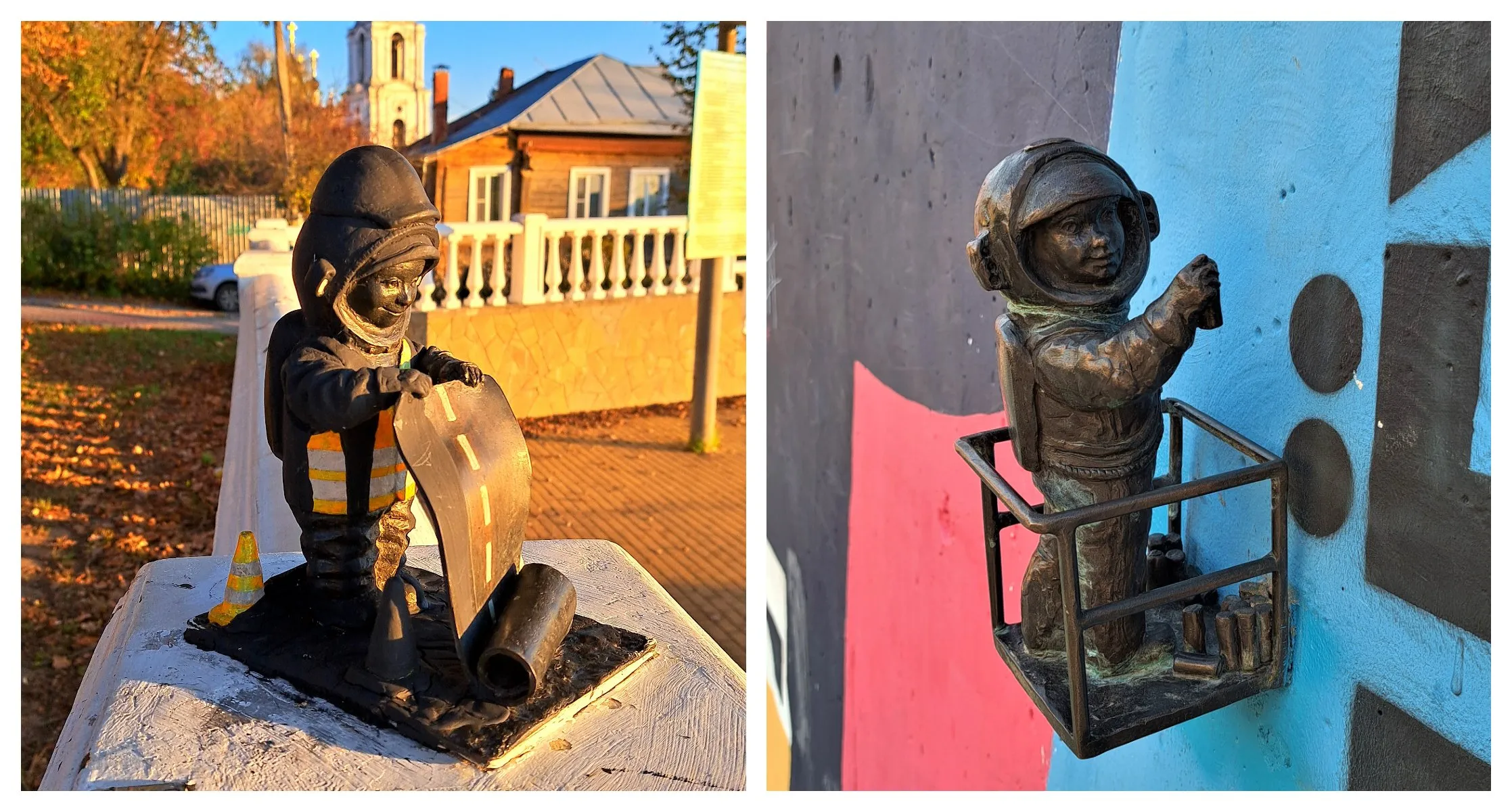
In 2023, Kaluga was transformed into a city-wide quest. Sculptor Alina Farnieva placed miniature cosmonaut figurines representing various professions all around the city. Finding them without a map is quite a challenge, as many are not located in obvious spots. Today there are already more than twenty of them, and the number keeps growing. A full list can be found on Yandex Maps.
Museums
At the Museum of Fine Arts in addition to the permanent collection, temporary exhibitions from the holdings of leading Russian museums are regularly held. Admission is 200 rubles (2.74 USD).
Ivan Bilibin House is a local history museum dedicated to life and everyday culture in Kaluga during the 20th century. There is also a separate exhibition devoted to the captive imam Shamil, who lived in this house. He stayed here from 1859 to 1868 with his family and servants, led a modest life, and swore an oath of loyalty to the Russian emperor. Admission is 300 rubles (4.11 USD).
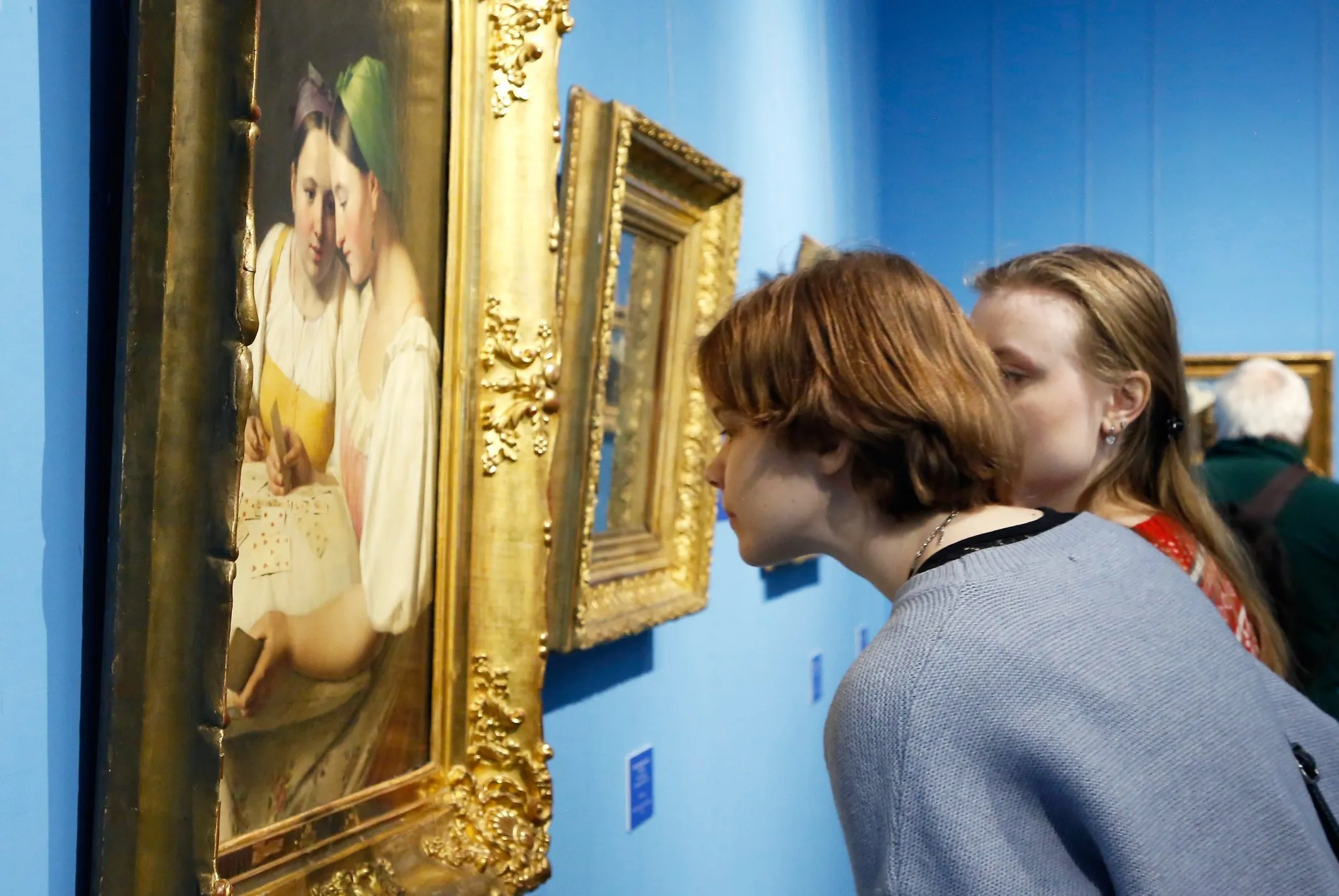
Museum of the Bank of Russia is a museum of the history of money housed in the State Bank building, whose Kaluga branch opened in 1883. Since the offices of the Bank of Russia still operate here today, visiting the exhibition — for which three different themed guided tours are offered — is only possible by appointment. Admission is free.
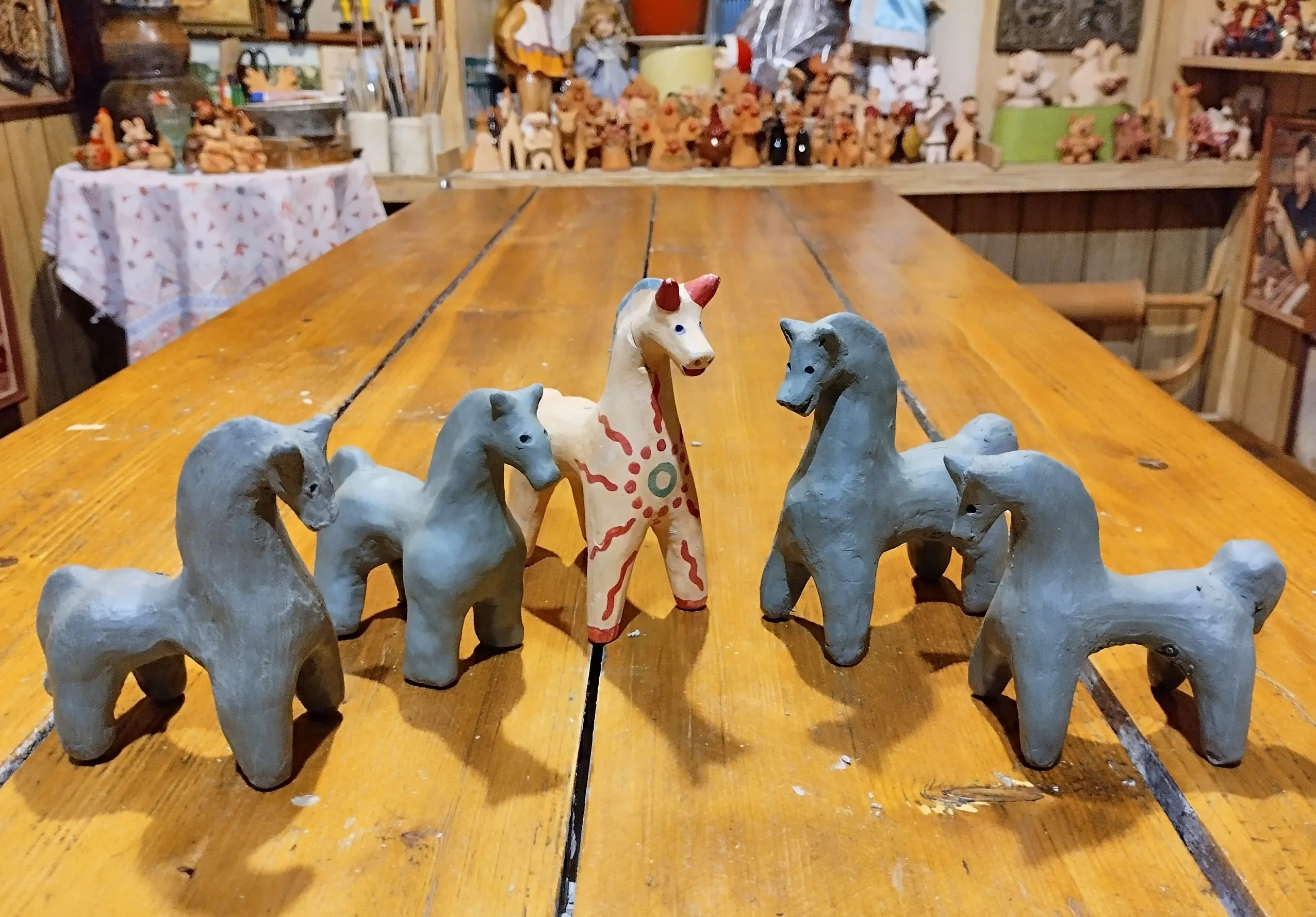
Museum of Crafts, Architecture and Daily Life: is a small private museum that has revived a forgotten trade — the making of traditional urban clay toys. The exhibition features everyday objects, ceramics, weapons, and tools spanning from the time of the Stand on the Ugra River through to the 20th century, and visitors are welcome to touch and even try using the items. Workshops on making Kaluga clay toys are held here. Admission is free, though donations are welcome.
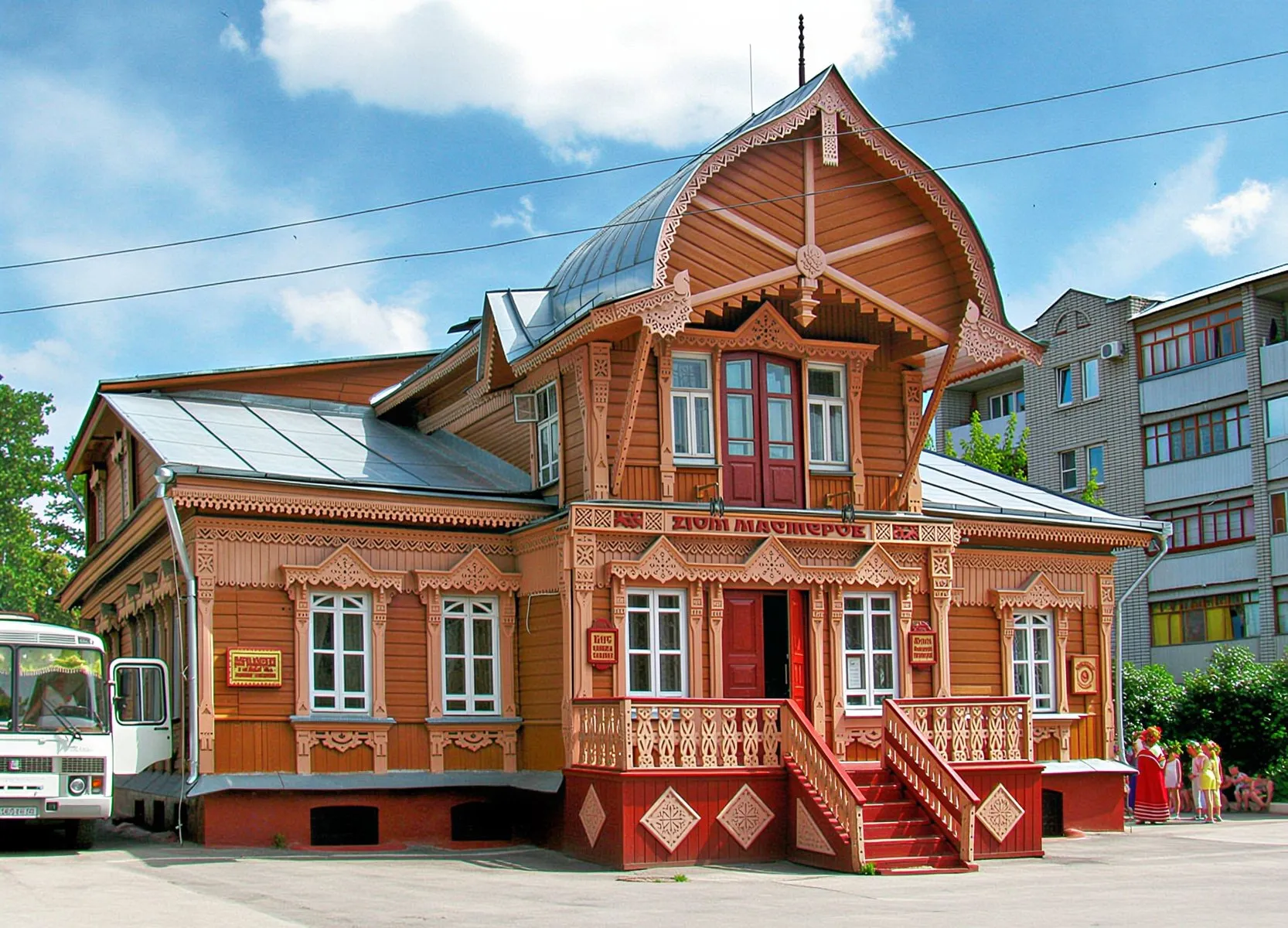
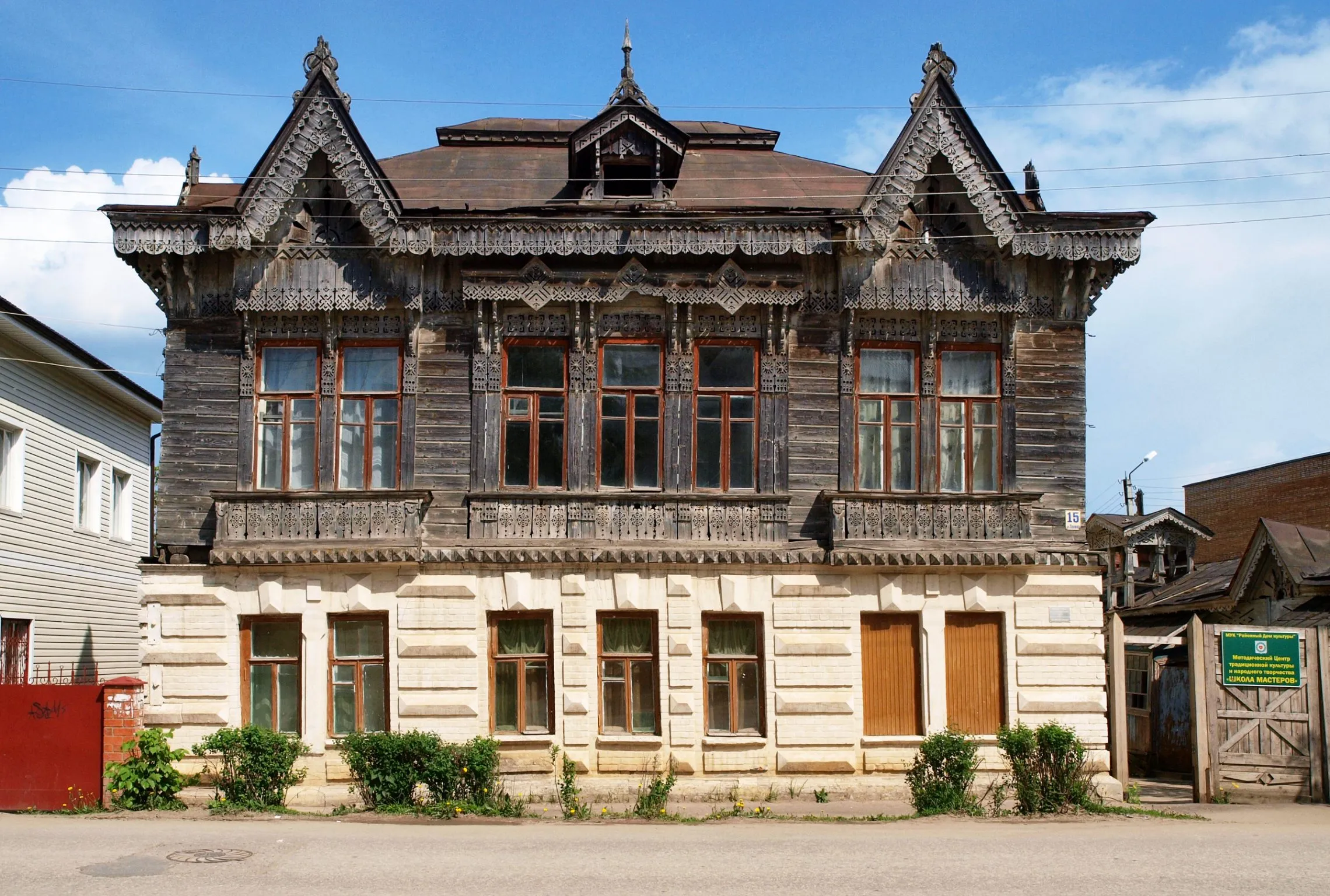
"House of Masters"is another unusual small museum featuring ceramics, textiles, toys, wooden and wicker household items, and decorative objects. The exhibition is housed in a mid-19th-century wooden manor with a mezzanine, which lends an authentic period atmosphere to the visit.
"Cat Museum" — is a micro-museum founded by the Chernov family. They serve as curators, guides, and patrons of their own museum, continually seeking out new depictions of cats in decorative and applied art to add to their collection. In 2024, the museum moved from a single small room in an old building — which had only been open on weekends — to a more spacious location on Teatralnaya Street, and now operates every day except Monday.
In One Day
Polotnyany Zavod
35 kilometers from Kaluga
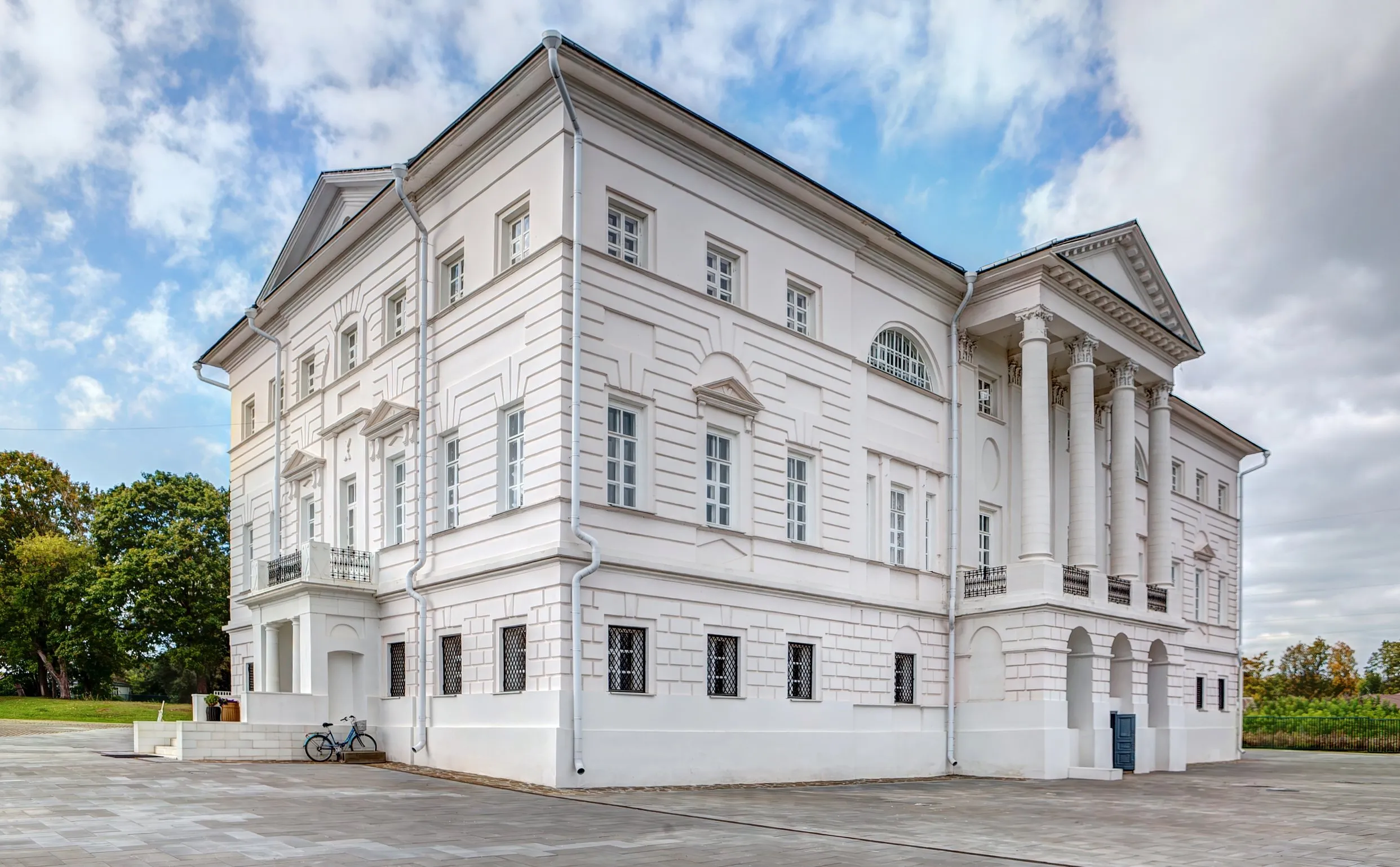
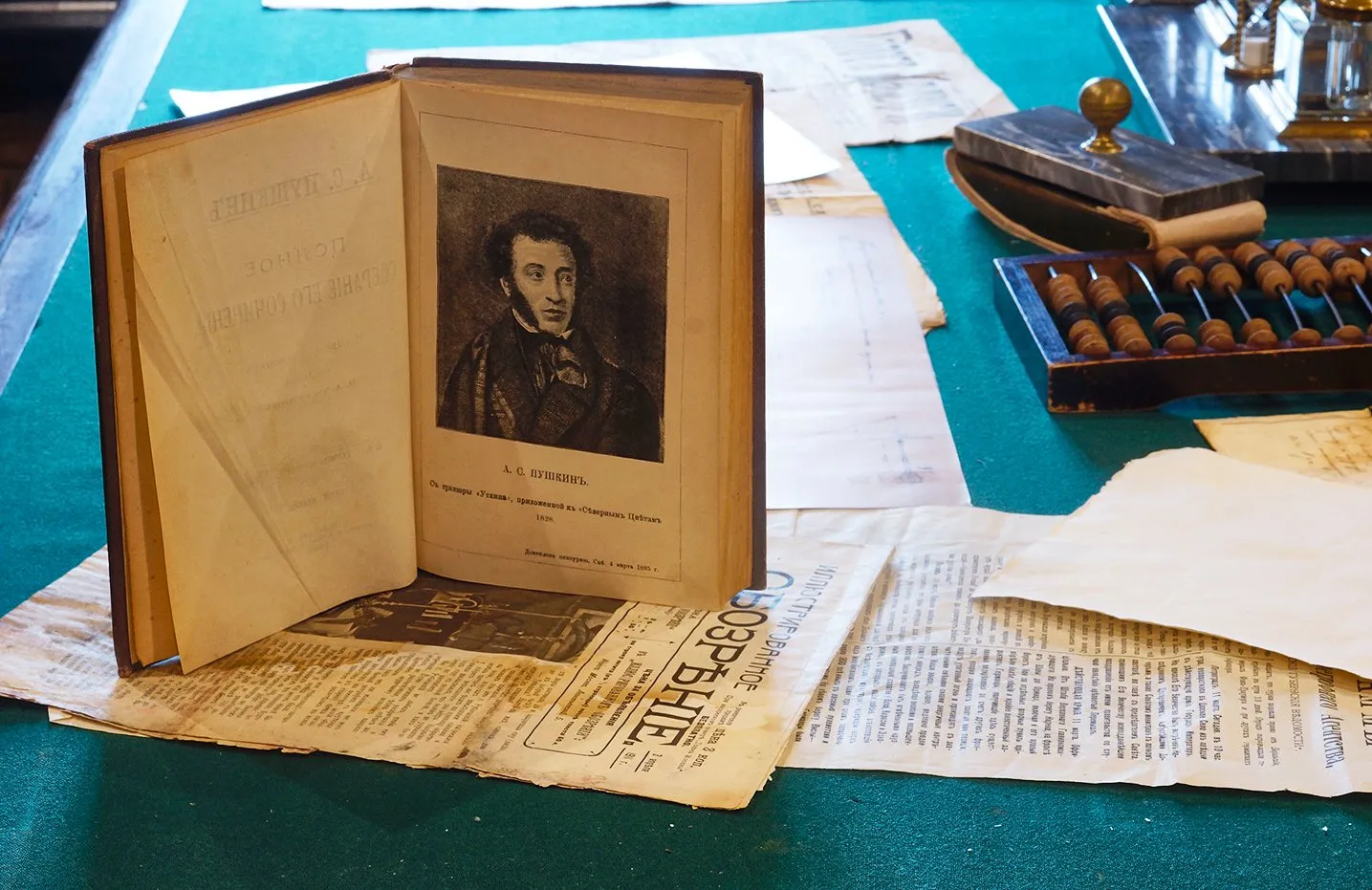
This urban-type settlement, once famous for the production of sails, fabrics, and paper, is also renowned for the Goncharov Estate — the ancestral home of Natalia Goncharova, who would become the wife of Alexander Sergeyevich Pushkin. Near the estate, which houses an excellent museum, you will find Pushkin Park and the paper museum Buzeон.
Getting there. Buses 136, 504, and 511 run from Kaluga. The journey takes about an hour and tickets cost 90–120 rubles (1.23-(1.64 USD). There are also three commuter trains a day, with a journey time of around one hour and tickets priced at 150 rubles (2.05 USD).
Ugra National Park
50/120 kilometres from Kaluga
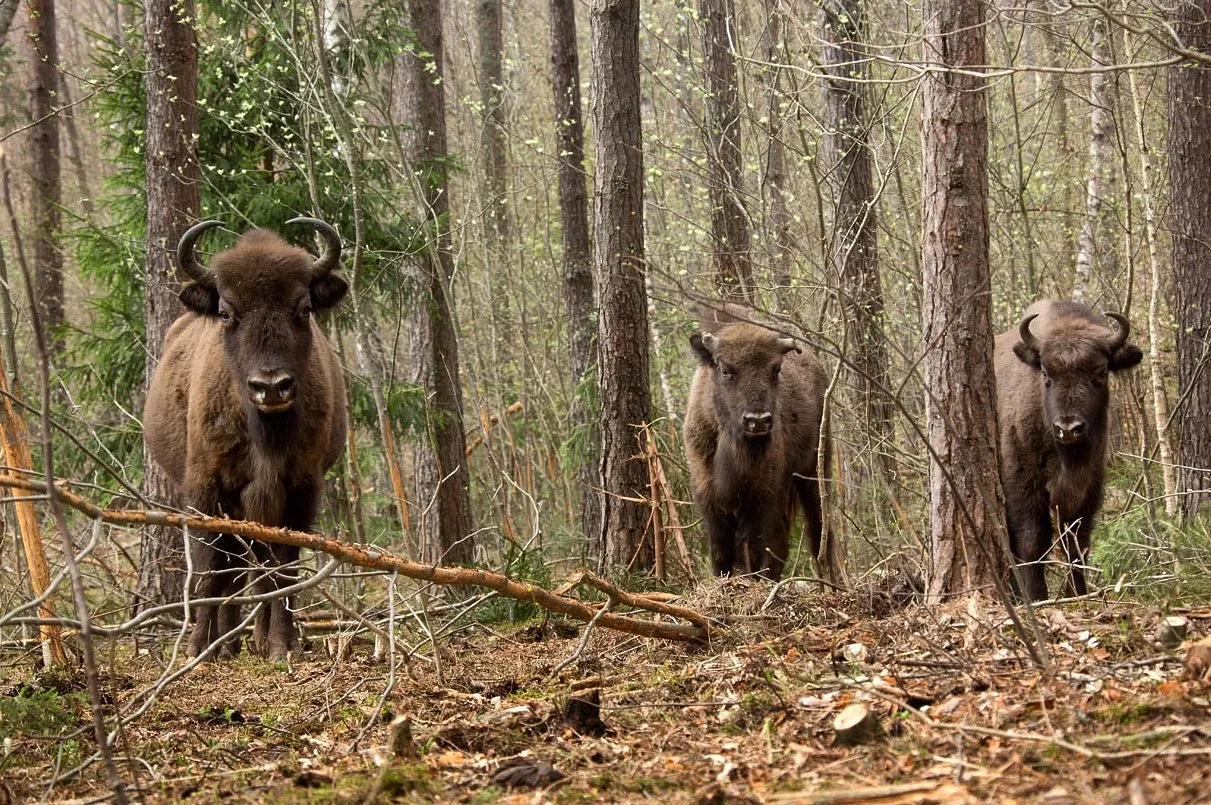
A nature reserve stretching along the riverbed from the border with Smolensk Oblast (the village of Klimov Zavod serves as a landmark) to nearly Kaluga itself — around 110 kilometres in length. The park is distinguished by the richness of its landscapes: from dense forests, meadows and plains to wetlands and chains of lakes. The territory features walking trails, observation and birdwatching towers, campsites, glamping sites and guest houses. Bison can be spotted in the park.
To visit the national park you must purchase a permit in advance on the website; it costs 300 roubles (4.11 USD) and is valid for up to seven days. More information about excursions in the park can be found at the official tourist office in Gostiny Dvor.
Getting there. Public transport is not an option: the park stretches for a hundred kilometres. Organised tours with transfers can be booked at the park's tourist office in Gostiny Dvor in the centre of Kaluga. Alternatively, you can drive to the park in your own car.
Nikola-Lenivets Art Park
70 kilometres from Kaluga
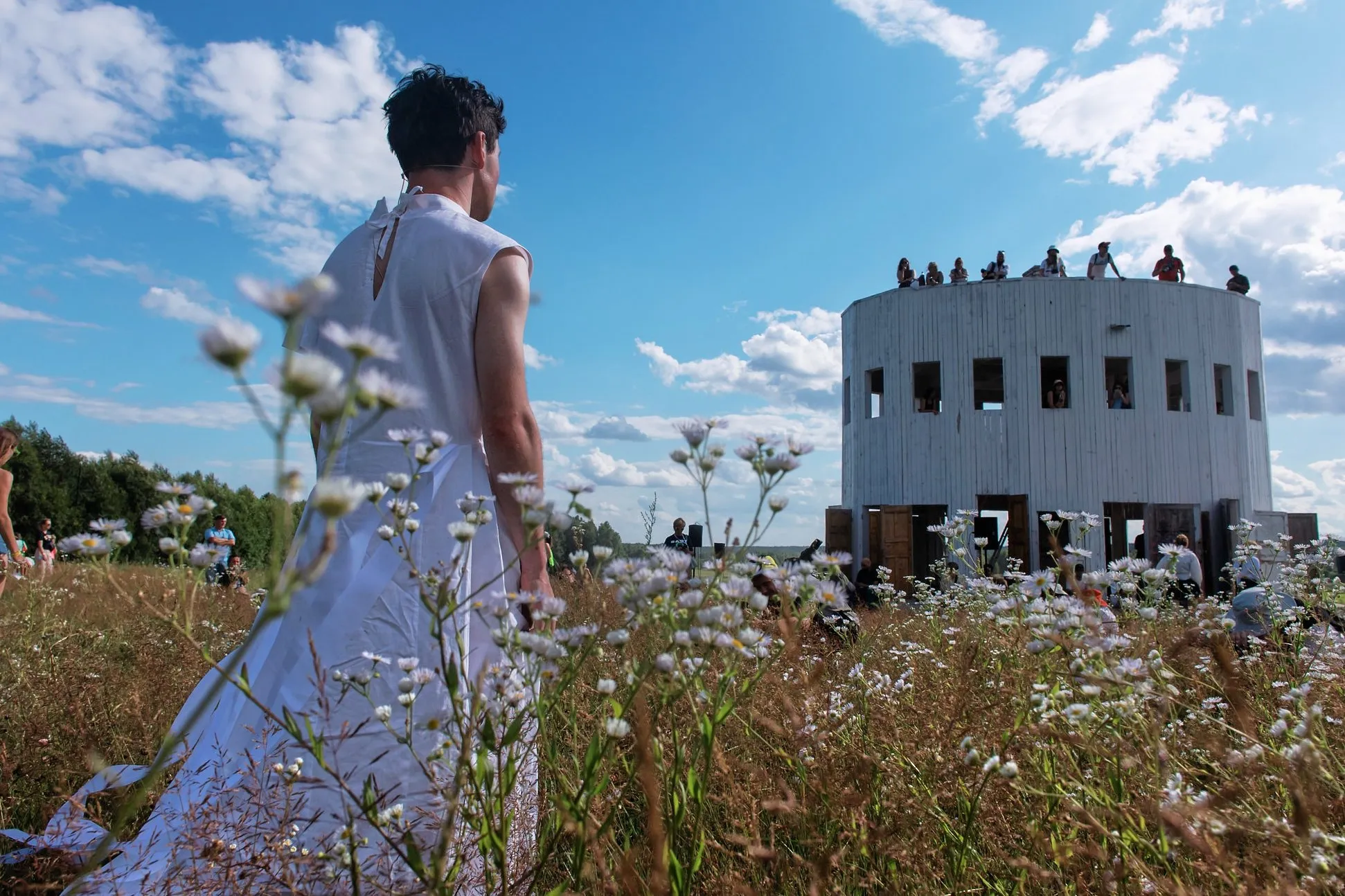
Nikola-Lenivets is the largest open-air art park in Europe. Set across a picturesque landscape of fields, forests, and rivers, the park is home to more than 60 art installations. You can rent a bicycle or explore the grounds on foot, taking in the unusual works of art.
Admission to the park costs 500 roubles (6.84 USD), but you will also need to obtain a permit for Ugra National Park, as some of the installations are located on its territory.
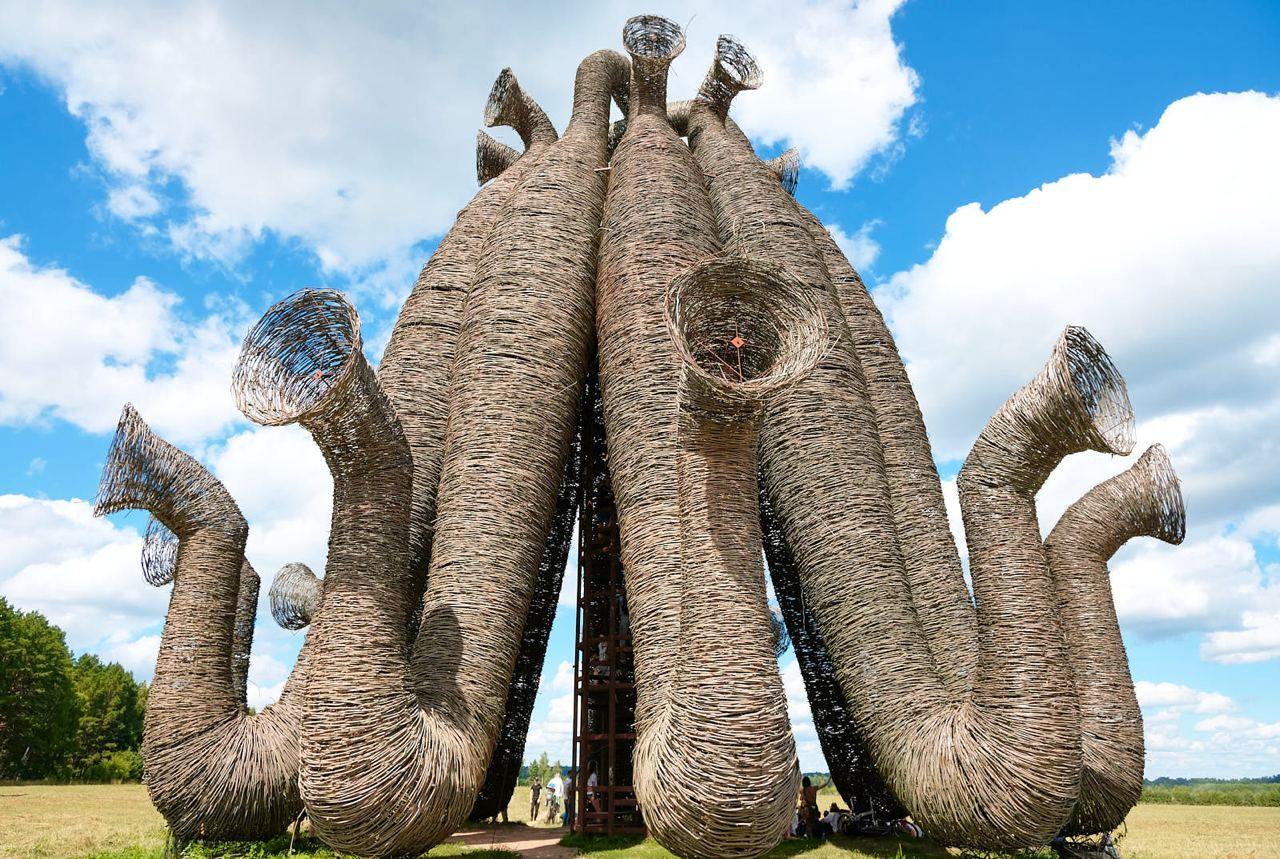
The park also has guest houses and cafés, including Ferma, where all dishes are made from so-called zero-kilometre produce — ingredients sourced exclusively from farms in the Kaluga Oblast. At the Ugra café, both the food and the presentation are of a fully restaurant-level standard.
Every year in July, an open-air festival of contemporary landscape art is held here: Archstoyanie. In 2026 it will take place for the 21st time. The park also hosts the Archstoyanie Children's festival and the Sport-Marathon festival. On festival days, entry to the park is only possible with a festival ticket. It is therefore worth checking before your trip that no events are taking place at Nikola-Lenivets.
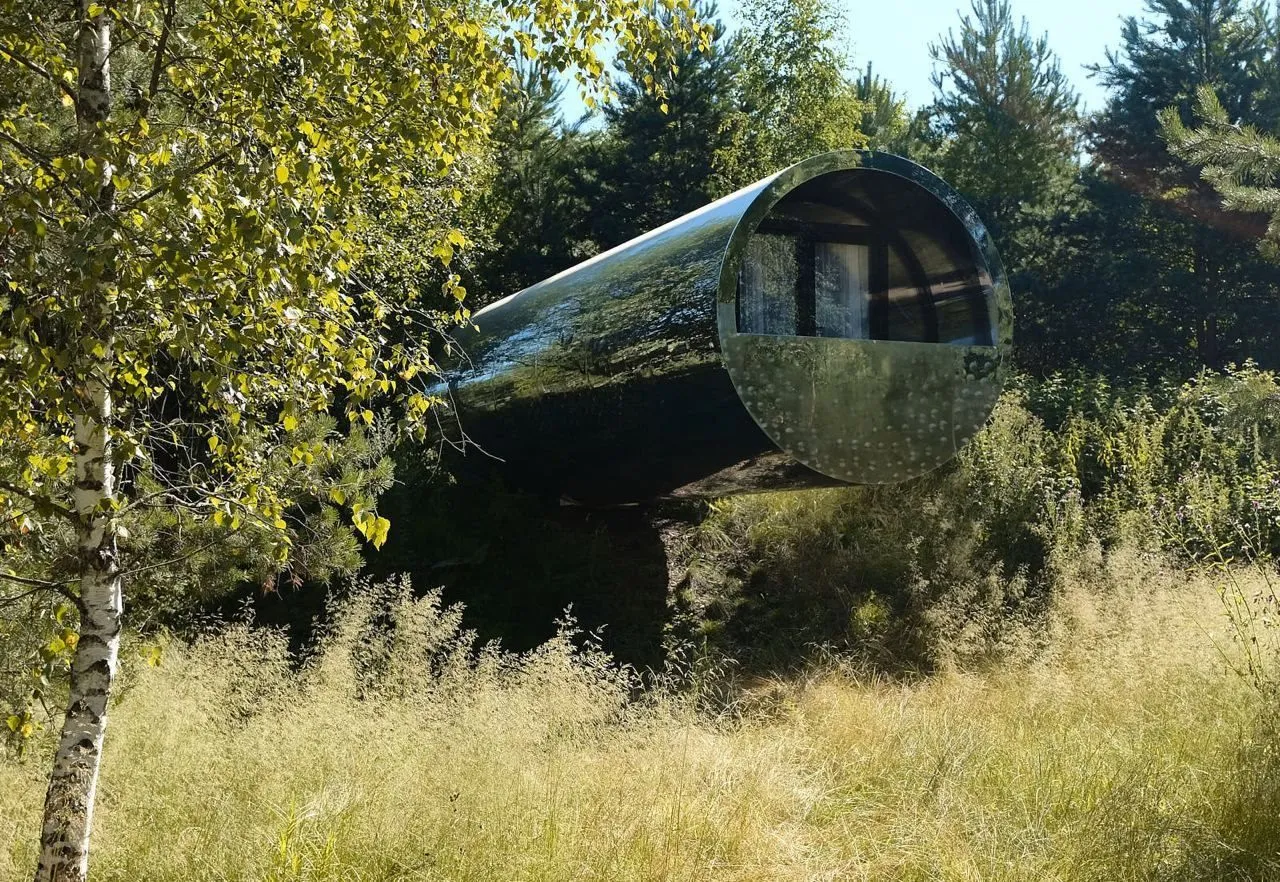
Where to stay. The art park offers both standard cabins and bespoke cottages designed by well-known architects. For example, the house built from PO-2 concrete fence panels was conceived by Alexander Brodsky, while the author of the enormous cylindrical barrel is Moscow's chief architect Sergei Kuznetsov. There is a house with a skate ramp inside, and another constructed from ventilation ducts. Inside, all the accommodation is comfortable, with proper beds, a toilet, and a shower. Standard cabins start from 6,000 roubles per night (82.1 USD); art houses from 16,000 roubles (219 USD).
Getting there. Getting here by public transport is quite difficult. A bus runs to the nearest village of Zvizzhi every other day. A taxi from Kaluga will cost around 2,500 roubles (34.2 USD).
Optina Pustyn Monastery
75 kilometres from Kaluga
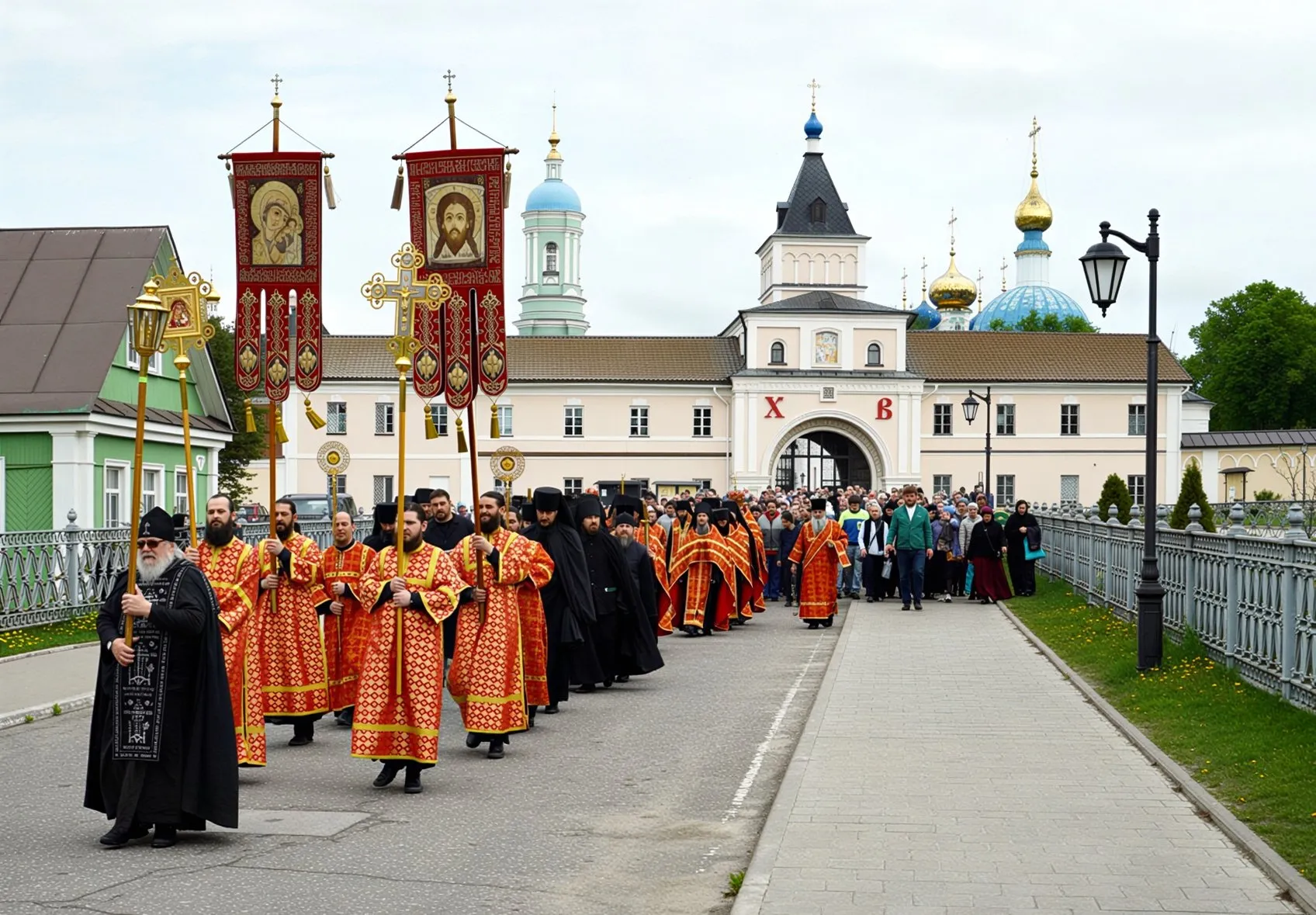
Men's monastery Optina Pustyn was founded in the 15th century and, despite the hardships of the Time of Troubles, the Revolution, and its subsequent conversion into a camp for Polish prisoners of war, an NKVD screening point, and a museum, it has retained its historical and spiritual significance. For example, monks pray around the clock in the forest hermitage, though laypeople are unfortunately not permitted to enter. The monastery has preserved around a dozen historical structures, including 18th- and 19th-century churches as well as refectories, towers, and a library.
Getting there. The monastery is located three kilometres from the town of Kozelsk. About a dozen buses a day run from Kaluga; the journey takes roughly two hours and a ticket costs 350 roubles (4.79 USD).
Borovsk
90 kilometres from Kaluga
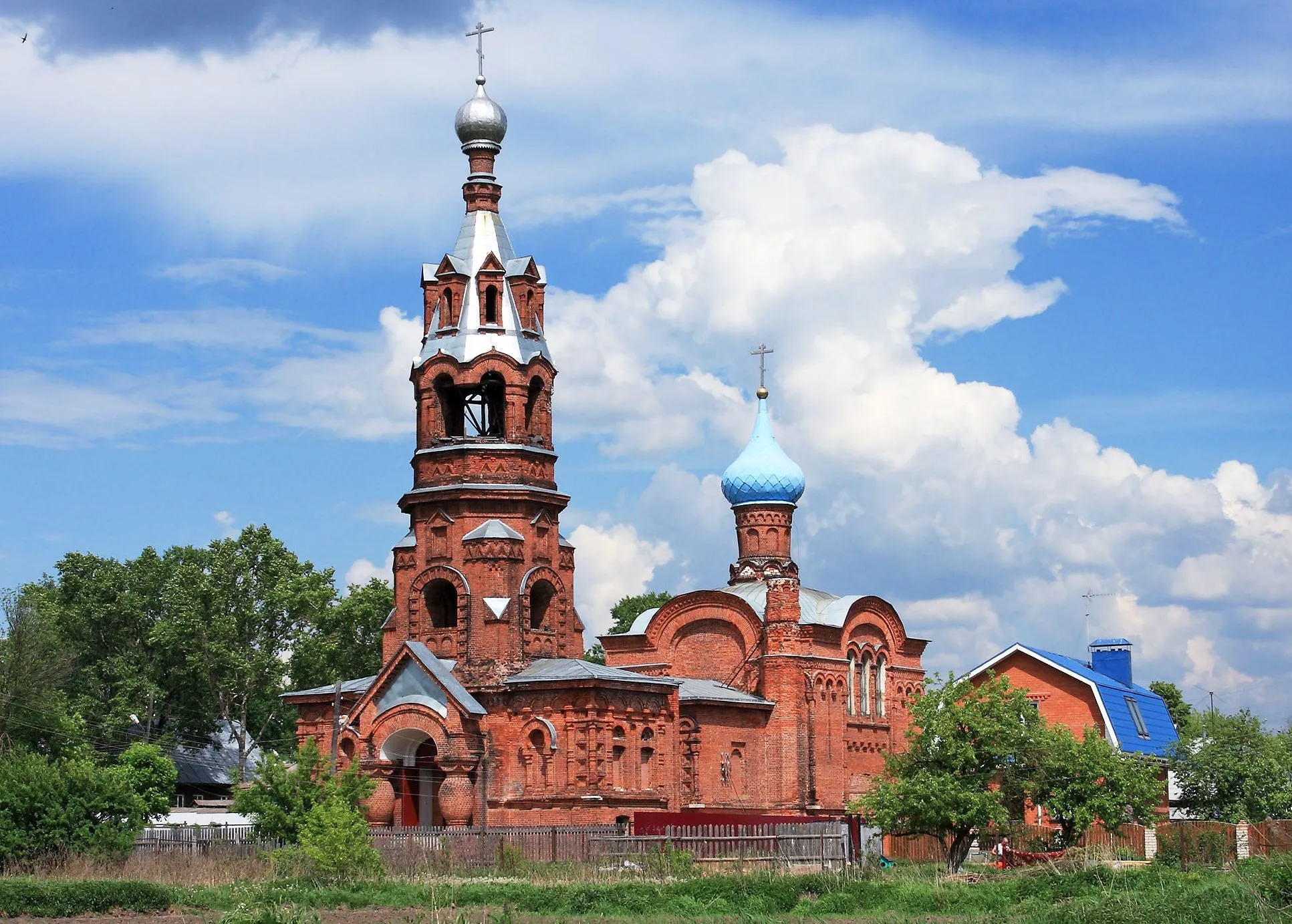
The ancient town of Borovsk is famous not only for the house where Tsiolkovsky once lived, but also for its Old Believer Vvedensky Church, the private Museum of Computers, wooden manor houses, and numerous murals decorating the walls of both old and new buildings. Even if you are only passing through, it is worth stopping into the artisan souvenir shop "Domik Schastya" (House of Happiness) and grabbing a bite at the café "Druzhba", and nearby, in Gagarin Square, discovering a charming and unusual monument to Tsiolkovsky.
Getting there. There are no direct buses from Kaluga to Borovsk. You will need to travel first to Balabanovo or Obninsk and then transfer to a bus or taxi to Borovsk. The whole journey takes at least three hours.
Voroby Bird Park
90 kilometres from Kaluga
Voroby is the largest bird park in Russia. Across its vast and scenic open-air grounds you'll find not only birds, but also Welsh sheep, Scottish Highland cattle, lemurs, wild cats, raccoons, foxes, lizards, and many other animals. Voroby is home to Russia's largest collection of parrots — around 70 species. Admission costs 600 roubles (8.21 USD).
Getting there. The park is located halfway between Kaluga and Moscow, north of Obninsk. If you are travelling by public transport, first take a commuter train to Balabanovo station, then continue by minibus or taxi to the park (about ten kilometres).
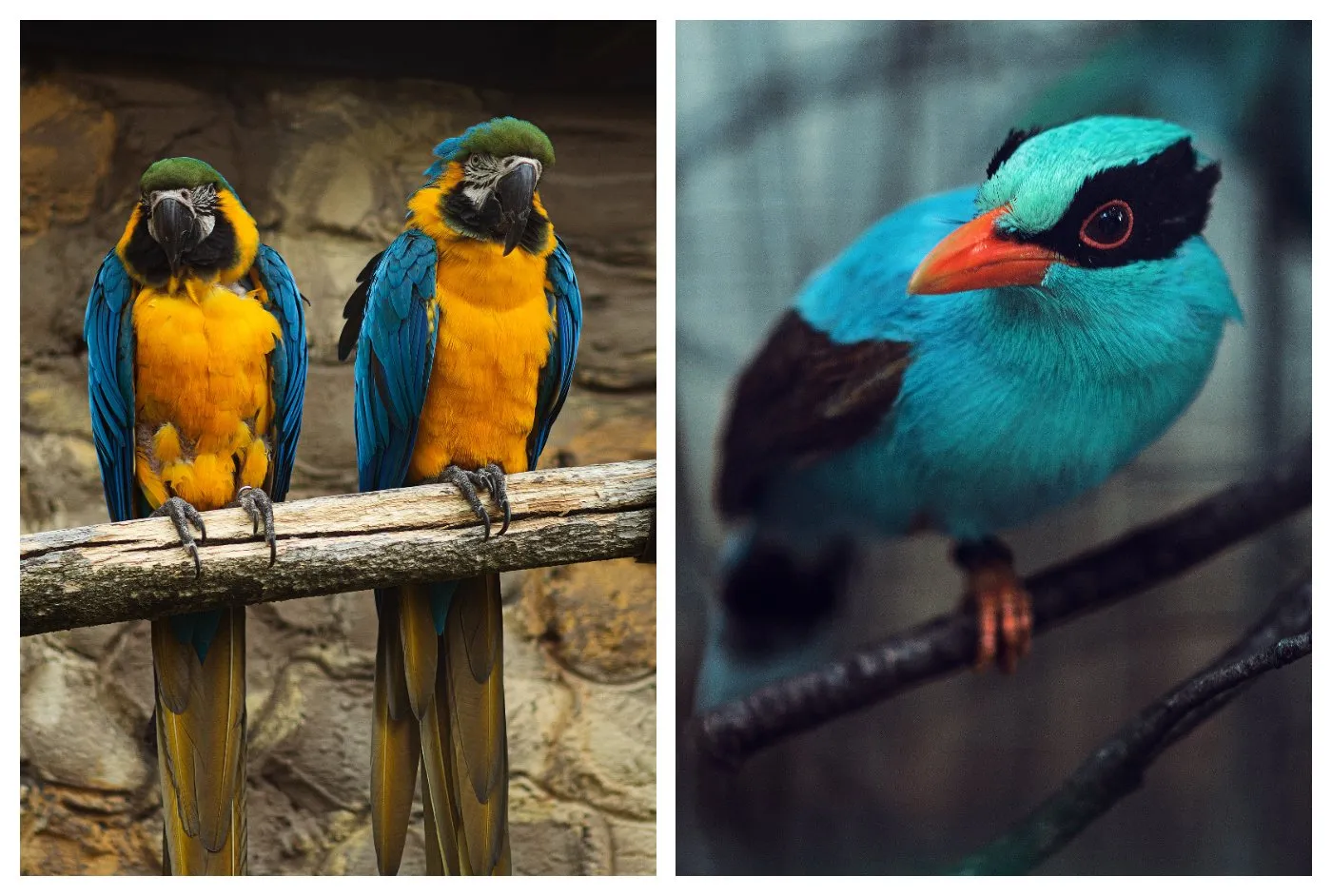
Etnomir Landscape Park
100 kilometres from Kaluga
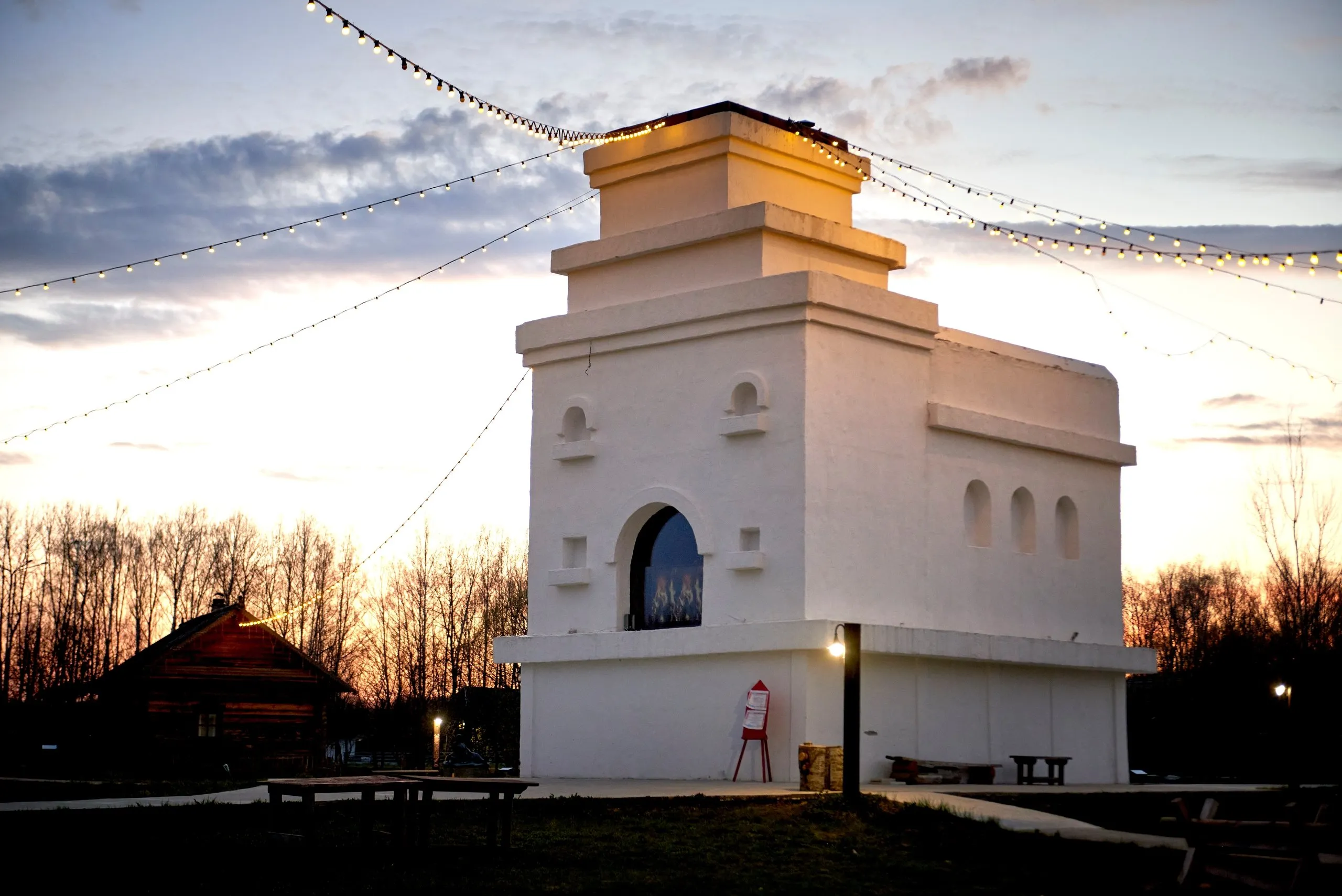
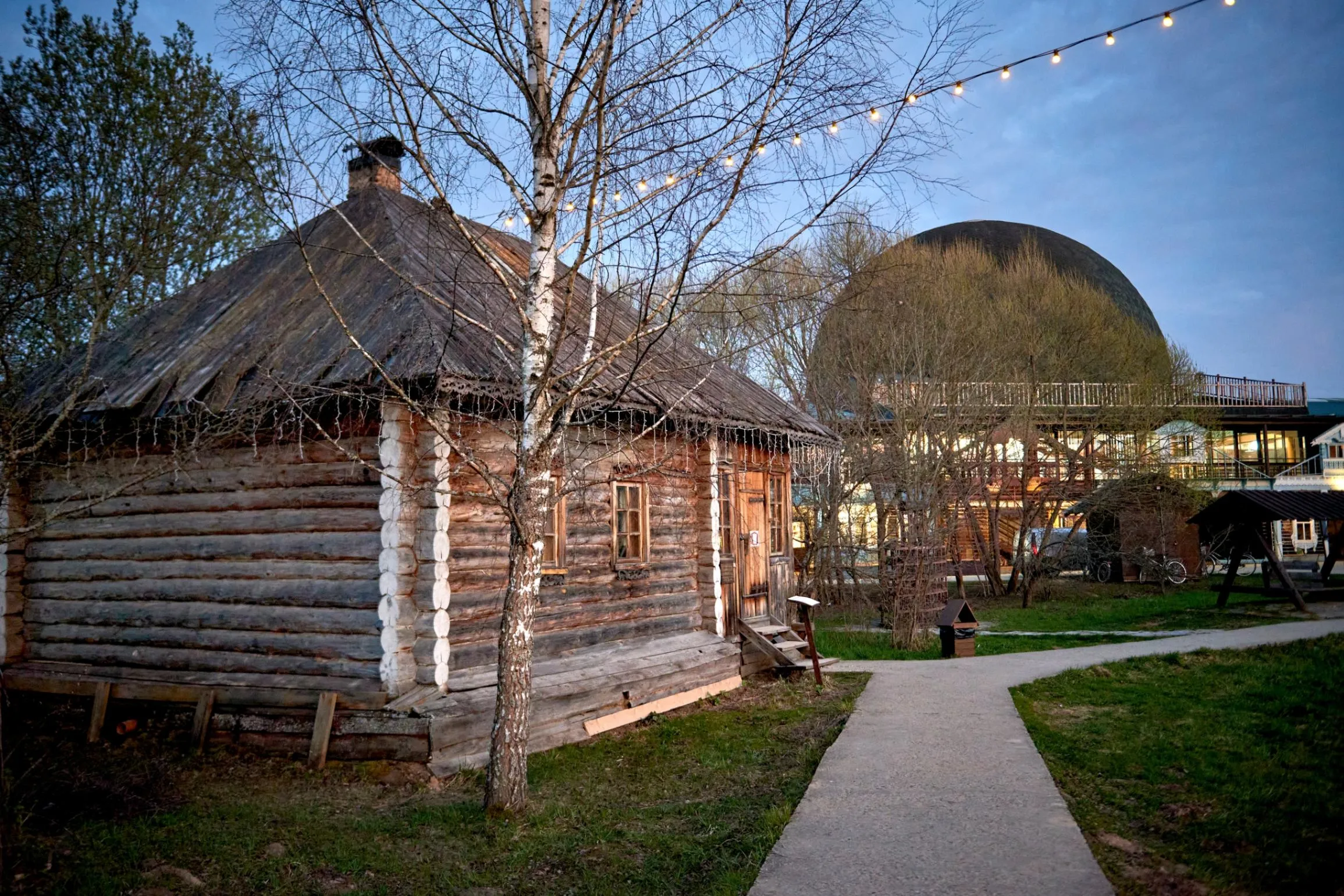
Etnomir is a vast park containing various themed zones — Ancient Rus, Buddhist cultures, the Eastern frontiers, northern peoples, the Caucasus, and much more. These zones house museums, host workshops, and stage historical re-enactments. The sets and scenery are of very high quality; what's more, the park has 12 themed hotels where guests can immerse themselves in the atmosphere of different cultures and historical periods while enjoying modern amenities.
Getting there. The park is ten kilometres from Borovsk; a taxi will cost around 300 roubles (4.11 USD).
Food
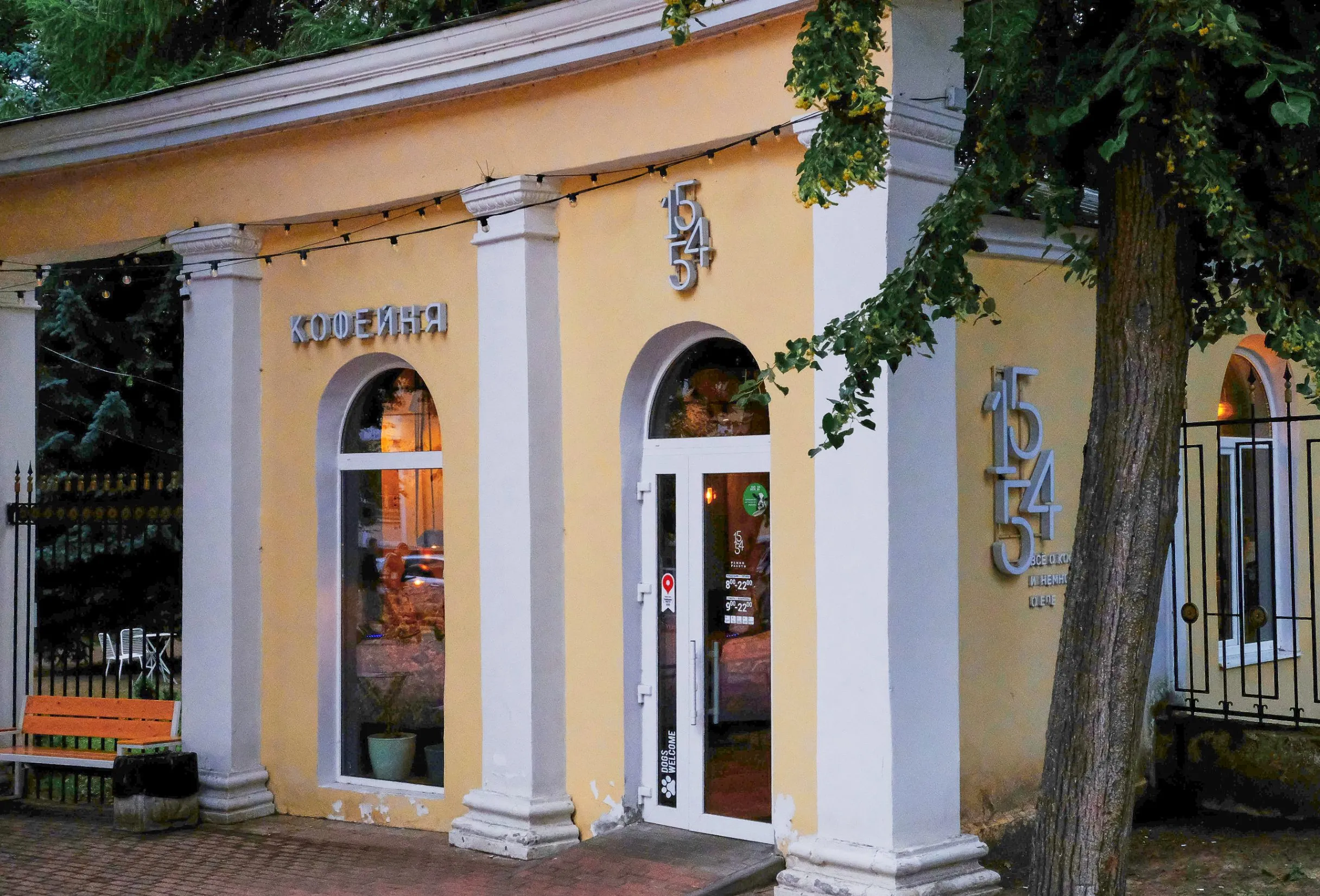
«1554» (Professionalny Proyezd, 1) — a small but very cosy coffee shop occupying a former utility space at the entrance to Central Park. The menu features porridges, cottage cheese pancakes, sandwiches, and, of course, good coffee. This coffee shop has three locations in Kaluga in total.
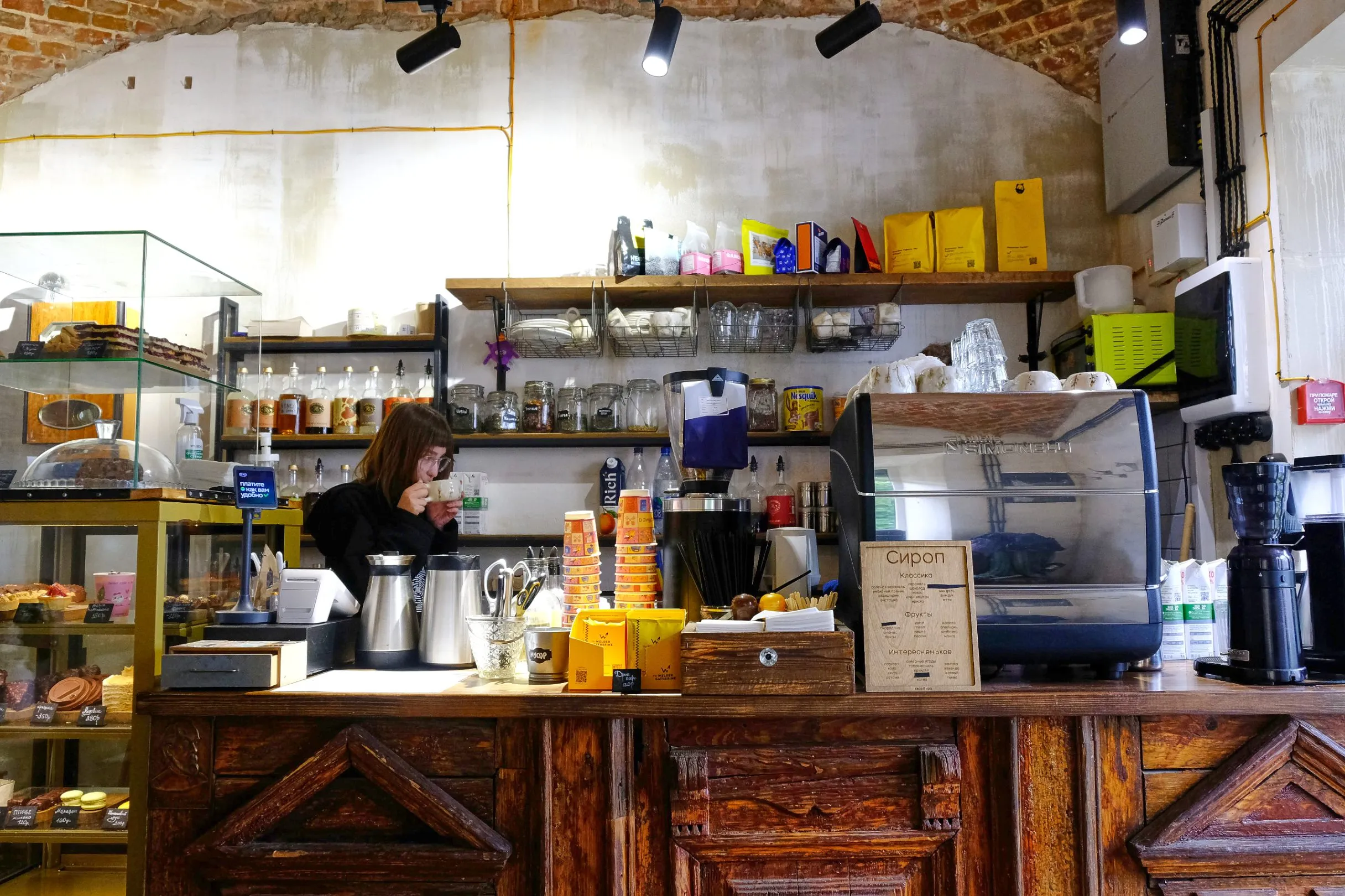
Benedict — breakfast specialists. The menu includes canteen classics such as oatmeal and semolina porridge, as well as cottage cheese pancakes and eggs prepared in every imaginable way. The lunch menu is more modest, but you won't go hungry — there are three types of salads, soups, and main courses each. A chicken cutlet with a side dish costs 520 roubles (7.12 USD), pasta with prawns — 790 (10.8 USD), Finnish fish soup or pumpkin cream soup — 390 roubles (5.34 USD).
Dagestanskaya Kukhnya (Dzerzhinskogo Street, 38) — a café with a self-explanatory name housed in an unremarkable building. Inside, however, the atmosphere feels just like visiting a Dagestani family. The menu features classic dishes (khinkал, chudo, kurze, bozbaш), and there are also several types of pizza.
DorofeyaHere they bake homemade yeast-free bread on live sourdough starter, with a wide variety of loaves to choose from. There are also three dining areas (including a veranda) where you can not only have coffee and desserts but also enjoy a proper meal.
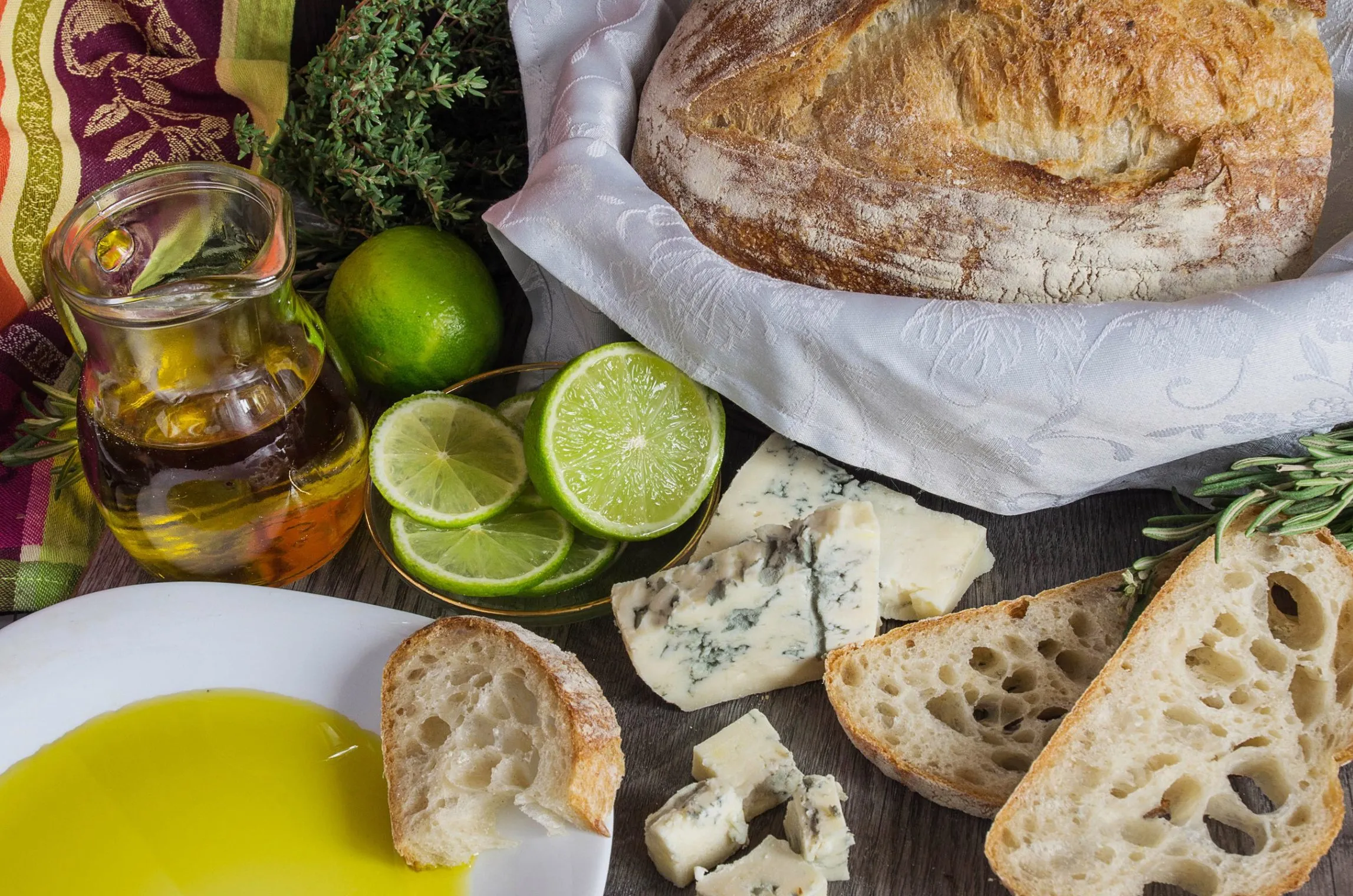
KvartiraAn intimate specialty coffee shop with an inner courtyard in a historic building. The interior retains as many of the original pre-revolutionary elements as possible.
KinzaGeorgian cuisine in the city centre, with live music on weekends.
Kofe KultA coffee chain originally from Tula. The menu has everything you'd expect — classic coffee drinks, teas, matcha, filter coffee, and various sweet specials. For a local touch, there's a Tula Gingerbread latte and a Kaluzhskoye Testo latte (more on that below).
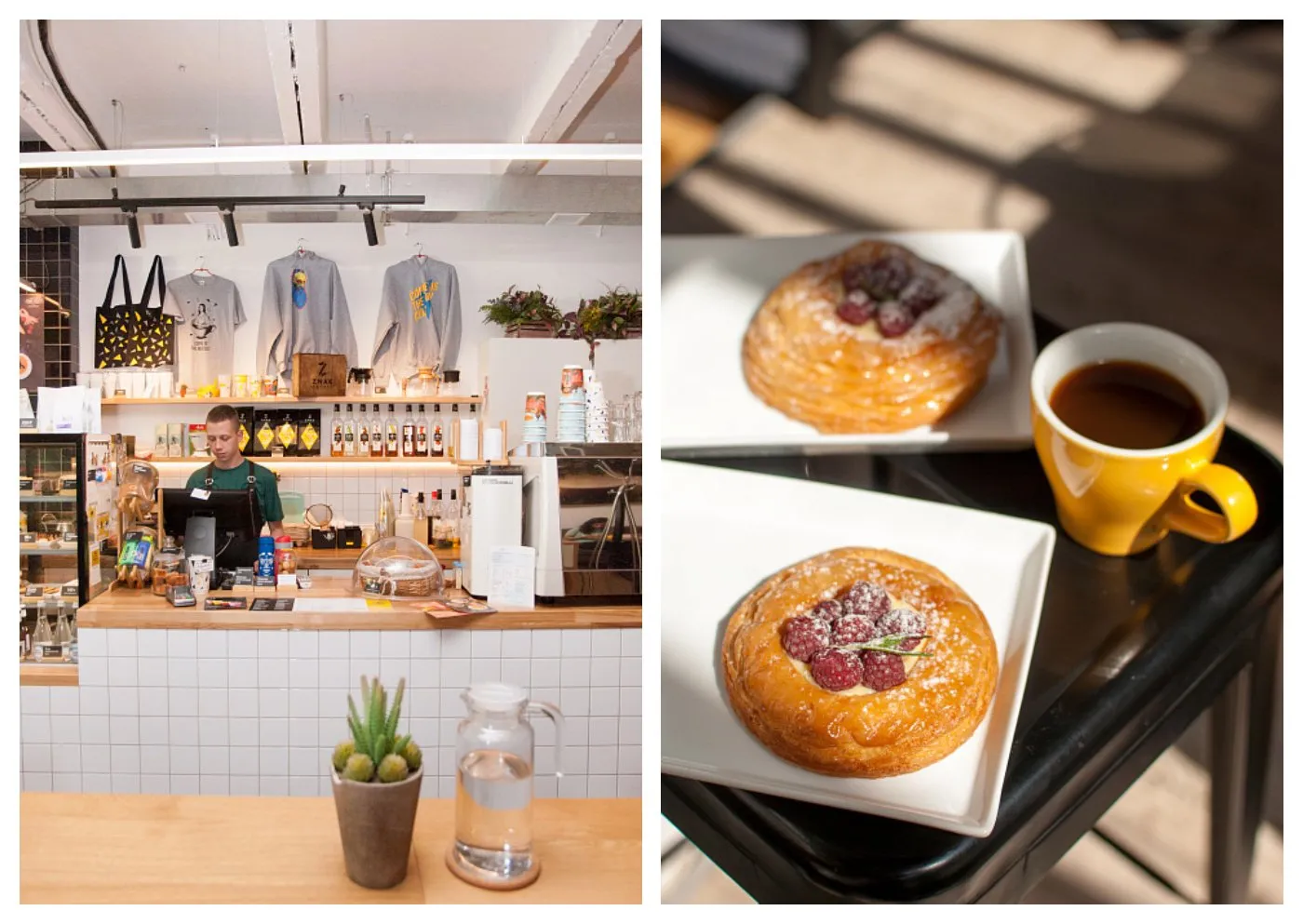
OsteriaA great spot for pizza and pasta lovers, with plenty of space and a covered veranda for rainy days.
Papiny Burgery A classic burger joint. Signature burgers cost 700–1,000 roubles (9.58-13.7 USD).
Pokrovsky Khleb (Lenina Street, 110) — an Orthodox canteen and a little bit of a coffee shop, located in Gostiny Dvor.
Chastnaya Praktika Italian cuisine combined with pan-Asian flavours, rounded out with burgers.
Kulturny KotA café with a menu that should appeal to everyone. There is a huge selection of breakfasts, poke bowls, pasta, and soups. Many people, however, come here exclusively for the desserts. For the past two years the café has received an award from a local food prize for best dessert.
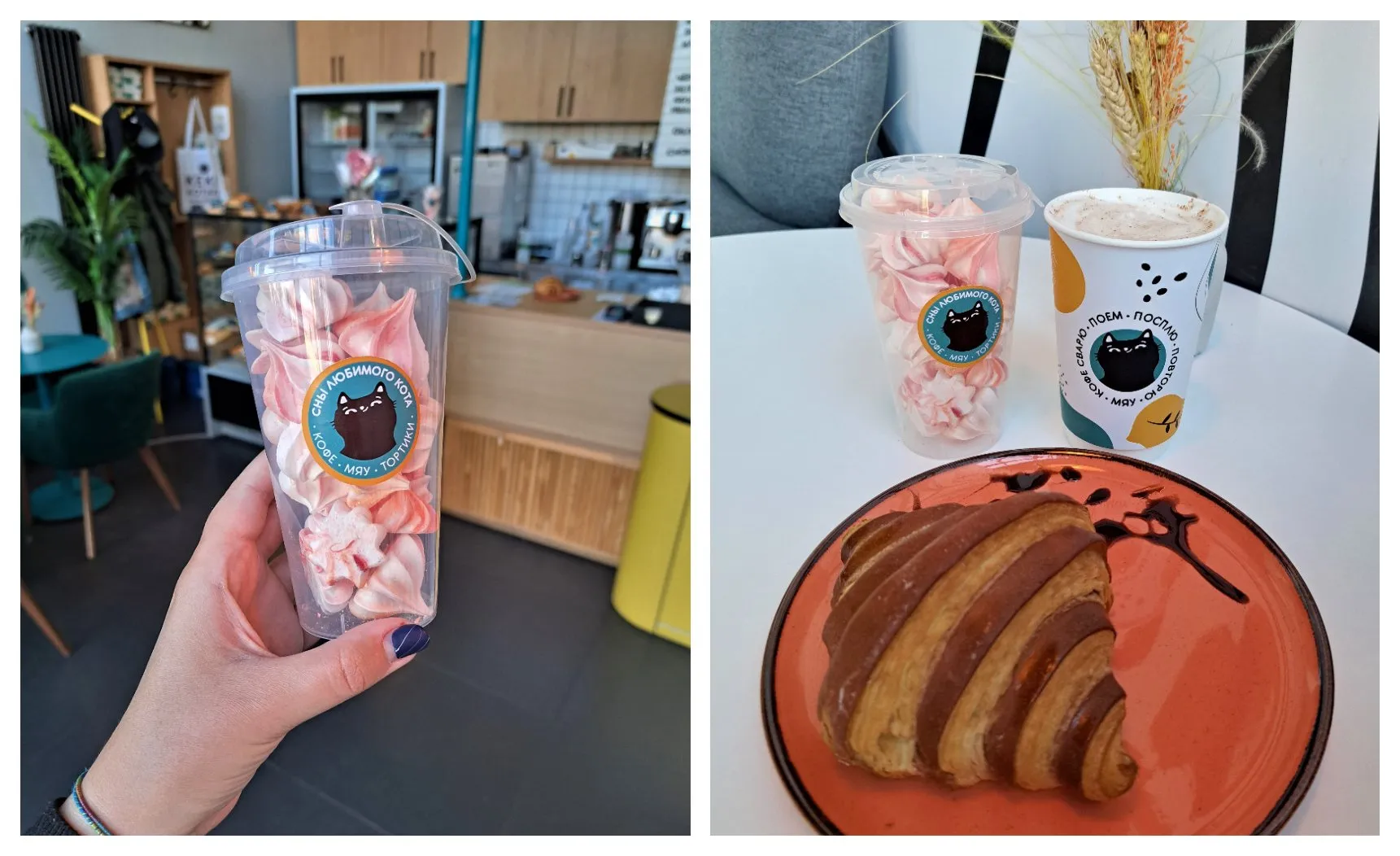
Khleb Nasushchny — a local bakery chain that comes in very handy when you want a quick bite on the go.
Andy'sA family restaurant occupying the wing of a historic building. The menu offers a little of everything: salmon steak with narsharab pomegranate sauce, borsch, tom yum, and khinkali.
Punch (Lenina Street, 101) — an attempt to combine a craft beer bar with a specialty coffee shop. The beer side of things seems to work better.
Saldens (Lenina Street, 108) — a craft beer bar from one of the most celebrated breweries, originally from Tula. The bar has a kitchen serving snacks as well as typical bar food — fish and chips, burgers, and sausages.
Where to Stay
Ambassador. The hotel is located on the grounds of the Grabtsevo industrial park, next to the airport. Kaluga Airport is not particularly busy, so it is quiet here, and all the necessary amenities are on hand. The hotel serves tasty breakfasts and has a fairly extensive restaurant menu, as well as its own pub, a spa, and a mini-golf course. The buildings are divided by room category: a standard hotel section and an aparthotel, where longer stays are possible. The main drawback is that you will need to take a taxi to the city centre. From 6,200 roubles (84.9 USD) per night.
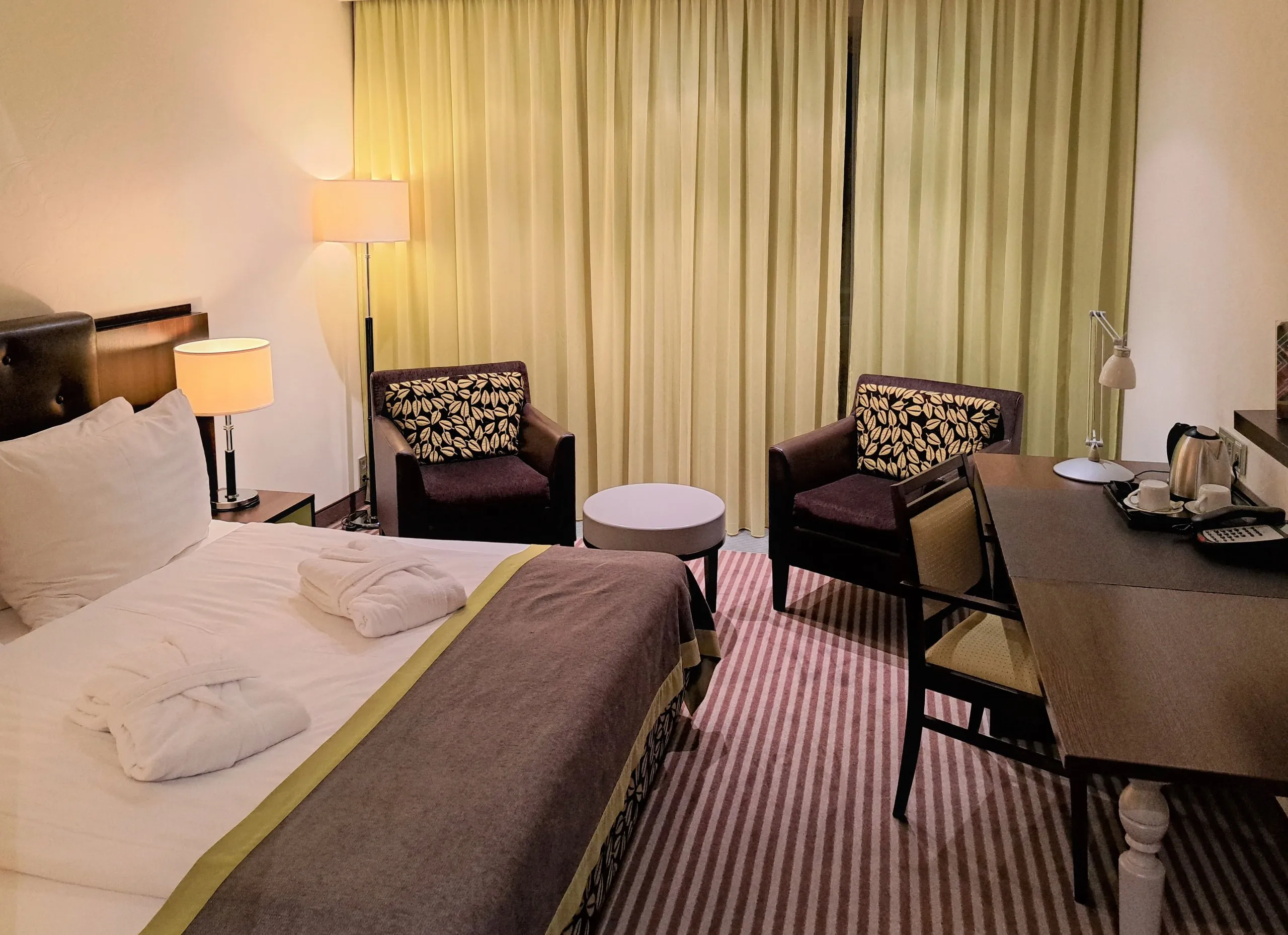
Villaggio. A calm interior, attic-style rooms (a favourite for many) and hearty, tasty breakfasts. From 3,800 roubles (52 USD) per night.
Gostiny Dvor. The hotel is situated in a quiet spot, and for those travelling by car there is a large car park. There is not much else to single out, except for the suite, which comes with its own sauna and pool. From 2,700 roubles (37 USD) per night for a standard room, from 8,000 for a suite.
Oka — a faceless block with a Soviet vibe, but right in the city centre, directly opposite Gostiny Dvor, and cheaper than all other options in the centre — from 3,000 roubles (41.1 USD) per night.
Azimut City Hotel — the former five-star Marriott in the city centre. Spa, conference hall, and rooms in three categories. Most importantly, it offers predictable service and interiors. From 6,000 roubles (82.1 USD) per night.
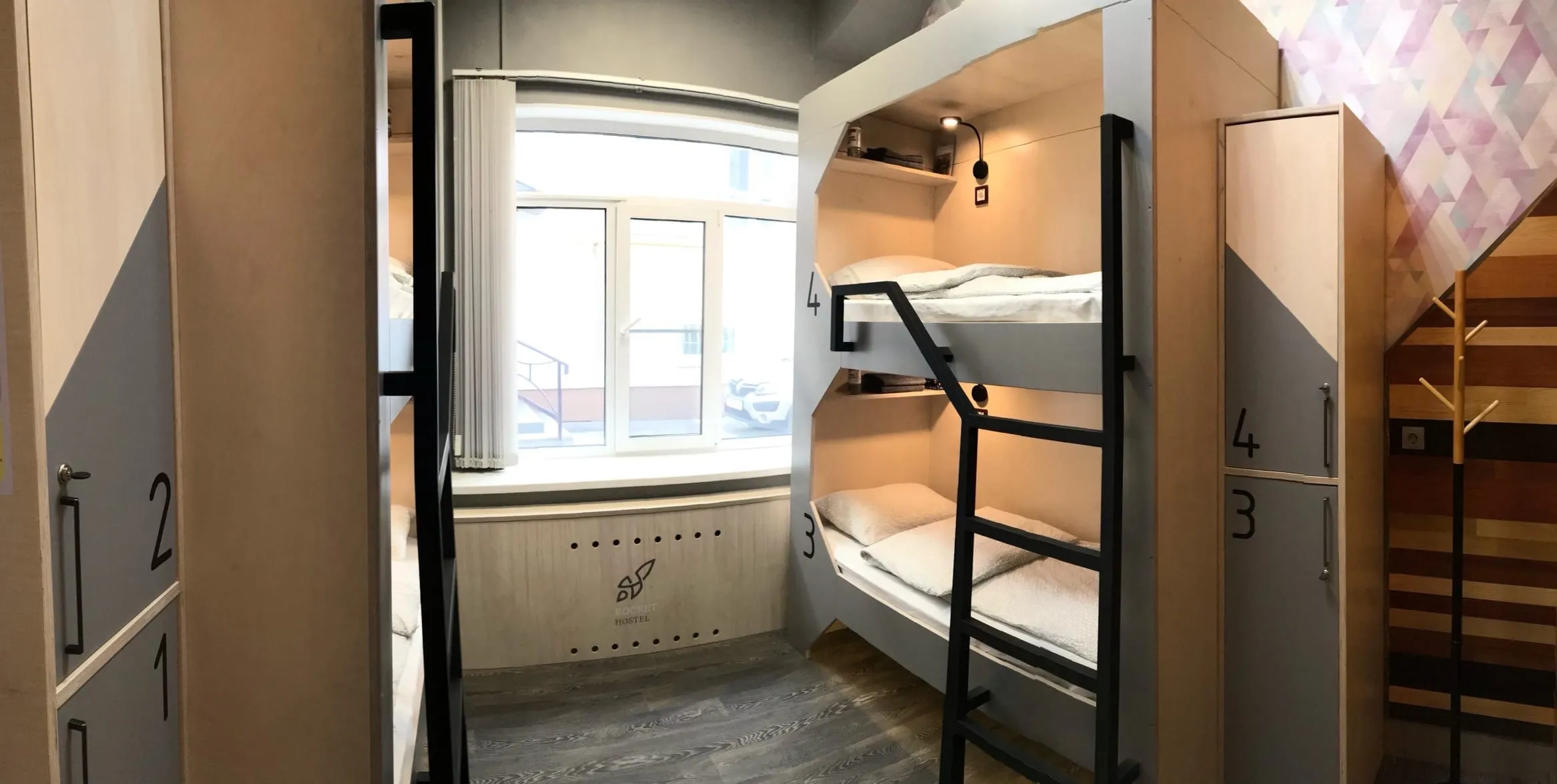
Rocket — a hostel in the city centre. A bed here costs just 1,000 roubles (13.7 USD).
What to bring home
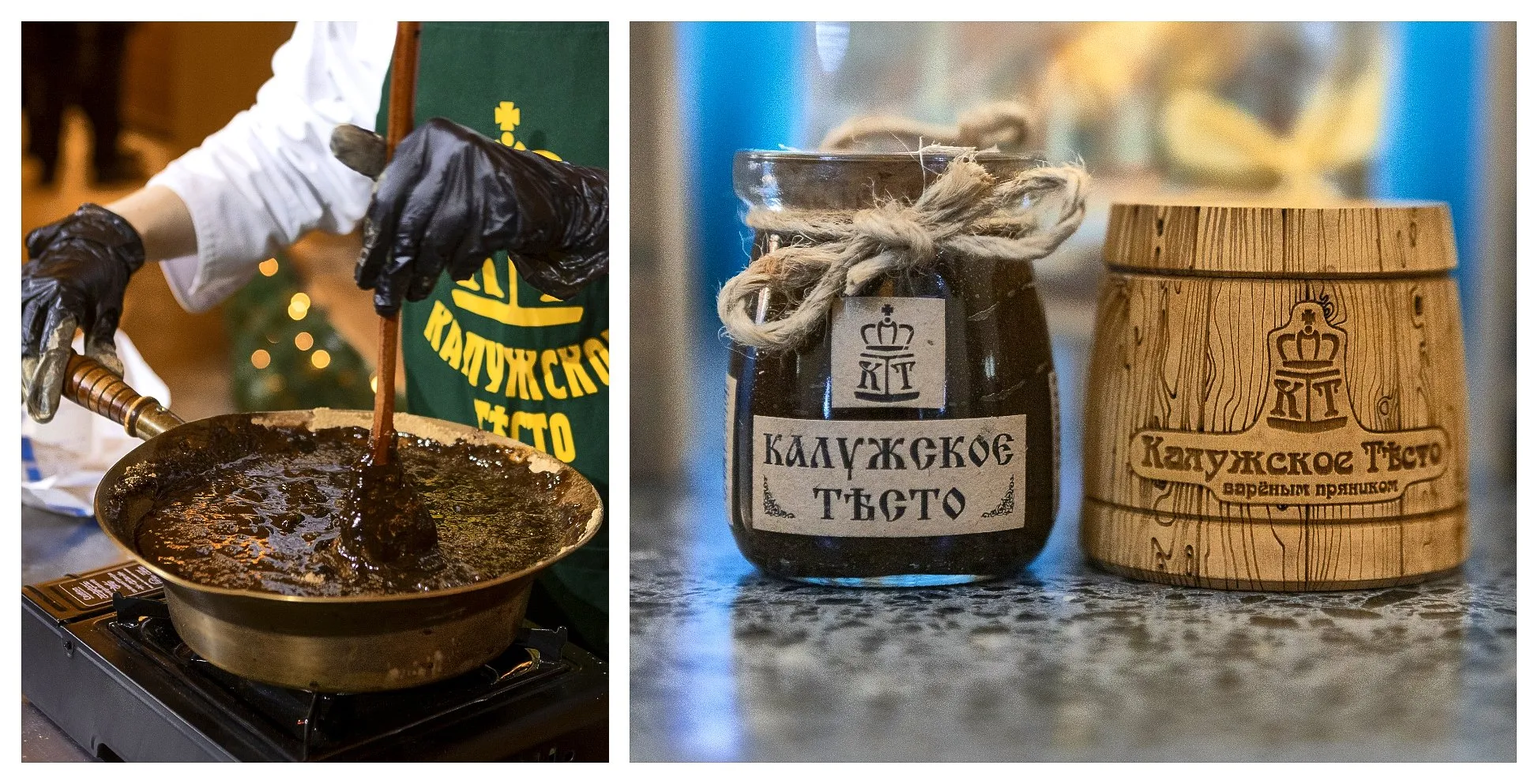
From Kaluga you can bring back clay toys, souvenirs with space-themed motifs, or printed gingerbread — they are quite different from the ones made in Tula. There is also Kaluga pastila, which is well worth trying to understand how it differs from the versions made in Belev and Kolomna. Alongside pastila, the city is renowned for a distinctive sweet called kaluzhskoye testo. This is a boiled dessert made from rye breadcrumbs with honey and spices. You can try this local speciality at the confectionery Kaluzhskoye Tysto. Souvenirs, including edible ones, can also be bought at the craft shops of Gostiny Dvor.
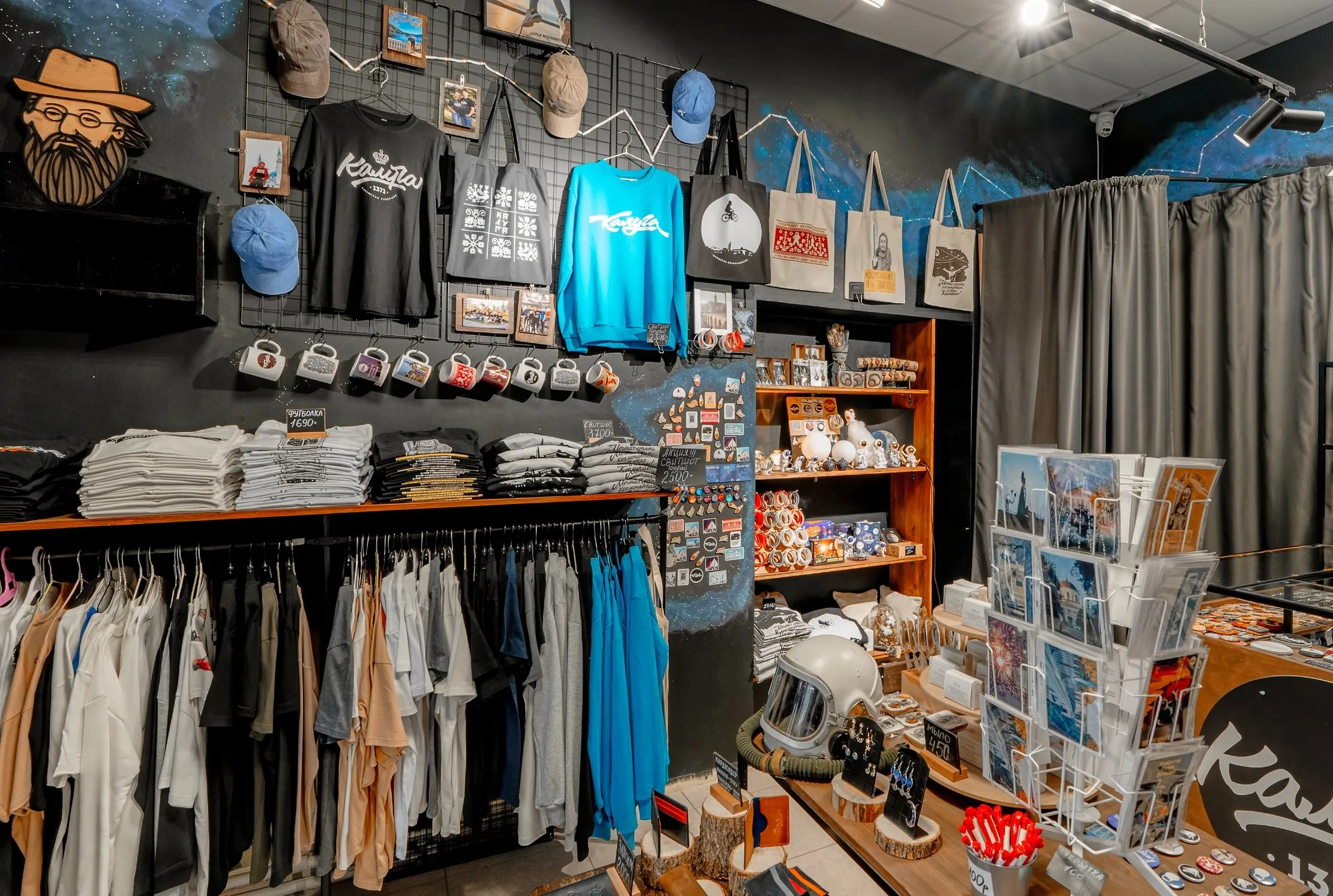
For those who don't want to hunt for souvenirs in different places, there is a single dedicated shop for local brands, Kaluga Store, stocking everything from space-exploration-inspired clothing to magnets, custom brooches, and stickers.
How to Get There
The easiest way to get from Moscow to Kaluga is by commuter train from Kievsky railway station; there are 15 departures a day. The journey takes two and a half to three hours, and a ticket costs 790–1,220 rubles (10.8-16.7 USD). Buses depart from the Salaryevo bus terminal and take around four hours.
Kaluga Airport Grabtsevo is connected by flights to St. Petersburg, Kazan, Kaliningrad, Mineralnye Vody, and Sochi. Tickets to Kaluga are often surprisingly cheap — for example, you can fly from St. Petersburg for as little as 2,500 rubles (34.2 USD) one way.
_%D0%B2_%D0%9A%D0%B0%D0%BB%D1%83%D0%B3%D0%B5.jpg)
#/media/File:Rakov_Building_(Kaluga).jpg)
#/media/File:%D0%9A%D0%B0%D0%BB%D1%83%D0%B3%D0%B0._%D0%A6%D0%B5%D1%80%D0%BA%D0%BE%D0%B2%D1%8C_%D0%A1%D0%BF%D0%B0%D1%81%D0%B0_%D0%9F%D1%80%D0%B5%D0%BE%D0%B1%D1%80%D0%B0%D0%B6%D0%B5%D0%BD%D0%B8%D1%8F_%C2%AB%D0%BD%D0%B0_%D0%9F%D0%BE%D0%B4%D0%BE%D0%BB%D0%B5%C2%BB_(%D0%9A%D0%B0%D0%B7%D0%B0%D0%BD%D1%81%D0%BA%D0%B0%D1%8F_%D1%86%D0%B5%D1%80%D0%BA%D0%BE%D0%B2%D1%8C).jpg)
#/media/File:Borovsk_Lenina_15_02j.JPG)